Wednesday, September 9, 2009

Letting a thousand flowers bloom, or ten thousand, whether you like it or not

Genetics is flourishing to an extent that those of us who have been around for a long time can hardly believe. The proliferation of journals is daunting: each issue of some, such as Genetics, resembles the proverbial Manhattan phone book. And we're now seeing the proliferation of online journals, which seems to be totally out of control in a competitive gold rush.

It's not just primary journals, all purportedly peer reviewed, that are proliferating. Review journals are sprouting like dandelions (Sense About Science, a British charitable trust dedicated to correcting misrepresentations about science, estimates that 1.3 million peer reviewed articles are published a year, and growing.) Pretty soon we'll have journals that just report the contents of review journals. In addition, we see the journals two times or more. Approved manuscripts are posted online before the final actual paper. Then the paper is e-published online before ink is put to any actual paper. Our inboxes are being filled with Urgent! emails listing stunningly important new papers. Humility is not part of the mix!

Indeed, a recent paper in Science (Strategic Reading, Ontologies, and the future of Scientific Publishing, Renear and Palmer, Science 325:828-833) shows that we read more but it takes us less time than in the past--as depicted in the graph. And soon computers will be mining papers for us, extracting the pithy parts, so that we can read even less. Does anybody really believe we have much recall of all this even now?

Hasty reading, reading mainly to cite something later in a 'literature review' of one's own papers or grant proposals. Peer review is clearly more hasty than ever before, and those of us on editorial boards know that a substantial fraction who are asked to review a paper decline.

This is out of control but clearly serves many interests. Not the least is that we're each trying to make our mark on tenure committees, grant reviewers--and posterity. Now. Patience is not called for! Of course, as always, most of what's being published will be chaff and relatively little grain, or weeds among the thousands of flowers that are blooming.

This does not necessarily mean that the papers being published are poor papers. Whether the system is good or bad depends on many factors and probably differs for each person depending on their age, seniority, grant funding, and personality. Some naturally are happy buried in minutiae, focused on one particular problem, such as the genetics of some specific disease, or a specific protein.

But others of us are not at ease with the current system, not just because we grew into our profession in calmer times, but because we think the important long-term aspect of science is synthesis, rather than reductionist partitioning and division down to the smallest detail.

Since its 'invention' in the 17th and 18th centuries, science has become a search for generalizations, not just particulars. Its long-term flow is driven by synthesis, which we often call 'theory'. In a field with thousands of technical particulars there is a kind of stream-like momentum. Implicitly, at least, people follow each other in terms of methods and kinds of analysis. Frantically trying to keep up or get ahead or stay afloat, de facto consensus forms--genomewide association studies, e.g., will explain complex diseases, so everyone jumps on the bandwagon. Epigenetics. Copy number variation. Whatever is the latest hot new thing, until something new comes along. Is this good in the long run, or is it ephemeral and herd-like?

The answer is probably a bit of both. Human genetics, plant genetics, Drosophila or mouse or zebrafish or nematode genetics are all providing similar explanations for how genes work and how development happens. Microbiology, though single-celled, is similar. In that sense, we really do get an overall picture of how life is from a genetic point of view.

At the same time, until there is a manifest feeling of failure or barrier, the flow won't shift and the de facto consensus can become a theory that is accepted without necessarily being very critically examined. We write a lot about the issues we think are being short-changed or mis-stated in this process. It is probably true that most people are happily ensconced in the details of their chosen subject and don't care about the big picture--we accept the current synthetic view without thinking too hard about it. That takes time or may slow down our next publication! But we're satisfied that the sea of particulars represents dramatic progress and are happy to carry breathlessly along.

We may drain ourselves to the point of exhaustion this way, or this may be how progress is made--it is our descendants who, a century from now, in calmer times, or at least in retrospect, will have the vantage point from which to look back and see what we have wrought. Our pointillist sea may, upon the distance of time, be a coherent picture after all.

What problem was Darwin trying to solve....and did he actually solve it?

We properly honor Darwin on the 150th anniversary of his Origin of Species, though more proper would be to have honored both Darwin and Wallace last year, when their ideas were jointly presented to the Linnaean Society. Indeed, their ideas actually rest on the cell theory, which was presented by Virchow in the same year (1858).

At the meeting Ken attended in Brazil last week, he got involved in a discussion with the distinguished ecologist Doug Futuyma of SUNY/Stony Brook. Ken had asserted that despite the title of his book, Darwin had not, in fact, solved the 'species' problem. First, beyond individuals, species are the nearest we have to objective categories in nature. Usually, we define species as populations that cannot interbreed to produce fertile offspring. But even there our definitions are often vague or imprecise.

Variation, even genomewide variation, can exist without speciation (it does among individuals within every species!). Widespread adaptive variation can exist without leading to speciation (humans are variable worldwide for presumably adaptive reasons--e.g., skin color, yet we're one species). And mating barriers can arise without adaptation in the usual sense (e.g., hybrid sterility genes).

In that sense Darwin did not solve the species problem he named his book after. Doug Futuyma suggested, however, that Darwin's main objective was not speciation per se, but the process that leads to it. Indeed, Darwin wanted 'natural selection' in the title of his book, because that was the process he was invoking as an extension of artificial selection by breeders, to explain long-term biological change and the origin of adaptive structures.

But was 'species' an incidental interest or a primary one? We think the answer is that species was indeed a central objective, and yet it is not separable today, nor in Darwin's mind, from the ultimate result of the process which is speciation. This seems clear in the way Darwin's book was written, in the materials presented to the Linnaean Society, and also in letters he wrote around the time of the book and earlier, around 1844, when he drafted a private sketch of his ideas.

The process was an extension of agricultural and hobby breeding, that clearly led to variation. But Darwin was also determined to show that species--natural 'types'--were not the result of specific acts of creation. The nature of 'transmutation' as it was often called at the time, was hotly debated and of course then, as now, centrally involved religious explanations of the world. Darwin was convinced that 'varieties' and 'species' arose gradually through natural processes.

So, while he did not solve the species problem per se (which is not a 'neat' problem in any case), he provided brilliant insight as to the nature of the processes that, in various ways, are involved in natural divergence that leads to the origin of species.

Monday, September 7, 2009

Fundamentalism and anthropological naivety

We were channel hopping this weekend, looking for the broadcast of Penn State's first football game of the season (well, Ken was looking; Anne wasn't). That led us to pass through several religious channels that our cable service provides.

It is in a sense an incredible phenomenon. Someone, usually manifestly poorly educated, in a robe of some sort, spouting off patent non-sense and opinion, in a rhetorical and tonal style to appeal to unquestioning emotion, and audiences (sometimes very large audiences) nodding unquestioningly (often in tears).

It is incredible that in our supposed age of science, this can still occur. It is an unsavory dose of reality, that wealth, education, and comfort do not actually educate people (unless by some weird chance these preachers are right and the entire empirical world an illusion). This is culture in action. We scientists and intellectuals flatter ourselves that we're the enlighteners of a benighted world, but it's not really true. People are surrounded by science, including evolution, and still it doesn't sink in.

In fact, we probably err in bemoaning the degenerating world that these religious hawkers are selling (and selling is an appropriate word for much of it, of course). We are perhaps the most formally educated population in human history: by far more people with more years of school, more credentialist degrees, technical training, and access to knowledge. Nonetheless, today as ever before, it has only been a small elite that is really 'educated' in the sense that applies here. High levels of this kind of knowledge have never been the daily bread of the majority of people, and they aren't now either.

The arguments produced in favor of sacred-text religion are specious and in the US often culpably misrepresent the claims of science, and we have every duty to try to correct them. But the real issue is not the physical facts of evolution vs theology. It's a deeper cultural fact about people, and symbolic battles for power and feelings of importance.

People generally like simple answers that explain everything. And they need opiates to calm their unease about the harsh realities they know are part of life. Mysteries can be appealing but also frightening, especially to those who know they're mortal. Science is no exception--simple answers are very appealing--which is why we do our best to resist unquestioned genetic determinism or darwinism. There should be no Gods, or gods (whether the latter be Marx or Darwin, Michael Jackson, or $$). Gods are dangerous. People are still willing, sometimes eager, to die for them.

We saw a comment in the news this weekend to the effect that fundamentalism will be the downfall of civilization. The rise of fundamentalism, according to this British scientist, means that global problems, such as climate change and population growth, won't be addressed with the kinds of worldwide cooperation needed to solve them. We realize that this was meant as a bemoaning of the human strife caused, justified, or motivated by fundamentalist belief, and we share that view. But it's important to understand that, as stated, it's totally wrong. First, it's probably fair to say that economic differences rather than religious ones are preventing global agreement on climate change. And secondly, if anything, the most advanced civilizations have thrived on marauding justified by religion (theological or, as in Marxism, secular). Mass-scale malevolent treatment of groups of people by other groups of people is perhaps one of the characteristics of large-scale complex societies.

It may also be natural for there to be people of good will who resist these dire aspects of human culture. There may be no precedent for it, but we hope they will eventually prevail.

Friday, September 4, 2009

Genetics in Brazil

I (Ken) was away this week, to give a talk at the 55th Congress of the Brazilian Genetics Society. The meeting was held in a relatively isolated hot-spring resort town, Aguas de Lindoia, north of Sao Paulo (the picture is of capybara, the world's largest rodent, in a lake near the meeting place). Around 2500 people were there, representing the wide array of genetics research, from ecology to experimental to biomedical.

Most of the attendees by far were young, enthusiastic students. Their posters and presentations (those I could understand through my lack of Portuguese) were first-rate, and shows a high degree of development of genetics research in this huge and burgeoning country. Several outsiders, like me, were privileged to be invited to talk to those attending.

The purpose of this brief post is just to pay a tribute to these achievements. With its huge resources for studying both the academic and practical sides of ecology, ecological change, and human impact, Brazil is a fascinating place that will be important in applied, evolutionary, and population ecological genetics. My guess is that the Brazilians, naturally friendly and open people, will continue to be receptive to potential collaborators who have good ideas. But they will be full collaborators, not just investigators in need of outside expertise or resources.

This meeting, like so many, was themed to honor the 150th anniversary of the publication of Darwin's Origin of Species. My only issue with this, and one I raised in my own presentation, is that the focus on Darwin and 1859 is somewhat misplaced and unfair. The reason is that it denies credit to Alfred Russel Wallace who, with Darwin but in the year before (1858), independently developed a theory of evolution. Wallace's was somewhat different from Darwin's, focusing more on group or species competition with the environment rather than among individuals, and Wallace's were somewhat more accurate relative to current knowledge in some other respects than Darwin.

Also, 1858 was the year in which Rudolf Virchow published his cell theory, that all life is cellular and all cells descend from other cells. That is an understanding upon which modern biology (evolutionary as well as functional) is entirely based.

So perhaps we missed doing our proper duty, and should have been celebrating last year. Wallace and Virchow might have gotten more notice, but of course, Darwin would still have been at the heart of the festivities!

Thursday, September 3, 2009

More on honey bees in the NYT

The New York Times today has an update on honey bees and colony collapse disorder ("Saving Bees: What We Know Now"), including an interview with Dr May Berenbaum, the senior author of the CCD study in PNAS, which we wrote about on Tuesday.

Not-so-random gene expression

One of the more perplexing questions about development is how a system rife with randomness--in the timing of gene expression, in whether genes in specific cells actually get turned on when instructed, in genetic variation itself, and so on--so predictably builds a recognizable replica of the organisms that donated their genetic material to the effort. The replica isn't exact, to be sure, as the genetic material comes from two parents with their own unique genomes, and mutations happen, but it's exact enough: a whale won't give birth to an elephant, nor a rabbit to a mouse. Randomness may be built in, but so is stability.

A recent paper in Science (Synchronous and Stochastic Patterns of Gene Activation in the Drosophila Embryo, Boettiger and Levine, July 24, 2009, Vol. 325. no. 5939, pp. 471 - 473) describes a mechanism that may explain some of that stability. Development is a time of rapid and contingent gene expression, demanding that at least a critical mass of cells in a developing tissue respond to signals in the same way, so that the next stage of growth can proceed. But not all cells that receive the same signal respond in the same way, such as by expressing a given gene at a specified time.

A note in the September Nature Reviews Genetics (Polymerase stalling gets genes in sync, p. 590) asks:
How is this variability dealt with in situations in which precise patterns of gene activation are important? A recent study [Boettiger and Levine] suggests a mechanism that can reduce variability in the onset of transcriptional activation in the Drosophila melanogaster embryo and may contribute to the precision of the developmental programme.
One of the initial steps in gene transcription is the recruitment and assembly of the RNA polymerase II complex that then starts the synthesis of new protein. If that complex isn't ready and waiting when a cell receives a signal to turn on a gene, the cell may not respond in a timely way, and the gene won't be turned on when needed.

Boettiger and Levine describe a series of elegant experiments looking at the timing of expression of a number of important 'control genes' in hundreds of fruit fly embryos.
These studies revealed two distinct patterns of gene activation: synchronous and stochastic [meaning random]. Synchronous genes display essentially uniform expression of nascent transcripts in all cells of an embryonic tissue, whereas stochastic genes display erratic patterns of de novo activation. RNA polymerase II is "pre-loaded" (stalled) in the promoter regions of synchronous genes, but not stochastic genes. Transcriptional synchrony might ensure the orderly deployment of the complex gene regulatory networks that control embryogenesis.

The timing differences are significant; synchronous expression of genes in different cells happens within 2 minutes of each other, while stochastic expression varies by as much as 20 minutes. Boettiger and Levine suggest that this may indicate two classes of genes, those for which timing of expression is crucial, and those for which it's less crucial. What controls the pre-loading of the RNA polymerase is not clear, nor how much play there still is in the process--previous experiments have shown that there is considerable variability in expression of the same gene in different cells, including non-expression, so the Boettiger/Levine classification scheme is clearly not exhaustive.

In many ways, randomness is crucial to evolution, but too much randomness during development can be lethal. As the Boettiger and Levine experiments show, evolution has produced ways to rein it in.

Tuesday, September 1, 2009

Colony collapse disorder solved?

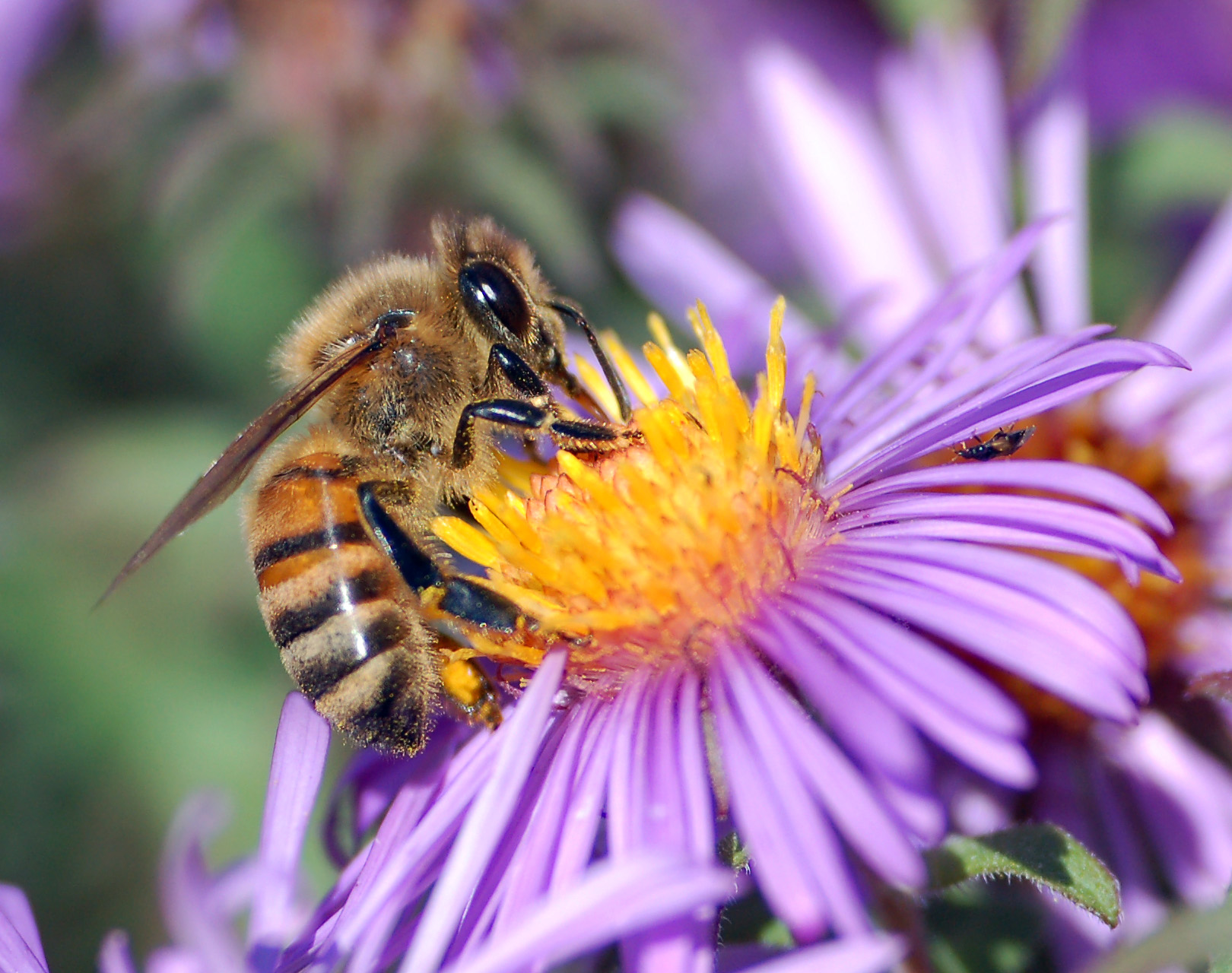
Investigators may be on the verge of explaining colony collapse disorder (CCD), or the to-date unexplained demise of one third of the honey bee hives in the US and other countries. Previous explanations have included the proliferation of cell phone towers, pesticides, antibiotics, pathogens, sheer exhaustion in bees asked to work too hard, and many others, plausible and not. Earlier studies have found evidence of infection from a variety of viruses, suggesting a general immune disorder of some sort. However, Dr May Berenbaum and her team report in the current Proceedings of the National Academy of Sciences (in a paper called Changes in transcript abundance relating to colony collapse disorder in honey bees (Apis mellifera), Reed et al., published online Aug 24) that they may now actually be closing in on a convincing explanation of why so many bees are dying.

The investigators used microarray technology to compare the genes being expressed in the gut of sick bees vs. healthy bees, on the east and west coasts of the US, searching for a genetic footprint that might lead them to the cause of the disorder. If they found immune genes differentially expressed in sick bees, they could conclude that the bees were fighting an infection (however ineffectively). If they differentially found detoxification genes involved in response to pesticides, that would suggest a man-made cause. And so on. They also put pathogen DNA on these microarrays to see whether they could identify pathogens that might be more abundant in sick bees.

They found a lot of variation in gene expression between east and west coast bees, but generally, 65 genes seemed to be more frequently expressed in sick bees than healthy ones. These genes did not include an elevated level of pesticide response genes, or immune response genes, suggesting that these two oft-suggested insults were not the answer. To the surprise of these investigators, however, and rather by accident, they found broken fragments of ribosomes, protein manufacturing 'factories' that are inside every cell, in bees suffering from CCD. They also found evidence of picorna-like viruses (pico=small, picorna = small rna), which attack ribosomes by insinuating themselves into the bees' ribosomal RNA and disrupting control over which proteins the hijacked ribosome can synthesize. And, the team found ribosomal fragments, suggesting that infection can degrade these molecules. The ribosome ends up reproducing the virus's RNA (or none at all), but not the bee's, so that the bees are then unable to make the proteins they need to fight infection. Thus, Berenbaum et al. suspect that after the ribosomes have been attacked, any and every insult, including pesticide exposure, exhaustion, other infectious agents, and so on could precipitate the death of the colony.

If this really does explain CCD, does this mean it's treatable or preventable? No, at least not yet. This study represents a great use of a high tech method to tell a story, but, as in human genetic diseases, even when a causative gene is identified, this rarely points the way to a cure. For now, if confirmed, these results can be diagnostic, meaning that hives on the verge of collapse can now be identified. Whether collapse can then be prevented is not clear, at least to us.

Berenbaum went on to suggest, as a guest on the BBC program Material World on August 27, that working honey bees in the US and Europe represent only a "tiny slice of honey bee genetic diversity". There are more than 20 races of honey bee, she says, and she trusts that the amount of genetic diversity maintained by these races will be sufficient to save the bees. It's early days in our understanding of the honey bee genome, she said, but characterizing the function of more bee genes might help. It's not clear whether she's envisioning genetically modified bees, or artificial selection to increase the bees' resistance to the viruses now infecting them, or some other preventive measure, but she's hopeful. We hope she's right to be.