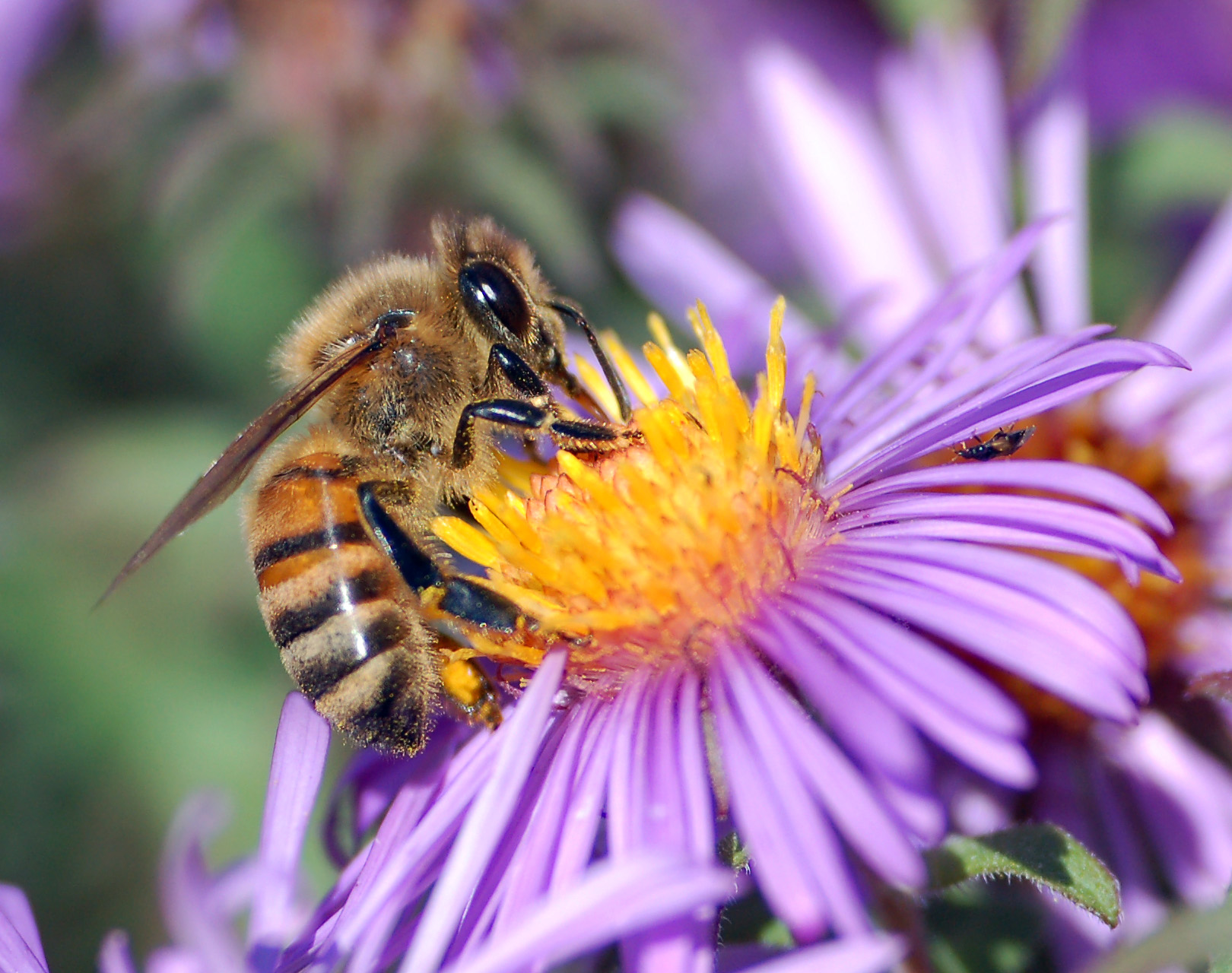
Showing posts with label colony collapse disorder. Show all posts

Wednesday, June 25, 2014

O, death, where is thy sting: the bees will continue to die

'Widespread impacts of neonicotinoids "impossible to deny,"' says the headline at the BBC.  The Worldwide Integrated Assessment (WIA) of the effects of systemic pesticides, a report released on June 24, concludes that the fairly new pesticides, neonicotinoids (neonics) and fipronil, are as bad for ecosystems as was DDT.  The report was written by the IUCN, the International Union for the Conservation of Nature, after a review of 800 peer-reviewed journal articles published in the last 20 years.  The IUCN is an environmental conservation group, and thus can't be said to be neutral in the debate over the role of these pesticides in ecosystems, particularly with respect to colony collapse disorder, but that certainly doesn't mean they are wrong.  

Systemic pesticides are water soluble chemicals and thus can be moved through a plant's vascular system to infiltrate its every cell, where they can remain for perhaps the life of the plant. Whatever eats the plant is then exposed to the pesticides, which, according to the BBC, are 6000 times more toxic than DDT (though, I am not sure what that actually means; that they last 6000 times longer, or kill 6000 times faster, or kill 6000 times the number of organisms?) but less toxic to mammals than some older classes of pesticide.
  

Healthy frame from hive, top; evidence of CCD, below;
Photos: Keith Delaplane from Oldroyd, 2007 and Reed Johnson;
Source
According to the report, neonics and fipronil are the third most widely used pesticides in use today, and because they are so widely used, and prophylactically as well as for pest control after the fact, they are found in the air, the water and soil.  And, they are affecting a wide range of organisms, perhaps including us.  Yep, you might be eating them for dinner.
The combination of their widescale use and inherent properties [of these pesticides], has resulted in widespread contamination of agricultural soils, freshwater resources, wetlands, non-target vegetation, estuarine and coastal marine systems. This means that many organisms inhabiting these habitats are being repeatedly and chronically exposed to effective concentrations of these insecticid
And,
The combination of prophylactic use, persistence, mobility, systemic properties and chronic toxicity is predicted to result in substantial impacts on biodiversity and ecosystem functioning.
The authors of this report recommend worldwide reduction in their use, continued research into alternatives, such as integrated pest management, and tighter regulation.

Pesticides are meant to kill, so that they are doing their job is no surprise.  But the most pressing question is whether they are also responsible for colony collapse disorder (CCD).  The European Union has banned the use of neonics for 2 years, in an attempt to answer this question.  However, there is currently some pressure from the National Farmers Union of combinable crops in Britain to overturn the ban in time for autumn rapeseed planting -- without them, growers warn, 2014 could be the last big harvest in Europe. Of course, the NFU can't be said to be a disinterested party, either.  

And, despite the report pesticide manufacturers (another party with a vested interest) deny that these chemicals are responsible for CCD, citing, for example, the persistence of tree bumblebees despite two decades of neonicotinoid use.  CCD, the sudden disappearance of worker bees from a beehive or colony, usually occurs with little or no build-up of dead bees in or around the affected hives, and with the early death of adult worker bees away from the hive.  This leaves affected hives populated primarily by young adults. The queen is usually in the hive as well, but without worker bees the colony can't sustain itself, and the remaining bees eventually die.

Winter is hardest on bee colonies, though since CCD was first reported, the proportion of beehives that die during a given winter has ranged from the expected 10% or so to bad winters such as the winter of 2013-14, with 60% or more of hives dying off in some areas.  Why this is happening is not at all clear -- perhaps varroa mites, perhaps a virus, perhaps overwork and stress, perhaps neonicotinoids, perhaps a combination of factors.  Indeed, CCD had not hit Canada or Australia until recently, although neonics have been in use in both places.  But, varroa mites weren't a problem in Australia, either, so it's hard to know what this means about the cause of CCD.

Colony collapse disorder has become politicized, in part because a lot of money is at stake, and in part because environmental protection is itself politicized.  It's the same kind of conservative vs liberal hate-fest, or, in this case, food-fight that we also see over the truth of evolution and climate change.  It doesn't help, of course, that understanding why bees are dying is so difficult.  But, similar questions arise in many other areas these days, like: what causes autism, or obesity, or hyperactivity?  Identifying the cause of a complex disorder turns out to be difficult, and 'cause' may not even be the appropriate word, though we seem to have no better.

The WIA report will not end the debate.  There will be charges of vested interest on both sides, and there will be inaction.  Environmental consequences of pesticide use will mount, and bees will continue to die.  But, for hungry humans, they may have the last sting.

Friday, February 21, 2014

Solving colony collapse disorder probably can't be just better bee husbandry

The problem of 'emerging infectious diseases' (EID) is well-recognized in humans and other vertebrates but less so among invertebrates.  Colony collapse disorder (CCD) is an ongoing and serious problem among honeybees that are used to pollinate food crops, but a new study published in Nature ("Disease associations between honeybees and bumblebees as a threat to wild pollinators", Fürst et al.) reports that whatever is killing managed pollinators is spreading to wild bumblebees and killing them too.  Indeed, wild bumblebee populations are in decline around the world.

Wild and managed bees already share some diseases, including deformed wing virus (DWV) and infestation with the fungal parasite Nosema ceranae.  Varroa mites seem to be among the causes of CCD, but they are not being found in wild bees.  Fürst et al. suggest that, as with vertebrates in which 'spillover' from domesticated animals to wild sympatric species, wild bees readily become infected with diseases that managed bees carry because they visit the same flowers.  Whether wild bees are as vulnerable as honeybees have been to the causes of CCD is yet to be seen.  

Source: BBC
Fürst et al. tested the infectivity of several diseases found in honeybees, DWV and Nosema ceranae, by inoculating bumblebees with the virus and infecting them with the fungus.  They found that these infections are indeed devastating to bumblebees, infected wild bees had non-viable offspring and shorter lifespans than uninfected bees.  

They then surveyed bumblebees throughout the UK and found evidence of active infection by both mites and DWV, although currently at lower levels than among honeybees -- 11% of bumblebees and 35% of honeybees had DWV, and 7 and 11% respectively had the fungus.  

They further found that prevalence of these infections was not uniform among their sampled wild bees but that it was correlated with prevalence in nearby honeybees. They further tested the strain of infection among wild and managed bees and determined that they shared the same strains. While they couldn't confirm the direction of infection, they suggest that it's likely to be honeybees to bumblebees since prevalence of DWV and fungal infection is higher in honeybees.  

The global trade in honeybees and the worldwide prevalence of CCD mean, to Fürst et al., that beekeepers need ways to reduce infection rates in managed bees, both for the health of these bees as well as for the health of wild bees.  But, as they point out, 'reducing the pathogen burden is not easy.'  They suggest that beekeepers should learn from experience with infection control in vertebrates.
Lessons learned from vertebrates highlight the need for increased pathogen control in managed bee species to maintain wild pollinators, as declines in native pollinators may be caused by interspecies pathogen transmission originating from managed pollinators.
A piece on the BBC website on Thursday includes this quote:
Dr David Aston, president of the British Beekeepers Association (BBKA), said: "By employing good husbandry practices, beekeepers can take steps to reduce the impact of pests and diseases on honeybee colonies using biotechnical controls and practices such as apiary hygiene, regular brood comb changes, ensuring the colonies are strong and well-nourished and the use of authorised treatments."
In other words, good husbandry can reduce the disease load on managed bees, and thus on wild bees, and knowing specific causes of CCD isn't as important as simple hygiene.  This may be true as far as it goes, but if pesticides and herbicides are part of what seems to be a complex chain of causation this problem can't be solved from hive to hive, but instead controlling use of toxic chemicals must be part of the solution.

Friday, January 24, 2014

Colony collapse disorder and TRSV - an answer or just another data point?

A new study of what's killing honey bees, reported a few days ago in the New York Times and elsewhere, suggests that a virus that normally infects plants might be involved.  The virus has apparently mutated and jumped to bees, much like influenza can jump from birds and pigs to humans.

The virus was found by serendipity, in a screen of the viral load of a sample of bees and the pollen they had collected.  Researchers were looking for both rare and frequent viruses and found the tobacco ringspot virus (TRSV), which is presumed to be transmitted via pollen.  The virus presumably works by attacking the bee's nervous system.

It seems that bees pick up TRSV when they forage for pollen. They then may share it with larvae when they feed them "bee bread", a mixture of saliva, nectar and pollen. In addition, mites that feed on the bees may also be part of the chain of transmission, presumably of other infectious agents as well as TRSV.

Tobacco ringspot virus; Forestry Images

Other RNA viruses are involved in colony collapse, but this is the first one that has been found to be transmitted by pollen.  TRSV infects many different species of plant, and can be devastating.
Of a number of plant diseases caused by TRSV, bud blight disease of soybean (Glycine max L.) is the most severe. It is characterized by necrotic ring spots on the foliage, curving of the terminal bud, and rapid wilting and eventual death of the entire plant, resulting in a yield loss of 25 to 100%.
Bees and other pollinators can transmit the virus between plants, but infected seeds are another mode of transmission.  The virus has been found throughout the honeybee body, and in an ectoparasite of the bee, Varroa destructor.  And, it is correlated with winter colony loss.  This is the first RNA virus that has been found to infect plants and animals.
Of ten bee colonies included in this study, six were classified as ... strong colonies and four were classified as weak colonies. Both TRSV and IAPV [Israeli acute paralysis virus] were absent in bees from strong colonies in any month, but both were found in bees from weak colonies. As with other detected viruses, TRSV showed a significant seasonality. The infection rate of TRSV increased from spring (7%) to summer (16.3%) and autumn (18.3%) and peaked in winter (22.5%) before colony collapse. .... The bee populations in weak colonies that had a high level of multiple virus infections began falling rapidly in late fall. All colonies that were classified as strong in this study survived through the cold winter months, while weak colonies perished before February
The authors of this study carefully do not claim to have found the cause of colony collapse disorder.  Instead, they suggest they've found a new mode of transmission of viruses to insects, and further suggest that TRSV is but one possible cause of bee decline.

Fundamental questions remain -- are weak colonies weak for unknown reasons, but thus susceptible to viral and parasitic infections, or do viral and parasitic infections weaken colonies?  Can bees and colonies withstand a certain amount of infection, but over a certain threshold more infection or parasite infestation is devastating?  Is there still a single cause of colony collapse to be found? 

Tuesday, June 11, 2013

Bee colony collapse: A hyper-polygenic trait?

Honeybee: Wikimedia
Colony collapse disorder (CCD) is a sudden dying-out of a honeybee colony.  Among other things, the bees--of most or all types in the hive--leave the hive and just don't return.  The hive empties out.  It's not littered with corpses in whom autopsies could identify pathogens or toxins or the like.  We recently posted on the possible causal role of neonicotinoids in CCD, and the response of the European Union.

CCD became what appeared to be a dire threat to humans about 6 years ago, because it was so widespread and catastrophic and so much of our food requires bee pollination.  Industrial-scale agriculture requires industrial-scale beekeepers, because megafields of one crop, or mega-orchards and the like have a short blossoming period when zillions of bees are needed to pollinate the flowers, or there will be no almonds, cherries, cranberries, blueberries and the like.  But after the harvest, in general the fields produce nothing else for the rest of the year.  Local wild bees simply would not be numerous enough to do the amount of pollination industrial ag requires, so bees are trucked in from around the country.

But if you bring in megahives, you have to then truck them elsewhere to do their next job so the bees themselves have food enough to survive. The result has been big bee-businesses that maintain hives in the tens of thousands and, on a contract basis, truck them around from crop to crop.  Unfortunately, and probably contributing to CCD, each area and each crop involve different exposures to things like viruses, pesticides, herbicides and so on.  So it has been very difficult (i.e., hasn't worked) to find a local virus or pesticide that is responsible for the disorder worldwide.  Or even nationwide.

Controlled studies of different hives or different agricultural areas have identified different candidate risk factors.  Each, under controlled experiments, seems to cause problems for at least some strains of bees.  So each seems to be a legitimate factor.  Yet it doesn't by itself cause the widespread CCD occurring around the world.

One response to such facts is to say that CCD is multifactorial, but that doesn't seem to wash, because if that were the case, then why would CCD have reached such proportions so quickly, with 30-40% of hives being wiped out this past winter, e.g.?

One possible explanation is that the industrial trucking of bees from location to location has brought bees who winter in very different environments, or who spend time in different series of crops, together for some particular crop--like the massive California almond crop, where bees are pollinating on the order of 1000 of trees.  This is the largest single bee-related monocrop area in the world.  Bees from all over, thousands of miles distant, who have spent their past seasons working in other environments with other crops involving various pesticide, virus and parasite exposures etc., are brought together.  In, say, the almond groves, they can exchange pathogens they are carrying or perhaps mix in other ways, and then after the blossoming is over, be transported to the next crop, maybe half-way across the country where they encounter ore bees from other areas.

Local causation, or not?
One spokesperson on a BBC documentary program that led to this post* likened this to bringing people from all over the world to a single location, where they sniffle and sneeze and exchange their viruses, only to fly back to homes all around the world.  Whatever might be causing disease would not stay local, just as CCD has not stayed local.  Had it done so, local factors in a specific population of bees and hives, might have led to a clearer causal understanding.

More possible, however, is that there really is a mix of multiple contributing causes, and no local area would have had a serious, confined problem until the mixing of bees from so many areas, carrying a diversity of afflictions.

This is like a polygenic trait in humans or other species.  Many different genes contribute, but no one gene contributes enough to cause the trait on its own.  Only individuals who have disease-associated variants at many different genes will manifest the trait.  Here we are talking about individuals, and the distribution of trait values (e.g., blood pressure related to stroke) in the population reflects the distribution of genetic variants at the many contributing genes.

Except that here it is not individuals with different genotypes in a population, but hives of different exposure types brought together in a population of hives.  If this is the reason for CCD it is a kind of hyper-individual polygenic-like trait for which complexity really is the story and the manifestation is only on a population basis.

As with natural selection, over time the fraction of individuals with vulnerable genotypes can diminish if the causation is polygenic.  Likewise, perhaps the fraction of hives that have the bad combination of risk factors and hence don't survive, is reduced and the disorder changes prevalence--declining--over the years.  That may explain in general principle why CCD seemed to be declining, at least before the decimation that seems to have happened in much of the US this past winter.

In any case, this explanation would be one of a kind of hyper-polygenic (hyper-risk-factor) causation where it really is true that many minor factors have, by the demography of bee-keeping in modern times, comprised a kind of population in which the CCD trait has appeared.
----------------------------------


*If you want to learn more, painlessly and even entertainingly, listen to BBC Radio4 'Discovery' broadcasts (online or as podcasts). 

Wednesday, May 1, 2013

Neonicotinoids and colony collapse disorder - err on the side of caution, or just a distraction??

The cause of colony collapse disorder (CCD) in honey bees is not yet understood, but even so the European Commission decided on Monday to ban the use of neonicotinoid insecticides starting in December, for at least the next two years.  This past winter was particularly hard on bees in the US, even given the losses over the last 10 years or so since CCD was first described, with 40 to 50 percent and more decline in the bee population around the country, and the EPA is being asked to reconsider the use of these compounds in the US as well.

CCD, the sudden disappearance of worker bees from a beehive or colony, is characterized by little or no build-up of dead bees in or around the affected hives, and by the early death of adult worker bees away from the hive, leaving affected hives populated primarily by young adults.  The queen is usually still there, but without worker bees the colony can't sustain itself, and the remaining bees eventually die.

Varroa mite on honeybee larva;
Wikimedia
It's possible that a build-up of factors causes CCD. Mite and parasite infestation seems to contribute, as do viral infection and the widespread use of pesticides and fungicides, and there's some thought that the stresses involved in frequently moving hives used for pollination of commercial crops might also contribute.  Bees might be able to survive just mites or a viral infection, but if they are already weakened by one or more stressors they are more likely to succumb when more are piled on. 

A third of everything we eat depends on pollinators, so the losses are significant commercially, with the potential to become even more significant.  Many people are becoming increasingly concerned about the impact of CCD on the world food supply.  Just this spring California almond growers have had to scramble to find enough bees to pollinate their crop, after a particularly hard winter for bees, but additional crops worldwide are at risk.   

It was to prevent agricultural losses that the European Commission decided to act. “I pledge to my utmost to ensure that our bees, which are so vital to our ecosystem and contribute over 22 billion Euros [$29 billion] annually to European agriculture, are protected,” said European Union Health Commissioner Tonio Borg.

Do they or don't they?
Neonicotinoids, as we wrote in a recent post, are the newest class of insecticides in use today, and the most widely used.  They affect insect nervous systems, though are less toxic to mammals than older classes of insecticides.  Derived from nicotine and developed 2-3 decades ago, seeds are coated with these compounds and they remain within the plant as it grows, or they are sprayed on fields.

More than 30 studies have demonstrated a connection between bee deaths and neonicotinoid usage.  Two high profile studies determined that they are likely to have a negative effect on bees.  A paper published online in Science March 29, 2012 (Whitehorn et al.) reported growing evidence that neonicotinoids are involved.  Researchers exposed bees in the laboratory to levels of insecticide that mimicked what bees would encounter in the field, and found reduced growth rates and an 85% reduction in new queens produced.

A second paper published in Science at the same time  (Henry et al.) found effects of a sublethal dose of a neonicotinoid on the homing behavior of honeybees.  One of the hallmarks of CCD is that whole hives empty out, suggesting that bees might be disoriented and unable to retrace their flight paths home. 

The definitive role of neonicotinoids in CCD has not been demonstrated, but the evidence seems to be mounting.  Pesticides are at "unprecedented levels" in honeybee colonies, and because neonicotinoids are the most frequently used pesticide today, and are applied on "approximately 75 percent of the acres devoted" to the most important fruit and vegetable crops grown in the US, their role has to be considered. 

On the other hand, these compounds are in widespread use in Canada and Australia, and CCD is not nearly the problem in these countries as it is in the US and Europe, though mites are not a problem in Australia either, so it's impossible to know which essential variable in the CCD equation is missing.  Indeed, a number of studies have not shown a definitive link, or suggest other causes (e.g., this paper reporting that metals in the soil, due to vehicle exhaust, might be the cause.)  

Manufacturers maintain that neonicotinoids are safe if used as directed -- applied to seeds, in small amounts.  They will break down as the plant develops, and no longer be biologically active when pollinators are visiting the plants.  But two nicotinoids have been found in the pollen and nectar of flowers of squash plants after being applied to soil as directed, and they've been found on riverbanks as well, suggesting that the compounds aren't breaking down as supposed.

To some, there is enough evidence of the detrimental effects of neonicotinoids on bees that it is time to ban their use.  Several European countries had already done so before the European Commission banned them through the EU, and the EU ban is welcomed by many.

To others, there is insufficient evidence that these compounds are a core cause of CCD, and this ban is premature and even detrimental because it means that farmers will now have to use older insecticides, whose effects on bees have not been studied.  It's no surprise that neonicotinoid manufacturers lobbied hard against the ban and are among those most vociferously protesting it.

Win-lose or lose-lose?
The New York Times reports that worldwide sales of neonicotinoids is in the billions of dollars.  Bayer CropScience and Syngenta are two European companies that make these compounds.  The Times reports their representatives saying:
“The proposal is based on poor science and ignores a wealth of evidence from the field that these pesticides do not damage the health of bees,” John Atkin, Syngenta’s chief operating officer, said Monday in a statement. “Instead of banning these products, the commission should now take the opportunity to address the real reasons for bee health decline: disease, viruses and loss of habitat and nutrition.”
Bayer CropScience called the commission’s plan “a setback for technology, innovation and sustainability,” and warned of “crop yield losses, reduced food quality and loss of competitiveness for European agriculture.”
The view of the industry, and their interpretation of the science of CCD, and in particular the role of neonicotinoids, is of course colored by their vested interests.  But, the view of the European Commission and agribusiness is also colored by their vested interests.  They just happen to be diametrically opposed to those of the neonicotinoid industry.
 
In all of this, it is rather surprising that something that seemed to have come on suddenly just a few years ago and hence might be expected to have a rather simple, strong cause, is so hard to understand, despite many large, carefully designed studies.  A lot of the evidence we just mentioned would indeed suggest that neonicotinoids really are not the cause, or even a cause, of CCD (whether or not they should be used, based on other considerations).  Erring on the side of caution, which is what the ban is doing, may be risky because of the other costs that entails, but the problem is so serious that any chance of improving it is probably worth taking.  This is another instance of the elusive problem of identifying natural causation, and as so often happens, the evidence is largely statistical and hence difficult to interpret.

As with climate change, this has become not a strictly scientific decision but a political decision driven by business interests.  The science is rather more equivocal than with climate change, but still the approach should be the same.  When the stakes are so high, and perhaps even irreversible, the precautionary principle, erring on the side of caution, should drive decision making.  Which is just what happened with this ban.  Whether or not a two year ban is enough time to pin down the science is certainly a question, but if neonicotinoids might be part of the problem, they should be banned.

Wednesday, April 3, 2013

Make a bee-line for truly important research!

You may think it's been too cold too long, but this was a really hard winter for honeybees.  Winters take their toll on bees even in a good year, with 5 - 10% mortality, but with the 'colony collapse disorder' (CCD) that has been affecting honeybees since it was first reported after the winter of 2006-7, mortality has risen to 20-30% and more.  If you like to eat, that's already pretty ominous news, since bees fertilize much of our food sources, but a story in The New York Times last week reports that this year 40 to 50% of all hives were wiped out (the accompanying video is worth a look), and no one is sure why.
“They looked so healthy last spring,” said Bill Dahle, 50, who owns Big Sky Honey in Fairview, Mont. “We were so proud of them. Then, about the first of September, they started to fall on their face, to die like crazy. We’ve been doing this 30 years, and we’ve never experienced this kind of loss before.”
This is of course devastating to beekeepers, but it's also going to be devastating to farmers who depend on bees to pollinate their crops -- almonds in California are a huge such crop.  A story at NBCNews.com reports that bee pollination is responsible for $15 billion in increased food value every year, perhaps a quarter of all foods.  And food losses will mean higher prices.  If this keeps getting worse, our own species itself could be in danger of starvation.  So of course we look hopefully to science to explain, and stop, the devastation of our buzzing friends.

According to the US Environmental Protection Agency, and this list of possible causes is fairly standard,
There have been many theories about the cause of CCD, but the researchers who are leading the effort to find out why are now focused on these factors: 
  • increased losses due to the invasive varroa mite (a pest of honeybees);
  • new or emerging diseases such as Israeli Acute Paralysis virus and the gut parasite Nosema;
  • pesticide poisoning through exposure to pesticides applied to crops or for in-hive insect or mite control;
  • bee management stress;
  • foraging habitat modification
  • inadequate forage/poor nutrition and
  • potential immune-suppressing stress on bees caused by one or a combination of factors identified above.
  • potential immune-suppressing stress on bees caused by one or a combination of factors identified above.
Additional factors may include poor nutrition, drought, and migratory stress brought about by the increased need to move bee colonies long distances to provide pollination services.
These possibilities have been proposed since the onset of CCD, and they are still live possibilities, but most have proven less explanatory than they'd seemed, and they don't explain why this winter was particularly hard.  Perhaps it was the drought in the midwest followed by a hard winter, though some beekeepers are reporting heavy losses despite good summer conditions.  The increase in pesticide resistant mites is another possibility, or viruses.  Or, perhaps it's a number of stressors in combination.

The explanation getting the most play these days is the increasing use of pesticides, fungicides and herbicides, although the EPA says there is no definitive evidence that pesticides are the cause ("To date, we’re aware of no data demonstrating that an EPA-registered pesticide used according to the label instructions has caused CCD."). And indeed, each of the chemicals now used on crops has been certified safe, but are our guardian officials being too lenient?  For example, any given combination may have unforeseen effects, and combinations haven't been tested.  Of particular concern is the only new class of pesticides developed in the last 50 years, neonicotinoids, derived from nicotine and developed in the 1980s and 90s.

A paper published online in Science March 29, 2012 (Whitehorn et al.) reported that neonicotinoids indeed do have a negative effect on bees.
Growing evidence for declines in bee populations has caused great concern because of the valuable ecosystem services they provide. Neonicotinoid insecticides have been implicated in these declines because they occur at trace levels in the nectar and pollen of crop plants. We exposed colonies of the bumble bee Bombus terrestris in the laboratory to field-realistic levels of the neonicotinoidimidacloprid, then allowed them to develop naturally under field conditions. Treated colonies had a significantly reduced growth rate and suffered an 85% reduction in production of new queens compared with control colonies. Given the scale of use of neonicotinoids, we suggest that they may be having a considerable negative impact on wild bumble bee populations across the developed world.
A second paper published in Science at the same time  (Henry et al.) tested the effects of a sublethal dose of a single one of these compounds on the homing behavior of honeybees, suspecting that it might affect the bee's ability to find its way home because of how it affects the insect nervous system.
They are highly potent and selective agonists of nicotinic acetylcholine receptors, which are important excitatory neurotransmitter receptors in insects.  Effects of sublethal neonicotinoid exposures in honey bees may include abnormal foraging activity, reduced olfactory memory and learning performance, and possibly impaired orientation skills.
They found that the neonicotinoid they tested affected forager survival, which may indeed have severe consequences for the survival of the hive.

Neonicotinoids are applied to the seed, and then travel through the sap to all parts of the plant as it grows.  They are said to be less toxic to mammals than other pesticides, and so have been used more liberally.  Because of the suspicion that they may be at least one of the agents responsible for colony collapse disorder, they've been banned in some European countries, and the ban may widen throughout Europe.  Indeed, Whitehorn et al. conclude their paper "...we suggest that there is an urgent need to develop alternatives to the widespread use of neonicotinoid pesticides on flowering crops wherever possible."

Several of these compounds are now under review by the EPA to determine whether they still meet requirements for certification.  If we were to bet, we'd bet they do.  Big agriculture relies heavily on chemicals to grow the food we eat.  Much less of this would be needed in more traditional, smaller-scale less corporately-tied agricultural practices, that many argue could still feed the earth.  Enough said.

Priorities when there's too much on our plate
We are currently pouring research resources into massive but mildly incremental topics like genomic disease and personalized genomic medicine (PGM).  Many, if not all, of these are the common diseases we get after living a long time in a sedate, well-fed (or over-fed) lifestyle.  These diseases are consequences of ease and privilege, and could clearly be  prevented, or greatly delayed, by basically painless changes in how we life.  They are not 'genetic' in any serious sense.  As a result, the payoff of these studies, in most cases, even if things were to work out as promised by PGM's advocates, would with some exceptions be exceedingly not-exceeding.  Indeed, it would be minor.  Minor relative to using the experience of relatives (heritability) rather than individualized genomes, minor relative to the baseline risk, minor relative to environmental exposures, and minor because genomic risk doesn't generally lead to gene-specific treatment.

Meanwhile, we really do have an important problem, one with orders of magnitude more potential for harm if not understood quickly and enormous potential for human good: colony collapse in bees.  A sane research policy would be aimed at solving societal problems in a rational priority order, rather than the vested-interest order that so predominates today.  These areas pale in importance compared to the problem of having adequate food.  That's even more important than climate change, though climate change may be a major threat to agriculture and our food sources as well.

Major problems often turn out to be complex and difficult to solve, and CCD may or may not turn out to be simple.  But it is an example, along with others like antibody resistance and overpopulation that are huge threats to our essential well-being.  Why aren't we pulling funds from what is sexy and media-exploitable research, but is entrenched and in many ways about problems of privilege, to areas that are much closer to the nitty-gritty of our very survival?

Thursday, September 3, 2009

More on honey bees in the NYT

The New York Times today has an update on honey bees and colony collapse disorder ("Saving Bees: What We Know Now"), including an interview with Dr May Berenbaum, the senior author of the CCD study in PNAS, which we wrote about on Tuesday.

Tuesday, September 1, 2009

Colony collapse disorder solved?

Investigators may be on the verge of explaining colony collapse disorder (CCD), or the to-date unexplained demise of one third of the honey bee hives in the US and other countries. Previous explanations have included the proliferation of cell phone towers, pesticides, antibiotics, pathogens, sheer exhaustion in bees asked to work too hard, and many others, plausible and not. Earlier studies have found evidence of infection from a variety of viruses, suggesting a general immune disorder of some sort. However, Dr May Berenbaum and her team report in the current Proceedings of the National Academy of Sciences (in a paper called Changes in transcript abundance relating to colony collapse disorder in honey bees (Apis mellifera), Reed et al., published online Aug 24) that they may now actually be closing in on a convincing explanation of why so many bees are dying.

The investigators used microarray technology to compare the genes being expressed in the gut of sick bees vs. healthy bees, on the east and west coasts of the US, searching for a genetic footprint that might lead them to the cause of the disorder. If they found immune genes differentially expressed in sick bees, they could conclude that the bees were fighting an infection (however ineffectively). If they differentially found detoxification genes involved in response to pesticides, that would suggest a man-made cause. And so on. They also put pathogen DNA on these microarrays to see whether they could identify pathogens that might be more abundant in sick bees.

They found a lot of variation in gene expression between east and west coast bees, but generally, 65 genes seemed to be more frequently expressed in sick bees than healthy ones. These genes did not include an elevated level of pesticide response genes, or immune response genes, suggesting that these two oft-suggested insults were not the answer. To the surprise of these investigators, however, and rather by accident, they found broken fragments of ribosomes, protein manufacturing 'factories' that are inside every cell, in bees suffering from CCD. They also found evidence of picorna-like viruses (pico=small, picorna = small rna), which attack ribosomes by insinuating themselves into the bees' ribosomal RNA and disrupting control over which proteins the hijacked ribosome can synthesize. And, the team found ribosomal fragments, suggesting that infection can degrade these molecules. The ribosome ends up reproducing the virus's RNA (or none at all), but not the bee's, so that the bees are then unable to make the proteins they need to fight infection. Thus, Berenbaum et al. suspect that after the ribosomes have been attacked, any and every insult, including pesticide exposure, exhaustion, other infectious agents, and so on could precipitate the death of the colony.

If this really does explain CCD, does this mean it's treatable or preventable? No, at least not yet. This study represents a great use of a high tech method to tell a story, but, as in human genetic diseases, even when a causative gene is identified, this rarely points the way to a cure. For now, if confirmed, these results can be diagnostic, meaning that hives on the verge of collapse can now be identified. Whether collapse can then be prevented is not clear, at least to us.

Berenbaum went on to suggest, as a guest on the BBC program Material World on August 27, that working honey bees in the US and Europe represent only a "tiny slice of honey bee genetic diversity". There are more than 20 races of honey bee, she says, and she trusts that the amount of genetic diversity maintained by these races will be sufficient to save the bees. It's early days in our understanding of the honey bee genome, she said, but characterizing the function of more bee genes might help. It's not clear whether she's envisioning genetically modified bees, or artificial selection to increase the bees' resistance to the viruses now infecting them, or some other preventive measure, but she's hopeful. We hope she's right to be.