Showing posts with label movie. Show all posts

Monday, August 8, 2011

Wicked smart apes


I tried to hate it. I really did.

But despite all the Hollywood violence; despite its (inadvertent but dangerous) glorification of the life of a pet chimp and of having one; despite the digital movements that weren’t always quite right… I still enjoyed Rise of the Planet of the Apes.

[If you’re worried about spoilers, (A) Don’t read the title of the movie, and (B) Don’t read any further until you’ve seen it. But to be honest, I'm not sure I reveal anything that wasn't already revealed in the trailers.]

I can't control how apologetic I feel for liking this flick so much. As a human I care deeply what other humans think of me and my movie tastes. And in a weird way I care what chimps, bonobos, gorillas and orangutans would think of me liking it. I guess I shouldn't apologize for being human and I can't easily stop being such a dork.

Perhaps it was the near-future sci-fi possibility of it. Perhaps it was all the sneaky little throwbacks to the original flick. Perhaps it was the attempt to tackle issues of personal bias, emotions, and capitalistic greed in the world of science. Perhaps it was the way James Franco wore that little white lab coat. Perhaps it was my adoration of apes overpowering the fact that these were mere digitized computer actor-humans. Perhaps it was the triumph of the apes! Perhaps it was impossible to go anywhere but up from my subterranean expectations. Perhaps I’m just a human and we humans love our big loud, manipulative blockbuster movies, especially ones that ask, “What does it mean to be human?”

The shows were all sold out on Sunday in West Warwick, so I’m betting most of my students will see this movie—if not this summer, then soon. And I’m sure to be fielding the questions they’re bound to have after watching it. You may have to field the same ones.

I may even use the movie as a teaching tool to help with topics like gene therapy, virus biology and therapeutic use, non-human disease models and test subjects, transgenic lab animals, and inheritance.

Although I’ve worked with custom-engineered virus vectors to modify and to shut down specified protein synthesis in epithelial cells, my experience stops there. And to help me try to make sense of this movie, I asked Ken and Anne to answer some questions that movie goers are bound to wonder.

Ken and Anne: Fire away.

Holly: In the movie Rise of the Planet of the Apes, a scientist invents a possible treatment for Alzheimer’s that regenerates neurons and they test it on chimpanzees in a fantastic lab (and the scientist also administers it to his father at home). The delivery system for the treatment is a virus vector injected into the bloodstream (for humans) or administered through a gas mask (for the lab chimps) that changes known genes associated with Alzheimer’s in humans (not chimps!). When a chimpanzee (who does not have Alzheimer's) is infected with the virus she becomes significantly more intelligent.

1. How does one test a cure for a human disease in non-affected non-humans?

Ken: We've not seen the movie but here are some guesses at your questions. In principle (far from practice at the moment), one could get such a vector into a person that could target the particular gene in cells, and replace it with a gene the vector carries. (If this were incorporated in the germ line of the mother or father, it would be passed on to their kids as part of their genome.) Testing simply would be taking a DNA sample (any cells--blood, cheek swab, etc) and looking for the sequence of the inserted gene. This is what is done to make transgenic mice (but the gene is inserted into an egg, not breathed in by an adult).

Anne: There are 2 things that normally would need to be tested in developing gene therapy; the system for delivering the genetic modification, and the efficacy of that modification. In principle they could/should be tested separately, so the delivery system would be tested on normal subjects before the efficacy of the cure is tested, so that, if it doesn't work, the researcher knows it's not because of the delivery system. Testing of many pharmaceutical products is done in similar stages -- first determine whether it's safe on normal people, then whether it actually cures. The first stage is often done on 'professional guinea pigs', people who make their living volunteering to test drug safety. But you're right, it's not the cure that's being tested on people without the disease, it's the efficacy or safety of the procedure.


2. The Alzheimer's (AD) cure not only heals neural degeneration (as evident in the human test case), but it improves cognition too and when both humans and normal chimps are infected their intelligence increases literally over night. Could that be possible? How?

Ken: It could (in principle) fix damaged neurons in the patient (this is at the moment largely fantasy but by now there may be some precedents--we're not up to date on what claims may be being made.) If the person's inherited genes that led to AD also led to poor cognition, and if changing the gene once their brain is developed could goose up the neurons' activities, then this, too, could occur in principle. Suppose for example that the problem were a neurotransmitter receptor that was somehow not very efficient, and this were replaced so that signals traveled between synapses more rapidly. Again this is all 'suppose' at present!

Anne: If intelligence is due to synapse speed, say, one could imagine that could be upgraded quickly. It's harder to imagine that the biochemistry underlying chimp intelligence is the same as that that causes dementia, and that therefore they'd have the same fix!


3. Also—and this is the real question I’m interested in discussing especially considering the recent Mendel-Wasn’t-Right theme here on the MT!—A female chimp who has been infected actually passes the positive genetic affects onto her offspring. They even remark how her son is intelligent because it's "in his genes." How could this be possible?

Ken & Anne: In the same way as related to #1 above, the offspring would inherit the faster-firing receptor gene and would be smarter.

All of this assumes that one gene change would work across genomic background variation, with no side effects, and all that. But the dream of real gene therapy has been to do what you're describing (again, we didn't see the movie). A good example would be replacing sickle cell hemoglobin (the beta globin gene) with a normal version, or replacing the mutant Tay Sachs or Cystic Fibrosis gene with normal sequences. But to be inherited it has to involve the germ line cells.

There are some known mechanisms that illustrate how such a dream scenario could be plausible. Cells have receptors that bring what binds to them into the cell (usually, this is for some normal cell response to the environment). A virus could be engineered to be taken into some specific cell, like a neuron, in this way. The virus could be designed so that genes it carries are made into RNA corresponding to the 'good' gene version, along with code for a protein like reverse transcriptase that turns RNA into DNA and inserts it into chromosomes could be used. The latter is how viruses currently incorporate into DNA and cause trouble; our genomes are littered with such inserted elements. The difference is that they insert only occasionally and even then into random places in the genome, or places of their choosing.

To get this into places of our choosing, we would have to engineer the system to recognize some sequence of the target gene area and insert the virus's passenger gene at that place, excising the current (bad) gene there.

In any cell in which this occurred, the transgene would have replaced the normal gene, and the job would be done for that cell. If in a sperm or egg precursor, then that would be transmitted to (half of) the person's offspring.

There are versions of each of these transgenic techniques already in practice, but in every case there are limits relative to the desired outcome, and they mainly work in mice that have already been prepared for the experiment by manipulating mouse egg cells. We use such transgenic mice in our own work here on craniofacially relevant genes.

There used to be a lot of hope for such gene therapy, but failures have led many if not most companies to give up the effort. Mostly what is still being tried (I think) is and has always been to administer something to a patient and change his or her genes, or insert a compensatory gene, in affected cells. Injections of such things into muscle to alleviate muscular dystrophy, or by inhaler to alleviate CF, or to fix immune system problems have been tried and probably some at least are still under test.

That still leaves movie goers wondering how someone, like Caesar-the-chimp’s mother in the movie, could contract a virus orally or through the bloodstream which somehow finds its way to the eggs or sperm and then inserts its DNA into those cells and modifies them. That’s the only way the modified DNA sequence could be inherited by future generations, like Caesar, but it's not outside the realm of plausibility. Just think of the evolutionary possibilities!


Friday, April 8, 2011

Deep Time: The Movie

The online journal PaleoAnthropology has recently posted the longest boringest movie ever made!

Why would anyone do that? Well, hopefully, you'll see for yourself.


The movie begins with the earliest hominin fossil from between 7-6 million years ago and ....93 hours later... it ends with
[SPOILER ALERT!] modern humans.

You can download the movie here
and you can also check out the brief article that accompanies it called, "Deep time in perspective: An animated fossil hominin timeline."

(Notice the author's name?)


Because here on the Mermaid's Tale I can address a broader audience--and I'm also free to write about celestial bodies and microbes as much as I please--I thought I'd post about the movie here.


So stock up on raisinettes, nuke enough popcorn to last 93 hours, find a comfortable chair, and enjoy your journey through deep time....


Darwin and Deep Time

Darwin heavily stressed the concept of deep time in Origin of Sp
ecies because he knew it was a major obstacle to understanding evolution.
It is hardly possible for me to recall to the reader who is not a practical geologist, the facts leading the mind feebly to comprehend the lapse of time. (Darwin 1872: 294)
Deep, geologic time is absolutely crucial to evolution but it is difficult to grasp let alone represent in a drawing.

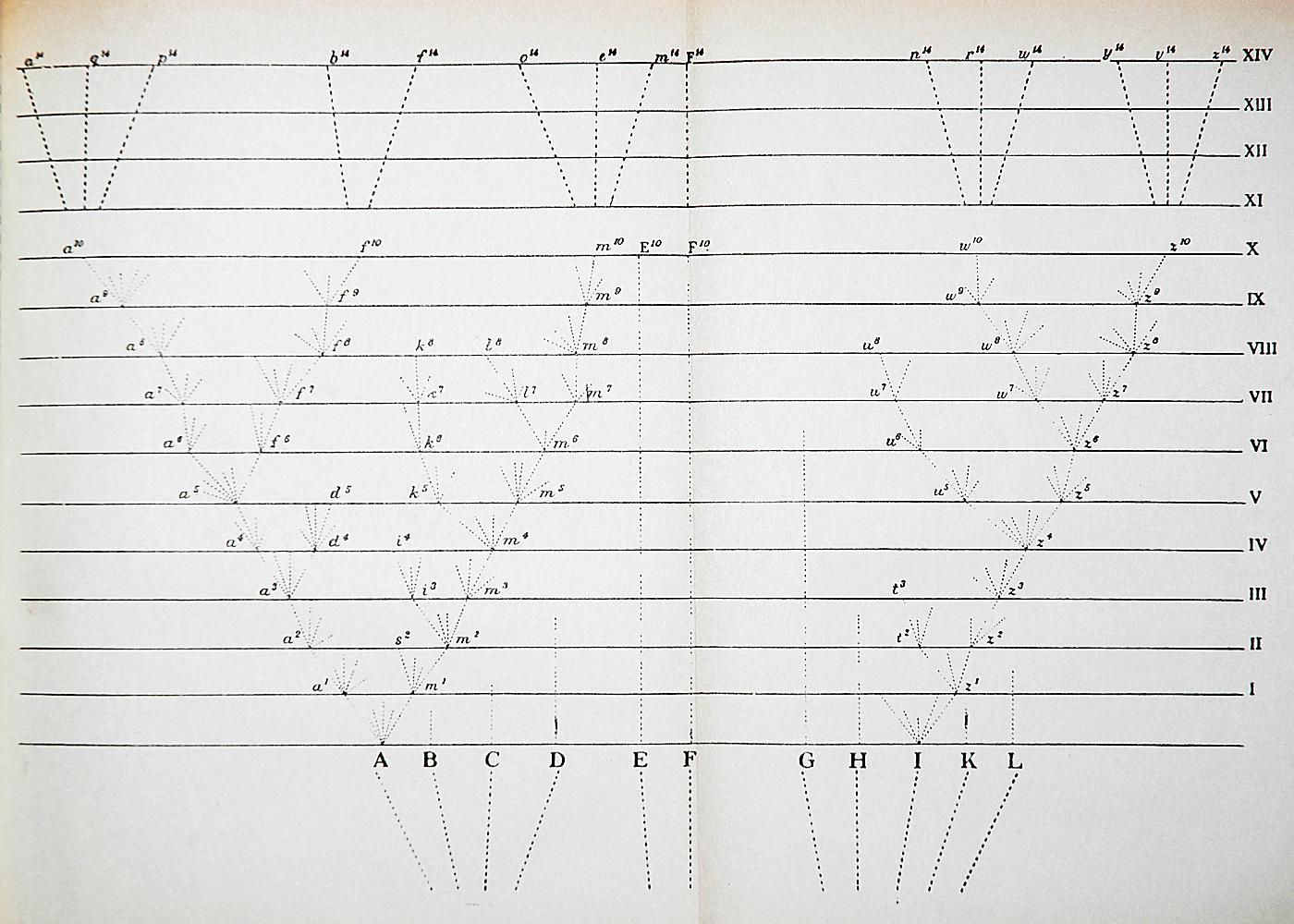
Scientists, like everyone else, have no frame of reference and so the lapse of deep time is all but ignored in evolutionary trees, like this one that Darwin drew.

Mr. Croll, a Strip of Paper, a
nd Deep Time
A colleague of Darwin’s, a "Mr. Croll" mentioned in Origin of Species, offered a c
rafty illustration of deep time.

Take a narrow strip of paper, 83 feet 4 inches in length, and stretch it along the wall of a large hall; then mark off at one end the tenth of an inch. This tenth of an inch will represent one hundred years and the entire strip a million years. But let it be borne in mind in relation to the subject of this work, what a hundred years implies, represented as it is by a measure utterly insignificant in a hall of the above dimensions. (Darwin 1872: 269)
Demonstrations like this offer a glimpse into the expanse of deep time and conjure up a feeling of awe. Everyone should try Mr. Croll’s exercise.

Wait. What? You don’t have 83 feet of paper? You’d like to experience more than one million years of deep time?

Well, here’s a solution for you. It’s an animated movie of Mr. Croll’s strip of paper and the inspiration to make it came from marking off the hominin fossil record on a long strip of register receipt paper in Alan Walker's paleoanthropology lab several years ago.

Making the Movie about Deep Time
Because a movie about the entire fossil record of life on Earth might take a lifetime to make and a lifetime to watch, we focused in on the last six and a half million years of human evolution.
We built a database of the majority of significant fossil hominin specimens beginning with the late Miocene Sahelanthropus cranium and going up until about 40,000 years ago.

(This was back in 2005 so we could only include fossils that were published at that t
ime. We could also only use the known dates/ages from that time. We also had to stop adding fossils near the end (the present day) because that part of the record gets enormous and the fossils overwhelmed the movie... you'll see if you watch it all the way through.)

Then, with help from our programmer friends, we created a movie using the software
Shockwave® that turned the record of hominin fossil specimens and their ages into an animated timeline.
The movie pauses with each fossil to allow the viewer to see it. Skeleton icons represent complete and nearly complete skeletal remains. Skull icons represent complete and nearly complete skulls and crania. Partial skull icons represent skull fragments. Full tooth row icons represent nearly complete maxillae and mandibles. Partial tooth row icons stand for jaw fragments. A single molar icon stands for an isolated tooth.

Watching the Movie about Deep Time
To watch the movie, you need to go to this link, find my article
and click on "PA20110013_S03.zip." Download it, unzip it or "extract" the files (crucial), and then click on the "timeline" which should run in Mozilla Firefox or another browser. Detailed instructions on how to do this are here.

Viewers of the movie may begin by following these st
eps:
  1. When you open the movie, it starts rolling immediately. The movie can be stopped at any time by clicking on the red button, which, when clicked again, causes the movie to resume playing. The default rate is 20 years per second and at this rate time ticks by at one generation (20 years) per second.
  2. When you watch the movie at the default rate for at least 2 minutes, you will experience onlyabout 2400 years and will see very few icons. At this rate, watching the entire 6.5 million yearsof the timeline would take about 93 hours!
  3. For a different perspective, you can click on the drop down menu and set the pace to 50,000 years per second (same as 2,500 generations per second). At this pace you can witness the entire timeline of hominin evolution in a more practical length of time... with the film taking only several minutes to watch from beginning to end.
A Guide to the Movie about Deep Time
The clock starts at 6.5 Ma with the cranium from
Chad (Sahelanthropus tchadensis). Time ticks by on the screen at the chosen rate until 6 Ma when symbols representing the next known specimens (belonging to the species called Orrorin tugenensis) flash into view. Then specimens belonging to Ardipithecus pop on the screen, and so on until the proliferation of anatomically modern humans in the Late Pleistocene. This movie offers a different perspective on the hominin fossil record from that of conventional evolutionary tree drawings, where the time span of a species is sometimes estimated based on a single specimen or very few specimens. See this diagram below for just one of the myriad examples (Dunsworth, 2007).


Gaps in the Fossil Record and Deep Time
There are literally tons of fossils in museums around the world, yet it
is clear from watching the movie that there are more gaps than there are fossils. How can that be? Part of the answer has to do with the fact that not all creatures fossilize; and, of those that do fossilize, not all preserve to the present; and, of those that do preserve to the present, only a rare few are actually discovered by paleontologists. This enormous Earth is teeming with life. And it has been teeming with life for longer than we can comprehend from our limited perspective.

So not only is the fossil record spotty because of the rare conditions that are required for fossils to form, and the special conditions that enable paleontologists to find them, but the fossil record also has gaps simply because it is so long. The record covers so much deep time that it is taking generations upon generations of scientists to fill in those gaps.

Like your body, like the Milky Way, and like the universe, the fossil record is more empty space than matter.


However, that does not diminish the wealth of information that we can glean from the thousands of hominin fossils and artifacts that have been discovered so far.

In general, hominin fossils are more similar to others that share space and/or time than they are to those found further away in space and/or time. There are a few instances where different types or species of hominins were living practically side-by-side (e.g. robust australopiths and early Homo) and when that is discovered, the hominins are placed on separate evolutionary lineages, marked by separate species or generic designations. Noting similarities and making distinctions are all part of the process that paleontologists use to reconstruct evolutionary history.

In spite of the gaps in the hominin fossil record that are made obvious by the movie, scientists know a great deal about human evolution.

Overall Trends in Hominin Aanatomy and Behavior
The traits and behaviors that distinguish hominins at the genus level are evident in their teeth, their skulls, their bones and the artifacts that they leave behind such as stone tools and butchered bones.

Ardipithecus, Orrorin, and Sahelanthropus: As the fossil record stands now, the bipedal abilities and adaptations of the earliest hominins are disputed (as is their inclusion as hominins!). Some of the teeth of these small-bodied apes have thick enamel and their canines are relatively small—both trends that link them to later hominins.

Australopithecus: The main trend in the time of the australopiths is that of bipedal adaptation. It’s during this era that two separate lineages diverged: The robust australopiths (or Paranthropus) and the genus Homo to which humans belong.

Robust australopiths (a.k.a. Paranthropus): With their large molars and large jaws, these hominins adapted to hard, tough diets and then went extinct.

Homo: With their nearly modern (and, later, totally modern) skeleton, these hominins made and used stone tools as they added meat to their diet. It’s during this time that the brain makes a significant expansion. Species in the genus Homo are the only hominins to be discovered outside of Africa.

Lamarck and Deep Time

Prior to Darwin, Jean Baptiste Lamarck grappled with deep time and described how miniscule the present perspective is in comparison to the vast stretches of time that came before.

There is one strong reason that prevents us from recognizing the successive changes by which known animals have been diversified and been brought to the condition in which we observe them; it is this, that we can never witness these changes. Since we see only the finished work and never see it in course of execution, we are naturally prone to believe that things have always been as we see them rather than that they have gradually developed. Throughout the changes which nature is incessantly producing in every part without exception, she still remains always the same in her totality and her laws; such changes as do not need a period much longer than the duration of human life are easily recognized by an observer, but he could not perceive any of those whose occurrence consumes a long period of time. (Lamarck, 1809)
Thanks to controlled breeding experiments on organisms like bacteria and basset hounds we can witness evolutionary changes. What’s more, that you are not a clone of your parents, that your generation is different from the previous one, is evolution. However, the dramatic changes that occurred over thousands and millions of years before the present, and that will carry on for thousands and millions of years into the future, are beyond our imagination.

Deep Time is beyond Human Imagination
It is impossible to comprehend deep time. Even if we had a time machine and could visit an australopith 3 million years ago, we would only gain a snapshot of the past.

To gain a better perspective on deep time than we have now—that is, to really se
e evolution taking place—we would have to increase our life spans substantially, which would require a substantial increase in body size as well.

Being as large as Earth would certainly give us a better feel for the lapse of deep, geologic time. Being as big as the Milky Way would be even better. And so on.


This is why so many evolutionary biologists study microbes. To a microbe you are slow and absolutely enormous.


It’s from this present and human point of view that we must continue to work towards the scientific truth about the evolution of all life on Earth, from microbes to mammals. Our inability to truly comprehend deep time does not prevent us from understanding evolution. As long as we accept our limitations we can forge ahead.

Acknowledgments

Alan Walker was the inspiration behind this project which was carried out at Penn State University. Jessica Berry, Stephanie Kozakowski, Gail E. Krovitz, Maria Ochoa, Joseph D. Orkin, and Kelli L. Welker helped compile the fossil hominin database. Brian Shook and Patrick Besong creatively programmed our ideas into the computer. Kevin Stacey, Ken Weiss, and Michael Rogers provided helpful insights, comments, and discussion.


References
Darwin, C. 1872. Origin of Species, 6th edition. John Murray, London.
Dunsworth, HM. 2007. Human Origins 101. Greenwood Press, CT.
Dunsworth, HM. 2011. Deep time in perspective: An animated fossil hominin timeline. PaleoAnthropology 2011: 13-17.

Lamarck, JB. 1809. Additions to Part I, Zoological Philosophy. From 1914 translation.


P.S. Time's Deep, Man...

Sunday, June 6, 2010

Splice: Hybrid vigor to the extreme!


I learned some amazing things from the movie Splice that I thought readers of the MT would want to know. Here goes.

1. Scientists have god-like skills, but no common sense.

Movie Lesson: In order to make a Hollywood movie about genetics here is what you need to do: Have your hip, young, attractive, brilliant scientists-slash-lovers know how to do everything and anything that has to do with biology or chemistry in a lab—quantum to organism—including (and this is the whole point of the film) how to create a living breathing VertebrateStew-Human hybrid.

Except,
make it so those brilliant young scientists can't tell whether their monster is dead.

Life Lesson: The universe hates moral and ethical lapses just as much as when you forget the fundamentals.


2. Humans have powerful DNA and it's completely unique.

Movie Lesson: When you’re just splicing together the genomes of a bunch of nonhuman vertebrate species, the result is a blobby appendage-less mass of writhing veiny flesh. Basically what you get is a 30-pound eyeless blobfish impersonating a caterpillar. [The pros can do this better than me: Time.com’s Mary Pols described the blobs as, “what might happen if an elephant foot and a freestanding penis could reproduce.”]

However, when our lab-coated Adam and Eve team adds human DNA to this genomic cocktail, guess what happens? Forbidden Fruit Cocktail: arms, fingers, legs, toes, ears, roughly 1300 ml between those ears, rudimentary language skills, come-hither peepers, perky breasts, forehead cleavage, a pointed tongue, a stinging tail, etc, etc…

Life Lesson: Humans and their powerful DNA are “completely unique.” (To borrow a cringe-worthy phrase, albeit out of context, that was uttered in the movie.)


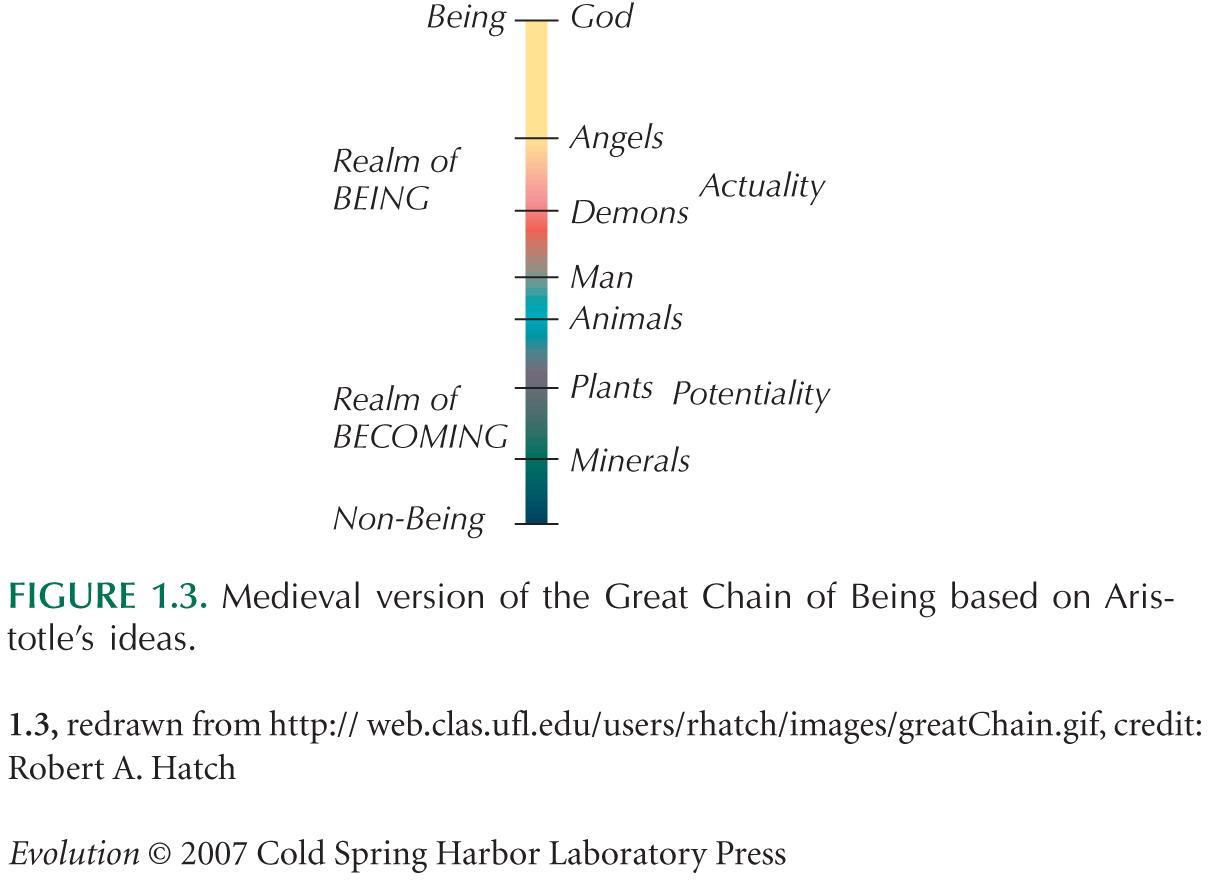
3. Ontogeny recapitulates the Great Chain of Being.

Movie Lesson: Exploit common misunderstandings about evolution in order to appeal to the general audience which is assumed to hold those misunderstandings . For example, in two separate scenes, talk about your monster “evolving” rapidly through its development from a ginormous air-breathing tadpole to a fierce, and *fierce*, angel.

Life Lesson: Real evolution isn’t exciting enough for the masses, but antiquated and misguided assumptions about evolution are absolutely captivating! Also, 21st century Americans aren’t satisfied unless there is a healthy undercurrent of Old Testament balanced out by a healthy overture of S-E-X.


If you enjoy attending the kind of movie where the outro earns peals of absurd laughter, ironic applause, and outbursts like, “What the *expletive* was that?” then I recommend you see Splice.