Showing posts with label hominid. Show all posts

Tuesday, September 20, 2011

New ancestors never get old


The media frenzy last week over the new Australopithecus sediba papers coincided with all of my new faculty events on campus.  Whenever I was asked to introduce myself and to describe what I teach and study, every response I heard had to do with the recent reports of fossil hominin discoveries from Malapa, South Africa.

"I just read about some fossils on msNBC. So that's what you're into?" … "How about those new finds! Wow!"

And although anything as equally well-preserved as the sediba stuff, but from 18 million years earlier (like, say, new fossil primates from Rusinga Island) would be greeted with relatively weak popping of eyeballs and with barely perceptible gaping of jaws, I'm pleased to be so quickly matched to my field of study. I'm delighted that paleoanthropology's so prominent in the media. Who doesn't want their passion to be bathed in limelight? (Besides independent music fans.)
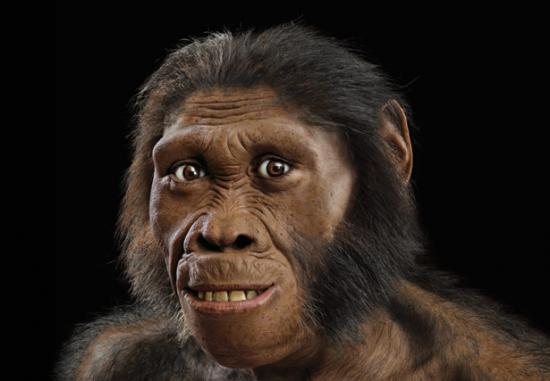


But why does paleoanthropology seem to garner and even hog so much attention? This is a sometimes perplexing pattern in the science news and here's a little back and forth between Ken and I inspired by this question.  


Ken: What, if anything, is this [the new A. sediba finds and analyses] really saying that we didn't already basically know?

Holly: We don’t know much about the time frame between 2.5 – 1.5 million years ago and this is when a lot of changes take place that trend toward human-ness and away from ape-ness. The Malapa fossils (A. sediba) preserve both cranial and postcranial bits of single individuals, so proportions of brain size, body size, limbs, teeth, etc can be studied which, again, is a rare opportunity for the hominin fossil record for this time period which is comprised mainly of cranial and dental remains that even with a well-preserved braincase for estimating brain size, don’t come with associated postcranial or skeletal bits for putting that brain size in context. The Malapa homs had small early hominin (read: ape) sized brains at a time in hominin history when we hypothesize and even expect hominins to have relatively larger brains. Many would also expect them to have larger brains given the modern aspects of their hands and pelvis. Furthermore, the skeleton—from the hand to the pelvis to the foot—shows a new mosaic of human-like, biped-like, homo-like, australopith-like, and apelike traits. Lucy (A. afarensis) is famous for showing a mosaic of these things but the Malapa finds show a different mix. These finds are a window into the process of evolution, to the order of when traits like we have appeared in the past. And even if it’s a tiny little momentary portal, it’s still a peek!

Ken: Why is it that a single new find can 'revolutionize' our understanding of 'what makes us human' and all that BS? If we are so vulnerable to a single new find, then why do we insist on making such bold claims about what we currently have?

Holly: I think that some of it has to do with the colorful personalities of the people who are drawn to paleoanthropology—the scientists, writers, reporters, critics, fans etc. If you care so much about your fossil relatives, that’s pretty narcissistic isn’t it? I’m not sure new finds revolutionize anybody’s understanding of “what makes them human”  unless they’re new to paleoanthropology. First-timers to the fossil evidence are probably blown away and their world-views are changed, but long-time fans would probably describe their new perspective as hypothesis creation or story change. And yes, new finds do re-write the story of human evolution if your story includes details beyond “We share a common ancestor with chimpanzees about 6 million years ago and since then bipedalism and big brains evolved.” But even that story could be re-written if we find fossil evidence that bipedalism preceded the LCA (last common ancestor) with chimpanzees.

Why do we “make such bold claims about what we currently have?” I don’t think paleoanthropology holds the monopoly on this behavior. As we discuss on the MT quite a bit, this is part of the game of science and academia, of getting tenure and promotion, of getting grant money.

I also think that paleoanthropologists are simply excited about their finds and can’t help but share that with the rest of us. If that excitement draws science-deniers closer to the light, then that’s a huge bonus.

I think there are only so many ways to make sausage. I'm pretty sure that's not the right idiom, but I'm trying to say that there are only so many ways to garner interest for news reports on new fossil hominins... so they all start to sound the same. Unless you read further and learn the ins and outs of paleoanthropology, then each new fossil is interesting in that informed context, from that informed perspective. If you do a search, all the phrases are the same for fossil news but if you search for reports on raging fires you find just as much repetition/unoriginality. There are only so many words and phrases at our disposal.

Ken: Beyond the circus atmosphere of each successive 'revolutionary' claim, what do we basically know about our origins that seems solid?

Holly: Humans share a common ancestor with chimpanzees between 8-4 million years ago (mya). It lived in Africa. It may or may not have been bipedal but the evidence right now indicates it was not. Since that split, for four million years (until about 2 mya), hominin evolution took place exclusively in Africa (the record is largest from East and South Africa), during which time body size remained fairly small (with rare exceptions) and human-style bipedal traits accumulate in the skeleton. Teeth are rather large during that time, but they trend smaller as time passes, especially the canine. About 3.5 mya a separate lineage splits from the australopiths and the lineage that ends in us. It’s the robust australopiths who had large teeth and jaws used for a harder and/or tougher diet than contemporaneous hominins. The robusts lived only in Africa and disappear around 1 mya. The first cut marked bone and stone tools show up around 2.5 mya in Ethiopia signalling a change in hominin behavior/ecology/diet. As we discussed here, some much earlier cut-marked bones were found at another Ethiopian site 0.8 mya earlier. These isolated “firsts” are followed by a much more regular and ever-denser record of tool production and meat-processing after 2 mya. Just after 2 mya we find the first hominin fossils outside of Africa—in Georgia and Indonesia. The brain gets slightly larger, but not by much, at this time and the skeleton, by about 1.5 mya is close to ours except for the brain size (which is still about half-three-quarters of our size), tooth size (still a bit large), and the shoulder anatomy which doesn’t seem to have the full range of motion of ours (which would mean throwing wasn’t “modern”). Since the first stone tools appear, there is a fairly steady increase in technological complexity to the present, although the Acheulean “handaxe” industry certainly sustains for quite a while (perhaps a million years) suggesting that big bulky stone bifaces were a lot more useful than they appear. Alongside the technological development is ever-increasing body size, with variation present, but the maximum size increases over time. There is also ever-increasing brain size to the present. And this is all happening as we find hominins inhabiting distant and diverse landscapes.*

Ken: Or is this [ A. sediba] basically just another specimen, even if it's interesting?

Holly: Nope. It’s not just another specimen. We don’t have many skeletons let alone skeletons with cranial remains and teeth associated with them. Let alone more than one skeleton associated, giving us some idea of variation within a species, or at least a family. These fossils are truly extraordinary and deserve all the fanfare.

Do all new hominin fossils deserve so much fanfare? I'm sure answers vary widely person-to-person. Some of us hyperventilate over half a molar, others could never hear of a fossil their whole life and die incredibly happy. I don't go ga-ga when stock prices go up, I don't swoon when I read headlines that Brad dumped Angelina, I don't drop everything when Marc Jacobs makes new pants, but all reports of those stories certainly come off as obnoxious as those about new hominin fossils. It's just show biz. And I'm fine with show biz if it gets people interested in evolution which can snowball into them learning about evolution. I love that new fossils even make the news when there are stocks, and celebs, and fashion shows hogging so much of the attention.


*I left out so many established/cool details because this post is already too long.

Monday, October 12, 2009

A Prehistory of Throwing Things

A long post in honor of Major League Baseball’s upcoming World Series…

Music, language, and calculus have always kept us atop the animal kingdom, but what about baseball?

Before there could be baseball, people had to get good at throwing things. The evolution of throwing ability has been the subject of much more academic speculation than many Yankees fans may realize.

Back when people were still playing “rounders,” Chuck Darwin proposed that throwing may have developed for hunting, self-defense or both, by permitting action at a distance. Walking upright frees the hands to do all sorts of sinister things, leading others to speculate that we throw as a means to punish, as a way to perpetuate peace. And, others have credited the evolution of throwing with brain enlargement, language, and human intelligence. (Yes, intelligence.)

There is real genius in baseball.

Dude throws like a chimp
Besides being the only creatures to calculate batting averages and grow playoff beards, humans are the only animals that can throw accurately and fast with one hand overhead in such a complex motion. Some non-human primates have been known to throw on occasion in the wild. Those who have bravely traipsed through the rain forests of Costa Rica learn this all too well if they’ve been used for target practice by feces-flinging spider monkeys.

Probably victimized occasionally herself, Jane Goodall observed throwing behavior in the chimpanzees at Gombe. She found that chimps threw many objects, including rocks and sticks with both underarm and overarm, and one and two-handed styles. They could throw towards their targets, but they rarely hit them.

No chimp or any other great ape has been observed to throw with the calculated skill or accuracy of a human. If you’ve seen footage of chimps throwing you recognize right away that they look like toddlers when they do it, but toddlers that could bench 400 pounds. This has to do with their different musculoskeletal anatomy and motor control, and both are reasons why throwing is not implemented in any of their hunting forays. Instead, for chimps, throwing things is just a way to threaten other chimpanzees, baboons, bushpigs, or humans, with no real effort to maim or kill their target.

So if chimps are our guide for our earliest ancestors, then baseball didn’t emerge from a hunting history so much as it descended from a display tactic. Under this hypothesis, throwing was originally used to parade strength and skill to enemies or symbolized health and vigor and even intelligence to potential mates (without need for dagger-like canines). This same hypothesis has been put forward for why we walk upright as well and these traits can be linked together considering how it helps to be a balanced biped in order to throw well.

The littlest league
If our closest living relatives, chimpanzees, cannot throw overarm-style efficiently or accurately, then why and how did humans develop the ability to throw? What was the evolutionary pressure for throwing behavior in its earliest stages? I already mentioned the display and threat hypothesis, but accuracy had to develop at some point and greater throwing ability was probably linked to increasing the amount of meat in the diet.

The earliest hominins probably took breaks from their mostly vegetarian diets to hunt prey, as chimps do now. They likely chose species that can be seized with their bare hands or with the aid of handheld tools, like termite fishing sticks and spears for killing tree-dwelling bushbabies. Once regular meat-eating became important, hominins were scavengers before they were great hunters and this is probably when throwing ability started to surpass that of the chimpanzee.

Throwing stones or clods of earth, as a means of defense or aggression against larger carnivores, could have compensated for early hominin vulnerability – not just when preyed upon but also when directly competing with predators and other scavengers.

Imagine yourself, but about 2.5 million years ago, with a brain that has just started getting bigger than a chimpanzee’s, fighting lions or hyenas for access to a gazelle carcass, standing barely four feet tall, with no claws, no formidable canine teeth, no tools more sophisticated than bashed rocks, and possibly no thick coat of fur for protection. On top of all that, this may have been right around the time when the human lineage started to become physically weaker than chimpanzees are now, since there may be a neurological tradeoff between brains and brawn. Throwing things would have been an ingenious way to scare fangorious competitors away from dinner.

It also may have been a novel way to rebuke or punish cheaters without risking as much as in hand-to-hand combat. Like shepherds who throw rocks to steer wandering sheep, throwing could have initially been a way to keep your family, friends and neighbors on the straight-and-narrow. When Fenway revelers hurl hotdogs at rival fans, they are making their point at a much lower risk to their own personal safety than if they threw knuckle sandwiches instead.

This is the basis behind Paul Bingham’s idea of coalitional enforcement, where throwing in groups against cheaters of the system (as in stoning them) provided the mechanism for us to succeed at living rather peacefully within large cooperative groups.

Like in the scavenging scenario, throwing with a group to punish cheaters or criminals would not require much accuracy for our early hominin ancestors. They needed to merely lob with decent accuracy at best, and the need for much accuracy would be diminished if groups were cooperating in the throwing activity. But with hunting, accuracy is far more important. As time progressed, hominin hunting abilities grew increasingly more effective and were probably very well established as early as 1.8 million years ago when the much taller Homo erectus showed up on the evolutionary scene. This is when throwing with speed and accuracy would have been even more crucial to survival because hunting was now a way of life.

Pitcher’s got a big gluteus maximus
There were plenty of anatomical adaptations that occurred in our evolutionary history that made fast, accurate throwing possible. Since we evolved bipedalism our hands have gotten much better at manipulating objects. We have short, straight fingers and we are capable of various precise and strong grips.

Surely our hand anatomy has been crucial for throwing ability but there are few hands in the hominin fossil record and it is thus far impossible to separate out bony evidence for throwing abilities from stone-tool making abilities. Clearly, making and using stone tools was important and, clearly, throwing was a “go” once we could make stone tools. Generally this is agreed upon, by both anatomical and stone tool evidence appearing, by about 2.5 million years ago.

Another equally important trait for throwing, which also changed after we began walking upright, is the bulbous human buttocks. The human-like condition of the gluteus maximus muscle differs from chimpanzees in its size and mechanical functions. In throwing, the activation of the gluteus maximus can increase the velocity on a projectile and stabilize the trunk over the legs for effectively completing the motion. Although muscles don’t fossilize, their locations of attachment, their biomechanical properties, and their sizes can be estimated from fossil bones and it is clear that by 2 million years ago, human bodies, especially human tookuses, were built for walking and running upright, for swinging tools, and for throwing.

Bringing the heat to the Ice Ages
Once you’ve got a hand that can grip the ball, and once you’ve got enough junk-in-the-trunk to make cheese, are you all set to pitch against a roided-up bat-corker? Not yet.

Ultimately it’s the modifications in arm length and shoulder anatomy (and brains, below) that greatly affected throwing and those changes lagged quite a bit behind the hands and glutes.

Anatomically, things get complicated at about 2.5 million years ago. Although the body seems to have all the right stuff for walking upright, there’s a little stint between 2.5 and 1.8 million years ago when small-brained hominins had achieved modern bodies but kept their longish, apish arms, particularly in the forearm.

Sometimes this evolutionary baggage - which is even seen in Lucy over 3 million years ago - is used to argue that hominins were still partly arboreal even after adopting bipedalism. The long arms would have affected throwing ability since long arms can throw a projectile further than short ones. A long forearm is capable of putting more velocity on a projectile, similar to the way atlatls or spear-throwers do so by artificially lengthening the arm.

Even with this potential, early hominins must have lacked accuracy due to their small brains (i.e. less complex neural circuitry and more primitive motor control). However, they may have been able to compensate. A long forearm has a larger range of angular velocities than a shorter forearm; that is, it is moving faster at more limb positions, or angles, than a shorter forearm. Therefore a longer forearm has a “bigger window of opportunity” to release a projectile and hit the target in arcing, lobbed throws.

With little brain power, but with a long arm on a bipedal body, these little hominins would have been better hurlers than chimpanzees. But Major League scouts need not set their flux capacitors for the early Pleistocene. Homo sapiens are much better baseball prospects because we can throw much further and more accurately than our ancestors with the aid of our shorter forearms and our bigger brains. Accuracy is increased with a shorter forearm which, with the right motor control, can tolerate relatively small errors in timing better than longer ones in flinging fastballs dead-on target.

Beginning around 1.8 million years ago, with Homo erectus, hominins spread out beyond Africa and they began to look and behave like actual predators compared to any of their predecessors. When throwing was assimilated into hunting strategies, speed and accuracy became essential because a moving animal can react to the arrival of the projectile. Hunting requires the use of a flattened trajectory throw that is more direct than an arced throw and requires more accuracy.

The brain does enlarge with Homo erectus, but it is still only half to three-quarters the size of ours, so motor control would not have been stellar. Plus, although the arm proportions look modern at this point, the clavicle may still be too short for full human throwing ability. Homo erectus did not have quite as broad shoulders, with the shoulder blades far on the back, as us and these features are necessary to throw like us. When the shoulders are placed far on the back, and when the shoulders are broad enough, they allow a greater range of motion for the full throwing motion. So the first hunters were not anatomically equipped to throw like humans yet.

Modern shoulder anatomy doesn’t emerge until much later, at about 500,000 years ago with what are termed “archaic” humans. Coincidentally, at the point in time when shoulders are finally geared for throwing is the same time when brains reach modern size. Not surprisingly this is when hominins must have been excellent hunters, made obvious by the sophisticated weapons, culinary ware, and dinner leftovers they left behind.

There’s no thinking in baseball
Thinking through a throw is the surefire way to ruin it. It doesn’t take big league pitching experience to understand this point. Anyone who has tossed a wad of paper into the office bin or who has seen Bull Durham understands. This does not mean, however, that the brain is not crucial for throwing.

The cascade of actions that comprise a throw, from start to finish, cannot be changed once they begin. Because the motion is too fast for feedback to reach the brain during the event, the brain plans out the throwing motion before it is executed and then fine-tuned timings as well as momentum carry the action through until the very last moment of finger release. Despite our inability to improve a throw by thinking it through, throwing is a fantastically cerebral activity.

William Calvin proposed that hominins with bigger-than-average brains might have been able to apply more timing neurons to throwing tasks - with the success (hunting or otherwise) of the faster, more accurate throws then selecting for encephalization trends. In other words, he suggests that our big brains should thank our penchant for throwing things for making them that way.

So easy a caveman could do it?
Neanderthals, the quintessential cavemen and women, had anatomy like ours and even had brains just as big as, and sometimes bigger than, ours, but were our evolutionary cousins throwing like us? Debate continues as to whether or not these guys who sometimes lived in very close proximity to humans were actually our occasional bedmates or our enemies. People siding with the former probably root for both the Mets and the Yankees.

There are two main lines of evidence that suggest Neanderthals weren’t big on throwing as a hunting strategy. First of all, many of their fossils have healed bone fractures and the overall pattern of trauma resembles that seen in professional rodeo athletes. Animals weren’t domesticated at this point yet so the best explanation, far better than clumsiness, is that Neanderthals were coming into very close contact with large dangerous prey, like reindeer and mammoth. The thickness and strength of their arm bones also fits better with habitual thrusting of spears rather than throwing.

For now, throwing things, as well as we can today, should be considered a very recent phenomenon, something beginning around 500,000 years ago with archaic humans, after nearly five million years of evolutionary time since the split from the common ancestor we share with chimpanzees.

Most things that make humans strange or fantastic are rooted in either our bipedal, upright-walking anatomy or in the power of our humongous brains. Getting good at throwing took the evolution of both of those traits. But after our bodies mastered bipedalism there was up to one million years of lag time before the brain got to modern size and before the shoulders were tweaked for exquisite throwing. Until this point, hominin throwers may have looked no better than chimpanzees or than Andy Pettitte using his right hand, assuming he’s pretty bad at that.

Throwing ability requires some of the highest levels of brain functioning - There is real genius in baseball.

Players and fans owe a big debt of gratitude to the apeman and the caveman in all of us.

Short Bibliography
Bingham, Paul M. 1999. Human Uniqueness: A General Theory. The Quarterly Review of Biology 74(2):133-169.

Calvin, William H. 1983b. The Throwing Madonna: Essays on the Brain. New York: Bantam.

Darwin, Charles. 1871. Descent of Man. London: John Murray.

Dunsworth, Holly, John Challis, and Alan Walker. 2003. Throwing and bipedalism: A new look at an old idea. In Franzen JL, Dohler M, Moya-Sola S (editors). Upright Walking. Senckenberg Institute, Frankfurt, pp. 105-110.

Goodall, Jane. 1986. The Chimpanzees of Gombe: Patterns of Behavior. Cambridge: Harvard University Press.

Larson, Susan G. et al. 2007.
Homo floresiensis and the evolution of the hominin shoulder. Journal of Human Evolution 53(6): 718-731.

Walker, Alan. 2009. The strength of great apes and the speed of humans. Current Anthropology 50(2): 229-234.


Note: If you liked this, you'll love "Hurling words and turds, an evolutionary link" and you might like "Can you throw with half a brain?" too.

Update: This post has been cited in "How high can a human throw something?" http://what-if.xkcd.com/44/

Monday, October 5, 2009

The Many Tales of “Ardi”

The Inspirational Tale

Common metaphors in paleoanthropology are those of winning the lottery and being struck by lightning. But although fossils are rarely preserved or exposed at just the right place to be spotted, the assumption that fossil discoverers are supremely lucky is an unfair one.


Eugene Dubois decided he’d find a missing link on Java, moved his family there, and found the first Homo erectus fossils. Louis and Mary Leakey dedicated their lives to traversing East Africa for fossils and they found beautiful ones. It took most paleoanthropologists years and even decades of hunting, sometimes walking over the same doggone dust every season, just to spot a tiny speck of something spectacular.


This is the kind of tenacity it took for Tim White and his team to amass a fossil record of as many as 36 Ardipithecus individuals and to collect over 150,000 plant and animal specimens from the Middle Awash study area in the Afar region of Ethiopia. Not only that but “Ardi’s” fragile skeleton had to be prepared sliver by tedious sliver in the laboratory before the analysis could be accomplished. Last week’s special issue of Science came 15 years after the first announcement of the project because of the massive amount of collection and analysis that followed.


It's no surprise that paleoanthropologists were glued to their computer monitors last Thursday and Friday. Many of us are still carrying around our stack of 11 papers, picking our way through them every spare moment we get.


The Paradigm Shifting Tale

This is not just a new skeleton. Depending on your take, this is a renovation or an entire upheaval of the way we interpret the last 23 million years of ape evolution. Here is a list of just some of these new perspectives that Team Ardipithecus has presented to us:


1. Ardipithecus is a hominid yet it is much more primitive than chimpanzees and gorillas which are both highly derived. (This one is exciting because it links Proconsul (the 18 million-year-old ape that I work on) to hominids.)


2. Anatomical and behavioral similarities between ape species that have to do with suspension and locomotion-in-general are independently evolved. That is, they’re convergences or homoplasies. Even these traits in the fossil apes Dryopithecus and Ouranopithecus do not link them phylogenetically to living apes because they too evolved independently as homoplasies. Conclusion: Ardipithecus shows that phenotypic and maybe genotypic homoplasy is rampant in the hominoid (ape) fossil record.


3. Chimpanzees and humans share a deeper last common ancestor than the one estimated to have lived 6 million years ago (mya). Although the 6 mya hypothesis is currently “in vogue,” the last common ancestor actually lived more like 7-10 mya.


4. Even though the split between the chimp and human lineages occurred 7-10 million years ago, Ardipithecus from between 4-5 mya is our best model for the last common ancestor, better than any other fossil apes from Africa from between 6-11 mya such as Orrorin, Sahelanthropus, Chororapithecus, and Samburupithecus.


If paleoanthropologists were stifled, rather than stimulated, every time something new overturned old ideas, they would quit the field, or flunk out.


However, the suite of game-changers proposed by Team Ardipithecus are bound to raise not just eyebrows but hackles as well.


For example, they explain the ape evolutionary tree with multiple homoplasies (rather than with parsimony or the simplest explanation: that the traits evolved once in a common ancestor), but then they use parsimony analysis (which excludes homoplasies whenever possible) to claim that Ardipithecus is a hominid. Furthermore, the claims about ape homoplasies are grounded in the assumption that Ardipithecus is a hominid in the first place. Could they have done it any other way? I don't know the answer yet. But as it stands, it makes an already large pill even harder to swallow. The whole field is now charged to test these new hypotheses and we certainly have our work cut out for us.


The Snarky Tale

Tim White’s papers are always thrilling to read. Usually the science is tight and methodical, which is highly satisfying, but you can also count on enjoying a bit of snark, and when I write “enjoy” I guess I’m being snarky.


Here’s an example: As the authors explain how un-chimp-like Ardi is, and how derived chimps and gorillas are compared to hominids, they write,


“Some hold that our last common ancestors with African apes were anatomically and behaviorally chimpanzee-like, that extant chimpanzees can be used as “time machines” and/or that unique features of Gorilla are merely allometric modifications to accommodate its great body mass.”(White et al., Science 326(64): 75)


These hypotheses of "Some" paraphrased and quoted by Team Ardipithecus may not sound so strange to any of you. They don't to me. But we're being admonished. Sure, the authors can forgive Darwin for thinking this way because he was forced to work without a fossil record. But the rest of us seem to have no excuse even though up until now we’ve all had to do paleoanthropology without Ardi.


A decent hypothesis for what our last common ancestor with chimps looked like is that it looked a lot like chimps. It’s pretty simple. And it’s only a hypothesis, not a personality trait. And it’s going to remain a decent hypothesis until scientists beyond these authors also support Ardipithecus as a hominid.


If they must lash out at colleagues, the authors should wait until after we've ignored their findings or rejected their arguments. Bashing us over the head the second we get a chance to read about Ardi is something Ardi might do.