Showing posts with label chimpanzee. Show all posts

Friday, March 30, 2012

Forget bipedalism. What about babyism?


First, a little time travel experiment...

Here's a newspaper headline and blurb from 709,987 CE: 

Hominin fossils dated to 2,012 CE show arboreality


Artists have made a realistic reconstruction (above) of an early human species based on the anatomy of the latest fossil discovery in paleo-Alabama by a team of paleontologists. These primitive hominins were still climbing trees!

source
In yet another reconstruction of this primitive species (above), an adult forages for honey by scrambling nimbly up a tall tree trunk. 


In other paleontology news, a team of scientists determined that a Morrocan variety of domestic goat, from roughly the same primitive era, could adeptly climb small bush-like trees.
**
*A-hem*

I promise that's not sarcasm or postmodernism! That's just me trying to jossle you loose of some traditional assumptions and spark you to wonder about how we know what we know about the functional relationships between anatomy and behavior.

I'm thinking about this because of the latest and greatest news in the world of paleoanthropology, published this week in Nature and here's a nice video to bring you up to speed:


If this Burtele foot fossil represents a hominin, it's different enough in anatomy (and the functional interpretation of that anatomy) to be considered something separate from other hominins on record.

It's this whole other animal.

As of now, all hominins at this time in the mid Pliocene (the foot is dated to 3.4 mya) belong to the genus Australopithecus and are only known from sites in East and South Africa. Perhaps the Burtele foot is another species that is not A. afarensis (which supports long-existing arguments that there are two lineages at this time) or maybe this is an ancestor to the Paranthropus radiation that occurs in the early Pleistocene. Or maybe it's not even a hominin, because the foot is very ape-like. Moreso than any australopiths on record.

Chimpanzee displaying it's non-human-like hallux (big toe). 
Can we tell what this animal is? Without teeth and cranial bones--our gold standard for identification and distinction--can we surmise what kind of creature this Burtele foot belonged to?

For starters, if it's to be deemed a "hominin," we should determine what exactly about this foot is human-like.

In terms of metrics, the Burtele foot shares traits with humans but these are also shared by gorillas and sometimes chimpanzees and sometimes old world monkeys too. The striking similarities between human and gorilla feet have been known since the earliest comparative anatomy studies and it was only a matter of time before a new primitive fossil brought the problem to heightened prominence.

For the qualitative traits, more similarities appear to be shared with the famous "Ardi" skeleton from about a million years earlier in time (belonging to Ardipithecus ramidus) than with extant humans.

According to the paper, there appears to be few derived, hominin-specific features in this foot. And that's even if you are on board with calling Ardi a hominin. Granted, we expect more primitive hominins to share few of those traits with us and traits evolve mosaically, even within the foot. And granted, not all hominins contributed directly to our evolution, so we might find species on the hominin branches of the TOL that share no derived features with humans. Still, the case isn't very strong for this Burtele foot being a hominin.

One of the reported hominin-like traits has to do with the shape and orientation of the proximal phalangeal joint where it articulates with the second metatarsal head. This appears to indicate that the foot was experiencing more toe-off during walking, more like human walking than like ape walking since it's not the condition found in ape feet. This functional interpretation seems to be based on that made of Ardi's foot. Unfortuantely I don't think anyone's looked at the biomechanics of this joint in apes (and ape feet) as they walk bipedally, yet. (But I could be wrong!)

Also, although the degrees of torsion in the second metatarsal is ape-like, the torsion in the first metatarsal is more humanlike. (Torsion describes the orientation of the proximal joint surface relative to the orientation of the head. The Burtele foot's MT2 and MT4 are reported to have less torsion than that seen in African apes (where this is associated with a grasping orientation), yet are still significantly twisted compared to human metatarsals.)  The torsion in the big toe (hallucial metatarsal) is reported to be unlike that of African apes, and presumably more like humans? It's not clear. But the actual measure of the degree is not included in Table 1, nor is it demonstrated in the Supplemental section as implied. So we have to take their word for it. And by the look of the Burtele first metatarsal in the photos, that's probably not a problem.*

So there are some leads away from extant African apes and weak ones toward Ardipithecus and possibly extant humans, but what the paper demonstrates better than the hominin status of the Burtele foot is just how difficult it is to pin down hominin-ness.  We don't always know it when we see it.

For most of us and I assume the authors of the paper, this is what makes paleoanthropology so fun! But it's also why we fight.

That's not because we don't know how anatomy and behavior are linked in extant humans, apes, monkeys, etc... we seem to have a pretty good handle on that. At least big picture. The problems arise when you zoom in. Are chimpanzees really arboreal? Yes. Are they really terrestrial? YES. Same for gorillas.

So reconstructing an evolutionary scenario in which our hominin ancestors went from a state of arboreality to a state of terrestriality is not that simple. The Burtele foot describers definitely understand this. It's just the popular media that doesn't have the time or the inclination to get this. Hence my intro above.

But that intro up there with the futuristic newspaper wasn't purely reaction-against-media-reaction. It's also me reflecting on issues closer to home for paleoanthropologists.

Do primitive "arboreal" traits in hominin skeletons really correlate with arboreal behaviors? Or are they ancestral relics? We don't do much climbing anymore but we have all kinds of anatomy that links us to our tree-hugging relatives, and presumably to our shared tree-hugging ancestors.

So at what point do we recognize primitive traits as being only that? Why must all traits we observe in extinct animals be so USEFUL?

The answer is.... because that is the only way to go about these functional studies. By definition functional anatomy indicates FUNCTION. So we go in with a bias toward identifying function, NOT with an aim to identify primitive relic anatomy that just happens to work for the animal. The latter is so much harder to perceive although one might argue it's what our null hypothesis should be. It's easier to assume that if an animal has the anatomy, then it's functional and therefore it's "for" doing whatever it is that it does with that anatomy.

Who cares about these subtly different approaches to comparative anatomy and evolutionary reconstruction?

Well if you're trying to determine when bipedalism became habitual and when hominins stopped relying on trees for foraging, fleeing, socializing, and nesting, then it matters whether functional anatomy is function or whether functional anatomy is just hanging on. (pun intended) Welcome to the nightmare that is paleoanthropology!

So where does the Burtele foot leave us?
1. Looks like we've got a separate ape-y thing that's not Lucy's species (A. afarensis) living around the same time and place as Lucy and her ilk.
2. Looks like whatever this animal is it doesn't have the few derived features found in some australopith feet. (those are even debated...)

But speciation, co-habitation, and bushy hominin phylogenies aren't even the coolest part of this story.

The two distinct foot morphs offer another kind of insight.

Lemme show you.

First of all, what is arboreality and how much arboreality is enough to require specific grasping adaptations in the big toe?

We know that cercopithecines (like macaques and baboons) vary pretty widely in their degrees of arboreality and terrestriality, but regardless, they're good in the trees and they're good in the trees despite their short and diminutive big toes! Arboreal behavior can be accomplished via many different evolutionary processes revealed to us via skeletal anatomy.

Here are two baboons showing off their small big toes.


Baboons are considered to have terrestrial adaptations in their feet that are similar to those in humans like with their shorter phalanges, but they're also the opposite of humans with their short, not long big toe.  Like with arboreality, terrestriality works via many different evolutionary processes that are revealed via the skeletal anatomy...and this goes beyond primates. (The crux of it all for human evolutionary reconstructions is determining how bipedal terrestriality differs from quadrupedal terrestriality.)

Gibbons (apes) are super aboreal, but their locomotion biases grasping hands, not feet. However, their suspensory behavior does use the grasping big toes.

Here are some gibbon feet displaying their big big toes.


Here's a film showing a gibbon using its grasping big toe: http://www.arkive.org/bornean-gibbon/hylobates-muelleri/video-08a.html

Conclusion: The arboreal use of the strong grasping big toe is not necessarily about climbing or even walking on tree limbs;** it's probably more about suspension.  Suspensory behavior is typified by the gibbons, orangutans (many at least), and the rest of the apes and so is the grasping big toe. That's the strongest functional explanation for the ape's thumblike big toe.

Now, larger apes are not suspending as much with their toes. And they can get up into the trees just fine without grasping with their big toe.****

DeSilva (2008)
So think about who's doing much of the suspension particularly in African apes: Juveniles.


Suspending from vines and tree branches is one thing, but also, climbing trees with immature musculature is certainly helped by a grasping big toe.
And then of course, grasping not just trees and vines, but grasping mother is important as well.


Is there any way we can investigate this ontogeny-based hypothesis for a grasping hallux?

Let's consider the foot as a whole first, and then get back to the big toe as a grasping tool.

We can see whether foot size varies during ontogeny in different primates.

I have looked at the size of macaque (monkey), gorilla and chimpanzee (Pan) feet through ontogeny (granted, a cross-sectional sample, not a longitudinal one).***

Because macaques grow up faster than the two apes which share developmental pace, here's how I lined up the age groups (1-5; 1 = infants and 5 = adults) so that I could fairly compare growth among them.


And here are the results where I compared relative foot size during ontogeny (over age groups 1-5). Femur length was my measure for overall body size.


The box and whisker plots show you how macaques are born with big feet relative to body size, relative to adult proportions. The ontogenetic changes in proportions that they experience, over the age groups I've constructed, are significant according to the ANOVA.

By contrast, and granted I had small samples of chimp and gorilla infants ... those apes are born with adult foot size proportions which are small relative to what macaque infants are working with. Larger, more adult feet at birth contribute to macaques' relative behavioral precociality compared to young gorillas and chimpanzees who are relatively altricial. With those big feet macaques can better navigate a big world.

Chimps (and especially humans) are relatively behaviorally altricial at birth compared to macaques. Neurological development factors into this, but the small feet (in a big world) are also part of that altricial package.


Now, to bring this back around to grasping thumb-like big toes in apes!

During their longer periods of infant and juvenile dependency, gorillas and chimpanzees spend quite a bit of time clinging to mom. Big feet for body size would help cling to mother like with macaques. On a relatively small foot for body size--and in a relatively more dependent baby which is taking longer to achieve independence and is requiring more mother-infant care and bonding and learning--the thumb-like grasping big toe would come in handy (or footy).

(We've got some residual ability still...see here.)

In this scenario, the grasping hallux is an adaptation for surviving the earliest stages of life as a small footed more vulnerable, slower-developing, extensively dependent ape infant.

So what does this have to do with Pliocene hominins?

First of all, it means that morphology should be considered in an ontogenetic context so that our adaptive hypotheses and evolutionary reconstructions are as robust as possible.

And second of all, if you're basically a dedicated biped and you've got free hands to help carry your baby (rather than demand it hang on for dear life)  then selection for grasping ability in babies might be relaxed. Meaning that relaxed selection on grasping foot anatomy could have preceded any selection for all the derived features we associate with bipedalism. This isn't new territory. Most of us assume that bipedal behavior preceded the refined (as much as it can be considered refined) bipedal anatomy.

To sum up, at some point hominin infants lost the ability to cling to mother and at some point we lost our foot thumbs. These evolutionary events might be related.

What does this mean for Lucy and her kind (with their non-grasping feet) and for the Burtele foot's kind (with their foot thumbs)?

Lucy would have had to care for infants more intensely than the Burtele gang. These species would have had different mother-infant interactions.
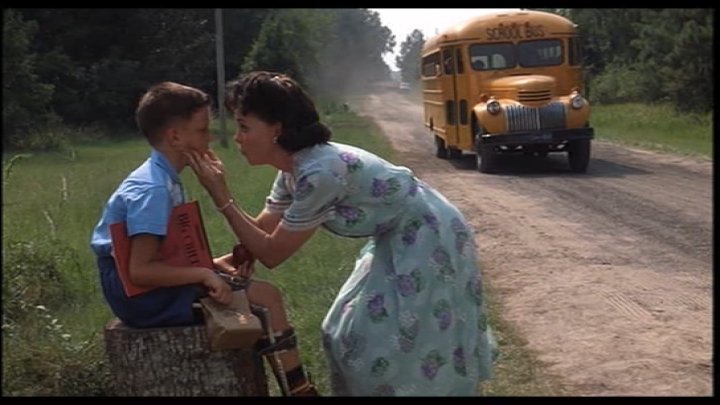

Babyhood and motherhood...that's a whole lot more profound than straight up metatarsal anatomy.


*I was derided for not strongly-enough demonstrating claims like this in my one attempt at publishing fossil foot bone descriptions. I trust this was an oversight in moving information to the supplementary section or collateral damage due to some other editorial process. Or it's my inability to read this paper properly!
**Wunderlich (1999) measured metatarsal head pressure during walking on the ground and a pole (branch) in chimps and found that the peak pressures for MT1 were higher on the ground than on the pole. And that's not just absolutely, but relative to to the other MTs.
***Dunsworth HM. 2006. Proconsul heseloni feet from Rusinga Island, Kenya. Doctoral dissertation, Pennsylvania State University.
****Correction: should have better worded what I see as a diminished role of the grasping big toe, not the elimination of it.


"Bless the blog. Nothing else like it."

Note on the missing images: Apologies for the now dead links to once-adorable images! When I originally posted this piece, I didn't know how to best post images that could potentially disappear in the future from their source sites. 

Friday, December 2, 2011

Hurling words and turds, an evolutionary link


Humans are excellent throwers. Even poor throwers, or famously ridiculed ones, are still pretty skilled compared to other species with grasping hands. We're so good at throwing things, it's hard not to wonder why. 

This is when you say, "Our arm anatomy, dummy. That's why humans are good throwers."
Our shoulder, arm, wrist and hand anatomy is mostly very similar to other primates' but the differences are critical to our ability to throw so well. (See here for more in-depth discussion of head-to-glutes-to-toe throwing anatomy.)  Once the arms were freed from their locomotor role their anatomy could respond to different selective pressures (or not) and one of those pressures might have still been locomotion (arm swing) and another was likely throwing, considering the benefits of action-at-a-distance for obtaining food, avoiding predators, and interacting (not so nicely) with other humans. 

But it's not all about the arm. Insert a chimpanzee's brain into a human's body and it'd be a safe bet that Frankenzee couldn't throw like Frank Reich... or any of us. That's because throwing well by human standards isn't just about human limb anatomy, it's about controlling that human limb anatomy with the human brain. 

Some popular and well-supported explanations for the origin of throwing are brain-based. The coordination of the body's movements and timing of those movements relative to the distance and velocity of a target is nothing less than genius. This same sort of coordination is required for language which is why hypotheses compare and even link throwing evolution to language evolution. Bill Calvin fleshed out an idea in The Throwing Madonna where he hypothesized that throwing enabled the evolution of language because both are controlled in large part by lateralized functions in overlapping regions (Broca's area) of the left hemisphere.

So it's only because of our big and specialized brains that we can both talk trash and sink a clutch three-pointer.

There's a field of research on understanding the biology, biomechanics, and physics of throwing behavior but only a subset of that research is rooted in an evolutionary, comparative approach. (For one good example, see Neil Roach's work.) As mentioned above, this is because few other species actually throw. However, lucky for us and despite their lackluster ability, chimpanzees do love to throw s--t.

This week some researchers who are interested in the neurobiology of throwing published a paper that made use of this hilarious habit--made famous the world over by zoo visitors with cameras and youtube accounts.


Like the study's authors, if you hang out around chimps long enough, their variation just screams out at you. For one, they vary in how they scream out at you.  But they also vary in their penchant for throwing. And this observation might cause you to ask yourself, If throwing is a brainy activity are the brains of the chimps who like to throw s--t any different from the brains of chimps who'd rather not? And if they're different, how are they different? What parts of the brains are different? Is there anything else about the chimps who like to throw s--t that separates them from those that don't?

These are the questions that Hopkins and his mates asked in their paper.

First they divvied up 78 chimps at the Yerkes National Primate Research Center into those who "reliably throw" (poop and food, mostly) and those who do not. I could not find more details on how this distinction was made, but if you spend your days at the YNPRC it's probably pretty obvious who the' THROWING+' and the 'THROWING-' are. (And you'd probably best learn fast before the s--t hits the man.)

Then they anesthetized each of them so they could MRI their brains to test for any brain anatomy differences.  (This was hopefully, and probably legally bound to be, coordinated with a necessary physical exam for each of these animals so the trauma was for good, health-related cause.)

To test for behavioral or personality differences, they performed the 'Primate Cognition Test Battery' or PCTB (Herrmann et al., 2007) on each of them.

When they compared the brain scans, they found that THROWING+ chimps had significantly more white matter relative to grey matter in the inferior frontal gyrus, which is the homolog to Broca's area in humans. And they also had significantly more white matter in the motor-hand area of the precentral gyrus, which is associated with handedness. Increased white matter is important because it indicates more myelinated interneurons that connect different cortical regions, suggesting to the authors that "learning to throw may alter the connectivity between premotor and primary motor cortex in the chimpanzee." (p. 44)

For an adaptive hypothesis in humans to come from this we'd need to parse out causes and effects. (The authors acknowledge this issue that haunts so many comparative studies.)

When they compared the results of the PCTB the only significant difference was that THROWING+ chimps scored higher in "communicate" points.

Hopkins et al., 2011
As far as I can tell, this "communicate" score comes from tests of a task called "comprehension" where experimenters gaze and point at targets and apes are assessed on how they respond, and another task called "production" where apes are assessed on whether they produce communicative signals (such as manual gestures) to indicate where food is hidden in hopes that an ignorant human will find it and give it to them.

This all seems so far removed from chimpanzees throwing s--t doesn't it?

Especially considering that the authors discuss these findings in support of the connection between language and throwing in human evolution.

Despite all the dots that need to be connected, throwers' brains did have more white matter in potentially significant (to throwing and language) centers of the brain and throwers did outperform non-throwers in "communicate" tasks on the PCTB. How else do you explain these things without throwing as part of the explanation, and maybe significantly so?  And if you're on board with that, how about throwing as a critical precursor to language... as the means for laying down the neural tracks that were later used for language?

Evolution of one wouldn't have occurred without evolution of the other one first. Why not? This isn't so scandalous. Just about everything else exists because of what came before. 

Monday, August 8, 2011

Wicked smart apes


I tried to hate it. I really did.

But despite all the Hollywood violence; despite its (inadvertent but dangerous) glorification of the life of a pet chimp and of having one; despite the digital movements that weren’t always quite right… I still enjoyed Rise of the Planet of the Apes.

[If you’re worried about spoilers, (A) Don’t read the title of the movie, and (B) Don’t read any further until you’ve seen it. But to be honest, I'm not sure I reveal anything that wasn't already revealed in the trailers.]

I can't control how apologetic I feel for liking this flick so much. As a human I care deeply what other humans think of me and my movie tastes. And in a weird way I care what chimps, bonobos, gorillas and orangutans would think of me liking it. I guess I shouldn't apologize for being human and I can't easily stop being such a dork.

Perhaps it was the near-future sci-fi possibility of it. Perhaps it was all the sneaky little throwbacks to the original flick. Perhaps it was the attempt to tackle issues of personal bias, emotions, and capitalistic greed in the world of science. Perhaps it was the way James Franco wore that little white lab coat. Perhaps it was my adoration of apes overpowering the fact that these were mere digitized computer actor-humans. Perhaps it was the triumph of the apes! Perhaps it was impossible to go anywhere but up from my subterranean expectations. Perhaps I’m just a human and we humans love our big loud, manipulative blockbuster movies, especially ones that ask, “What does it mean to be human?

The shows were all sold out on Sunday in West Warwick, so I’m betting most of my students will see this movie—if not this summer, then soon. And I’m sure to be fielding the questions they’re bound to have after watching it. You may have to field the same ones.

I may even use the movie as a teaching tool to help with topics like gene therapy, virus biology and therapeutic use, non-human disease models and test subjects, transgenic lab animals, and inheritance.

Although I’ve worked with custom-engineered virus vectors to modify and to shut down specified protein synthesis in epithelial cells, my experience stops there. And to help me try to make sense of this movie, I asked Ken and Anne to answer some questions that movie goers are bound to wonder.

Ken and Anne: Fire away.

Holly: In the movie Rise of the Planet of the Apes, a scientist invents a possible treatment for Alzheimer’s that regenerates neurons and they test it on chimpanzees in a fantastic lab (and the scientist also administers it to his father at home). The delivery system for the treatment is a virus vector injected into the bloodstream (for humans) or administered through a gas mask (for the lab chimps) that changes known genes associated with Alzheimer’s in humans (not chimps!). When a chimpanzee (who does not have Alzheimer's) is infected with the virus she becomes significantly more intelligent.

1. How does one test a cure for a human disease in non-affected non-humans?

Ken: We've not seen the movie but here are some guesses at your questions. In principle (far from practice at the moment), one could get such a vector into a person that could target the particular gene in cells, and replace it with a gene the vector carries. (If this were incorporated in the germ line of the mother or father, it would be passed on to their kids as part of their genome.) Testing simply would be taking a DNA sample (any cells--blood, cheek swab, etc) and looking for the sequence of the inserted gene. This is what is done to make transgenic mice (but the gene is inserted into an egg, not breathed in by an adult).

Anne: There are 2 things that normally would need to be tested in developing gene therapy; the system for delivering the genetic modification, and the efficacy of that modification. In principle they could/should be tested separately, so the delivery system would be tested on normal subjects before the efficacy of the cure is tested, so that, if it doesn't work, the researcher knows it's not because of the delivery system. Testing of many pharmaceutical products is done in similar stages -- first determine whether it's safe on normal people, then whether it actually cures. The first stage is often done on 'professional guinea pigs', people who make their living volunteering to test drug safety. But you're right, it's not the cure that's being tested on people without the disease, it's the efficacy or safety of the procedure.


2. The Alzheimer's (AD) cure not only heals neural degeneration (as evident in the human test case), but it improves cognition too and when both humans and normal chimps are infected their intelligence increases literally over night. Could that be possible? How?

Ken: It could (in principle) fix damaged neurons in the patient (this is at the moment largely fantasy but by now there may be some precedents--we're not up to date on what claims may be being made.) If the person's inherited genes that led to AD also led to poor cognition, and if changing the gene once their brain is developed could goose up the neurons' activities, then this, too, could occur in principle. Suppose for example that the problem were a neurotransmitter receptor that was somehow not very efficient, and this were replaced so that signals traveled between synapses more rapidly. Again this is all 'suppose' at present!

Anne: If intelligence is due to synapse speed, say, one could imagine that could be upgraded quickly. It's harder to imagine that the biochemistry underlying chimp intelligence is the same as that that causes dementia, and that therefore they'd have the same fix!


3. Also—and this is the real question I’m interested in discussing especially considering the recent Mendel-Wasn’t-Right theme here on the MT!—A female chimp who has been infected actually passes the positive genetic affects onto her offspring. They even remark how her son is intelligent because it's "in his genes." How could this be possible?

Ken & Anne: In the same way as related to #1 above, the offspring would inherit the faster-firing receptor gene and would be smarter.

All of this assumes that one gene change would work across genomic background variation, with no side effects, and all that. But the dream of real gene therapy has been to do what you're describing (again, we didn't see the movie). A good example would be replacing sickle cell hemoglobin (the beta globin gene) with a normal version, or replacing the mutant Tay Sachs or Cystic Fibrosis gene with normal sequences. But to be inherited it has to involve the germ line cells.

There are some known mechanisms that illustrate how such a dream scenario could be plausible. Cells have receptors that bring what binds to them into the cell (usually, this is for some normal cell response to the environment). A virus could be engineered to be taken into some specific cell, like a neuron, in this way. The virus could be designed so that genes it carries are made into RNA corresponding to the 'good' gene version, along with code for a protein like reverse transcriptase that turns RNA into DNA and inserts it into chromosomes could be used. The latter is how viruses currently incorporate into DNA and cause trouble; our genomes are littered with such inserted elements. The difference is that they insert only occasionally and even then into random places in the genome, or places of their choosing.

To get this into places of our choosing, we would have to engineer the system to recognize some sequence of the target gene area and insert the virus's passenger gene at that place, excising the current (bad) gene there.

In any cell in which this occurred, the transgene would have replaced the normal gene, and the job would be done for that cell. If in a sperm or egg precursor, then that would be transmitted to (half of) the person's offspring.

There are versions of each of these transgenic techniques already in practice, but in every case there are limits relative to the desired outcome, and they mainly work in mice that have already been prepared for the experiment by manipulating mouse egg cells. We use such transgenic mice in our own work here on craniofacially relevant genes.

There used to be a lot of hope for such gene therapy, but failures have led many if not most companies to give up the effort. Mostly what is still being tried (I think) is and has always been to administer something to a patient and change his or her genes, or insert a compensatory gene, in affected cells. Injections of such things into muscle to alleviate muscular dystrophy, or by inhaler to alleviate CF, or to fix immune system problems have been tried and probably some at least are still under test.

That still leaves movie goers wondering how someone, like Caesar-the-chimp’s mother in the movie, could contract a virus orally or through the bloodstream which somehow finds its way to the eggs or sperm and then inserts its DNA into those cells and modifies them. That’s the only way the modified DNA sequence could be inherited by future generations, like Caesar, but it's not outside the realm of plausibility. Just think of the evolutionary possibilities!