Showing posts with label babies. Show all posts

Tuesday, August 16, 2016

Many more words are extinct than those we get to read

I'm starting a new human evolution book project. Technically I've already started it but I've got the greenlight from my agent so it's for real. 

So much writing, at least for me, is just exploratory, organizational vomit that I never times infinity wish to see on the printed page. 

But, here, let me show you my vomit from this morning:

High heels are sexy because they change a woman’s posture so that her boobs and butt stick out and that’s attractive because boobs and butts and because waist hip ratio. 

Wait, no, they’re sexy because they make a person taller and taller is universally attractive. 

What if they’re a handicap or a fitness indicator like a risky bird call or a peacock’s tail? The hampered, painful locomotion signals to potential mates how badass the high heel wearer is. “We will have badass kids!” say high heels. 

source

Or they keep women from being able to escape too quickly if ambushed by aroused men, but that’s too macabre for me to consider further and pisses me off. 

How about, they’re sexy because we decided they are. Culture is weird and powerful: neck lengthening rings, circumcision, Taco Bell. 

Or they’re sexy because they make a woman’s feet look small for her height and this is sexy because … Fibonacci? (Must do calculations.) I don’t know. "Hold me closer tiny footed," isn’t how the song goes. 

But, wait, high heels change a woman’s locomotion. Women who walk in them have an exaggerated female-stereotyped gait. Ask those biomechanists who said so. That’s why heels are sexy, then, they heighten femininity and project its signal further out across the savannah, and into the gaze of more men for longer in each of their numerous salivating minds. 

But why are swinging hips sexy? Because they’re opposite of a man’s? 

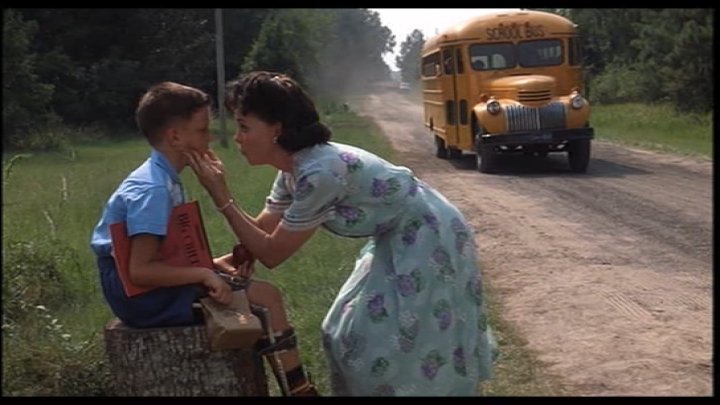
But there’s something else that heels do to gait. They make a person unstable, careful, as if they're just learning to walk. One slips into those torture slippers and they're suddenly precious, adorable, in need of rapt attention. Like a toddler, walking for the very first time. 

The idea’s out there, somewhere, that heels make a woman helpless and that’s attractive to men who want to rescue women. This toddler idea is just a fraction of a degree away from that one. Is male attraction to helpless women the same thing that drives them to be doting fathers? Gawd. If that’s true, that means I shouldn’t be as annoyed when they want to rescue full grown women, and when full grown women want to be rescued, because, after all, it’s just good fatherly mojo. But, we’re not babies, dammit. 

High heels. Sexy for so many reasons, but also because they make women into babies and, hey, wait a second...

We don’t think babies are sexy. What the bleep am I talking about? Back up: what we prefer in babies can be preferred in adults for fundamentally similar reasons but those preferences can result in different outcomes. 

Attractive helpless babies get cared for and not sexualized (too much) and attractive helpless women do too but that affection includes bleeping. 

It all makes perfect sense. How on earth did our lineage survive this long without high heels?

Wednesday, May 13, 2015

Just-So Babies

If you've ever watched a baby eat solid foods, that's DuckFace.

If you've ever seen a shirtless baby, that's DadBod.


Why are we so into these things, whatever they are, right now?


Because whether we realize it or not, they're babylike, which means they're adorable. And all things #adorbs are so #totes #squee right now for the millions (billions?) of social media users in our species. And if they're babylike, they're especially adorable to women and women are more frequently duckfaces than men. And women are increasingly open to embracing, maritally, the non-chiseled men of the world...who knew?


Well, anyone and everyone who's spent a damn second raising a baby, that's who. Especially those with mom genes.


Understanding babies, how they develop, and our connections to them while they do so is key to explaining just about everything, and perhaps literally eh-vuh-ray-thing, about humanity. 
How can I be so sure? Well aren't you?

We all know that the most attractive women are the ones that look like babies. 

source
And to help Nature out, makeup, lasers, and plastic surgery neotenize us temporarily or permanently, making our skin smooth, our eyes big, our lips pouty, our cheeks pinchable and rosy, and our noses button-y.

That stuff about beauty is common knowledge isn't it? We do these things to ourselves because of our evolved preferences for babies. We find them to be so extremely cute that this adaptive bias for babies affects much of the rest of our lives. Beauty is just the tip of the iceberg because, like I said, babies explain everything: DuckFace, DadBod, ...


And, yes, I do have more examples up my sleeve.


All that weight we gain while pregnant? You think it's to stockpile fat for growing a superhuge, supercharged baby brain both before and then after it barely escapes our bipedal pelvis?

Me and Abe, with hardly an inkling that there's still a whopping five more weeks ahead of us... suckers.
Or maybe I gained 20 pounds above and beyond the actual weight of the pregnancy so that I could protect my baby from calorie lulls from disease or food shortage, especially when those things happened more frequently to my ancestors.

Nope. And nope.


Pregnant women gain all that weight so that its lightning fast loss while lactating leaves behind a nice saggy suit of skin for the baby to grab and hold onto--not just on our bellies, but our arms and legs too. Our ancestors were dependent on this adaptation for quite a while, but over time mothers and infants became less dependent on it when they started crafting and wearing slings. Slings reduced selection on a baby's ability to grasp, you know.


Before slings, selection would have been pretty intent on favoring baby-carrying traits in both mothers and babies. For example, t
he way that our shoulder joints are oriented laterally, to the side, is unlike all the apes' shoulders which are oriented more cranially, so they're always kind of shrugging. You think we have these nice broad shoulders for swinging alongside us while running, for seriously enhancing our throwing ability, and, of course, for making stone tools? 

No. No. No.

All that's great for later in our lives, but our lateral facing shoulder joints are for being picked up and carried around while we're helpless babies. Our sturdy armpits are necessary for our early survival. And, biomechanically, those shoulder joints are oriented in the optimal way for carrying babies too. It's a win win. Combine that with the shorter hominin forearm, oh, and that itty-bitty thing called hands-free locomotion and it's obvious that we're designed to carry our babies and also to be carried as babies.


Bums come into play here too.


You probably think your big bum's for bipedal endurance running don't you? Or you might assume it evolved to give a stone-tipped spear a lot of extra oomph while impaling a wooly rhino hide.


Wrong. And wrong again.


Our big bums develop early in life because, like armpits, they build grab'n'go babies as well as well-designed grown-up baby carriers.

source
Bums plop nicely on a forearm and most certainly give babies and moms an advantage at staying together. Bums on moms (if not completely liquefied and fed to baby) steady her while holding such a load and also provide something for a baby slung on her back to sit on. Once babies lost the ability to grasp onto moms, babies' bodies had to adapt to be portable objects and moms bodies had to adapt to never drop those portable objects (at least not too far). No doubt big bums, like sturdy armpits, evolved before slings and home bases were ubiquitous in our species. 

Here's another one: The pregnancy "mask."


All those pigmentation changes that we describe as a side effect of the hormones are much more than that. Those new brown and red blotches that grow on a mother's chest and face, those are functional. They're fascinators. A mother's body makes itself more interesting and loveable for the busy, brainy baby on its way. Once we started decorating our bodies with brown and red ochre and pierced shell, bones and teeth, selection on these biological traits was relaxed. But they still persist. Why not? A human baby can't be over-fascinated, can it?


Oh, and fire. That was the best thing that ever happened to babies which means it was the best thing that ever happened to everyone living with babies. Quiet, serene, fascination, those flames... which also happen to process food for toothless babies whose exhausted, stay-at-foraging parents, would much rather swallow the food they chew up for themselves.


The baby also grows fascinators of its own. The big long hallux. Yep. Our big toe is long compared to other apes'. This is where you say it's an adaptation for bipedalism but you'd be only half right.


© naturepl.com / Ingo Arndt / WWF
The length makes it easier to reach with our mouths, as babies. And we teethe on that big toe. Imagine a world with no Sophies! That's what our ancestors had to deal with. Toes as teething toys doesn't seem so ridiculous when you remember that our long thumbs evolved for sucking.

Anyway, this long hallux was a bit unwieldy so thanks to a lucky mutation we stuck it to the rest of the foot and this turned out to work rather well for bipedalism.


Now that it's been a few minutes into this post, you must be sitting there at your computer thinking about boobs.


Yep, babies explain those too! The aesthetic preference for large breasts, by both males and females, is just nostalgia and allometry. You know how when you go back to visit your old kindergarten it looks so tiny compared to your memory? While you're a small human, you spend quite a lot of time with breasts, focused intently on them. But grow your early impression of breasts up in proportion to your adult body's sense of the world and, well, that's quite a big silicon kindergarten!


Your desires, your preferences, your tastes, your anatomy now, your anatomy when you were a baby... everything is babies, babies, babies. Even bipedalism itself.


Gestating a large fetus would not be possible if we were not bipedal. Think about it. All apes are bipedal to a significant degree. What pressured us into being habitual bipeds? Growing big fat, big-brained babies, that's what. Can you imagine a chimpanzee growing a human-sized fetus inside it and still knuckle-walking? I doubt the body could handle that. The spine alone! If you walk upright and let your pelvis help to carry that big fetus, you're golden. Obviously it worked for us.


I could go on forever! But I'll just give you one more example today. It's one you didn't see coming.


Women live longer than men, on average, and a large portion of that higher male mortality rate (at older ages) is due to trouble with the circulatory system. Well, it's obvious why. I'm looking at my arms right now and, complementing these brown and red fascinators, another part of my new mom suit is this web of ropy blue veins. Is this because my baby's sucked up all my subcutaneous fat from under my saggy skin, or... Or! Is it because my plumbing's stretched after housing and pumping about 50% more blood than normal by the third trimester. If my pipes are now, indeed, relatively larger for my blood volume and my body size then, all things being equal, that should reduce my risk of clogging and other troubles. Most women experience a term pregnancy during their lives. I'm sure this explains most if not all of the differences in mortality between men and women.


Like I said, that's just the start. And although I haven't provided evidence for many of the things I wrote, that shouldn't matter. These are just-so stories and they're terribly fun to think about. They're nothing close to approximating anything as lovely as Kipling's but they're what we humans do. If you're not a fan of today's post, hey, it's not like it passed peer review!

Monday, October 20, 2014

'Obstetric dilemma' skeptic has c-section and remains skeptical ... & ... Why my c-section was natural childbirth

This is a new kind of Tale for me. The rock'n'roll's turned way up, and every couple sentences I have to stop typing to twirl a blue hound dog, a bear holding an umbrella, a Flying Spaghetti Monster, and other oddities that I strung up to hypnotize this little guy into letting me type one thought at a time:

The thing that needs to be hypnotized.
Or the three wise monkeys say: The thing that makes it impossible to create or to dwell on the negative. (e.g. his birth by c-section)

That young primate's the reason I've been quiet for a while here on the MT. And he's the reason I'm a bit more emotional and I cry harder than usual at Rise of the Planet of the Apes (those poor apes!), Cujo (that poor dog!), and other tearjerkers. But he's also the reason my new favorite animal is plain old, fascinating, and dropdead adorable Homo sapiens.

In anthropological terms, he's the reason I'm overwhelmed, not just in love but in new thinking and new questions about the evolution of human life history and reproduction, and then what culture's got to do with it and with our reconstruction of it.

Some context would help, probably.

For the past few years I've been challenging the 'obstetric dilemma' hypothesis--the idea that hominin mothers' bipedal pelves have shortened our species' gestation length and caused infant helplessness, and that antagonistic selection between big-brained babies and constrained bipedal mothers' pelves explains childbirth difficulty too.

[For background see here or here or here or here.]

As part of all that, I've been arguing that the historically recent surge of c-sections and our misguided assumptions about childbirth difficulty and mortality have muddled our thinking about human evolution.

So, once I was pregnant, you might imagine how anxious I was to experience labor and childbirth for myself, to feel what the onset of labor was like, and to feel that notorious "crunch" that is our species's particular brand of childbirth. Luckily I was not anxious about much else the future might hold because modern medicine, paid for by my ample health insurance, would always be there to make it all okay. After a long pregnancy that I didn't enjoy (and am astonished by people who do) I was very much looking forward to experiencing childbirth. In the end, however, my labor was induced and I had a bleeping c-section.

But my bleeping c-section's only worth cussing over for academic reasons because the outcome has been marvelous, and the experience itself was out of this world.

We'll get to the reasons for my c-section in a second, but before that, here are the not-reasons...

First of all, I did not have a c-section because I fell out of a tree with a full bladder.

Second of all, shut your mouth... a c-section was not inevitable because of my hips.

Okay, you got me. I've never been even remotely described as built for babymaking. My hips are only eye-catching in their asymmetry. One side flares out. It might be because when I was 15 years old I walked bent-kneed for a few months pre- and post-ACL reconstruction. That leg's iliac crest may have formed differently under those abnormal forces because, at 15, it probably wasn't fused and done growing yet. If you like thinking in paleoanthropological terms like I do, then my left side is so Lucy.

Anyway. I'm not wide-hipped. However, guess how many nurses, doctors, or midwives who were involved in our baby's birth think my pelvis was a note-worthy factor in my c-section? Not one.

Hips do lie! Inside mine there's plenty of room to birth a large baby. Two independent pelvic exams from different midwives (who knew nothing of my research interests at the time) told me so, and it sounded like routine news to boot. Although one midwife asked me "do you wear size nine and a half shoes?" (no, I wear 8) which was her way of saying, "Girl, you're running a big-and-tall business. You got this."

What you probably know from being alive and knowing other people who were also born and who are alive (or what you might hear if you ask a health professional in the childbirth biz) is that most women are able to birth babies vaginally, even larger-than-average babies. And that goes for most women who have ever lived. Today, "most women" includes many who have c-sections because not all c-sections are performed because of tight fit between mother's birth canal and baby's size. As I understand it, once the kid's started down into the birth canal and gets stuck, a c-section's no longer in the cards. So performing c-sections for tight fit is a preventative measure based on a probability, not a reflection of an actual tight fit. In the mid 20th century, tight fit used to be estimated by x-raying pregnant women and their fetuses. Can you imagine? And this was right about the time the obstetric dilemma hypothesis was born. I don't think that's a coincidence.

Here's a list of reasons for c-sections. Tight fit is included in the first bullet point. Tight fit is one of the few quantifiable childbirth risks. No wonder it's so prominent in our minds. That list excludes "elective" ones which can be done, at least in Rhode Island, if they check the box that says "fear of childbirth". And that's not even close to a list of reasons why women around the world and throughout history have died during or as a result of childbirth. For example, about a hundred years ago women were dying all over the place because of childbed fever.

Anyway, we should assume that I am like most women and expect that I could have given birth the way Mother Nature intended: through my birth canal and with the participation of other humans. Oh yeah, when it comes to humans, social behavior and received knowledge are part of natural childbirth. Even this natural childbirth (which has inspired a forthcoming reality television show featuring women giving birth in the wild!) involves the supportive and beneficial presence of other humans as well as the culture that the mother brings to the experience.

But a c-section's just culture too, so could it be part of "natural" childbirth, then?

I'm inclined to blurt out yes, of course! because I don't support calling anything that humans do "unnatural." But I know that's not something everyone agrees with. It's politics. For example, many of you out there don't flinch an inch at the subtitle of Elizabeth Kolbert's book, "The Sixth Extinction: An Unnatural History."  And given the present energetic movement against childbirth interventions, describing c-sections as "unnatural" as climate change could help minimize unnecessary ones for those who wish to give birth vaginally.

So there we have it. These are the two enormous issues raised by my own little c-section: What can it teach us about the evolution of gestation length, infant helplessness, and childbirth difficulty? And could it be considered natural?

One way for me to get at these questions is to try to understand why I experienced "unnatural" childbirth in the first place. So here goes.

Here's why I think I had to have a c-section:

1. My pregnancy ran into overtime.


This is expected for nulliparous mothers. I visited one of my OBs on my due date. He put his finger on the calendar on the Friday that was two weeks out and joked, "Here's when we all go to jail." Then he asked me, "Who do you want to deliver your baby? I'll see when they're on call before that Friday and schedule your induction then." And I chose my favorite midwife and he scheduled the induction.

All right so I was running late compared to most women, but that's still natural, normal. But it also means risks are ever-increasing by the day. And no matter how small, that the professionals know how to mitigate the biggest risks of all, *deaths*, means that they try to do that. They're on alert already as it is, and then they're even moreso on edge when you're overdue. Especially when it's your first baby and you're a geezer, over 35 years of age.

Now, does going overdue mean the baby keeps growing? Maybe, but not necessarily and not necessarily substantially. Both of us, together, should have been reaching our maximum, metabolically. There's only so much growing a fetus can do inside a mother.

When I approached my due date, and then once I went past it, I tried to eat fewer sweets to make it less comfortable in my womb. I also went back to taking long, hard walks, five milers, even though it was hard on my bladder because I thought that might help kick him out too. I even ran the last of my five miles the day before my induction, to no avail other than the mood boost it gave me.

2. I didn't go into labor naturally by my due date or by my induction date 11 days later. 

Although my cervix was ripening, when I went in to be induced I was only dilated 0-1 cm. I had 9+ more to go before the kid could get out at 10. So a balloon catheter was inserted and filled with water, and I had to tug on the tail of it, which tugged the balloon, which put pressure on the cervix. It dilated enough that it fell out several hours into the process, and by morning I was dilated 3-4 cm. This was exactly the goal of the catheter, this many centimeters. All was going well. However, that the cervix did not open on its own is already a missing piece of going "natural," of having my own biology contribute to my childbirth experience. So starting this way is already derailing things, making it difficult for anything natural to follow, naturally.

3. The fetus's head was facing the hard way: sunnyside up.

This was assessed by the midwife and cradling my belly in a bedsheet, with me on all fours, she and I could not twist him into a better position. His head, she said, was probably why I did not dilate naturally. When I asked an OB during my postpartum check-up, "What dilates the cervix?", he said "We don't know. But I can tell you it's not with the head like it's a battering ram." Well, then... hmph. And then I asked him if women carrying breech fetuses have trouble dilating their cervixes, or going into labor naturally, and he said not necessarily. No. Hmph.

Regardless of what causes cervical dilation, if the head isn't facing the right direction, it's notoriously tough to get down into the birth canal, let alone through the birth canal. It's not impossible, not even close. But it's not looking good at this point either. Perhaps the contractions will jossle his head into a better position, they said. And the contractions should further dilate the cervix.

4. Contractions didn't get underway, naturally, after the catheter dilation, so the drug pitocin was used. 

Induction and pitocin increase the chances that a mother will ask for drugs to help with pain and that she will have interventions, like a c-section. See for example this paper. What the causes are, I'm not sure. But pointing out the correlation is useful at this point because at this point, without even getting into hard labor yet, and without finding out whether my cervix does its job, I'm more likely than ever to be going to the operating room.

5. After six hours of easy labor and five hours of intense labor, my cervix never dilated past 5 cm.  

It needs to get to 10 cm to get the baby moving into the birth canal. Just like with due dates, I think that blanketly assigning this number to all women is probably not consistent with variable biology, but it's how it's currently done. And maybe any higher resolution, like "Sally's cervix needs to hit 9.7 cm", is pointless.

After several hours pitocin-induced contractions--which at first felt like the no-big-deal Braxton-Hicks ones I'd been having numerous times daily for the whole third trimester--I only dilated 1 cm more. That's even when they upped the pitocin to make them more intense.

But after they saw I'd made essentially no progress and that I was napping to save my energy for when things got bad, they woke me up and broke my bag. It would be nice if they could have let my labor progress slowly, if that's what my body wanted to do, but remember, my personal biology went out the window as soon as induction began. And then when that amniotic fluid oozed out of me, that's when bleep got real.

Every two minutes and then every one and a half, I grabbed Kevin's extended hand and breathed like an angry buffalo humping a locomotive. It was the worst pain of my life and I was afraid I'd never last to 10 cm, so I took the stadol when I told the nurse my pain was now at a 9 out of 10 (all previous answers to this question were no higher than 2). I was going to avoid the epidural no matter what, even at this point, because I was more afraid of the needle sticking out of my spine for hours of labor than I was afraid of these contractions. I have no idea if the stadol dulled any pain, because the pain just got worse, but it did help psychologically because it put me to sleep between contractions. There was no waiting with anxiety for the next one and time flew by. But after five hours of this, I had not dilated any more. But I had vomited plenty! And although I'd fended off the acupuncture (FFS!), I folded weakly and, for the peace of mind of a wonderfully caring nurse, I allowed a volunteer to perform reiki on me. And what a tragedy it was! Wherever she is, there's a good chance she gave up trying to help laboring women, and she may have given up reiki all-together.

The hard labor story ends at five hours because that's about when the nurse actually screamed into the intercom for the doctor. My contractions were sending the fetus into distress.

6. After five hours of intense labor, the fetus was experiencing "distress" at every contraction, as interpreted from his heart-rate monitor. 

Basically, he was bottoming out to a scary heart-rate and only very slowly coming back to a healthy heart-rate just in time to get nailed by another contraction. By the way, this is the official reason listed in my medical records for my c-section: fetal distress.

I know that a heart-rate monitor on the fetus is another one of those medical practices that increases the chances of an "unnatural" childbirth. That's probably because all fetuses are distressed during labor, but observing the horror, and then guessing whether it's safe to let it continue is seemingly impossible. So at some point, like with me and my fetus, they get alarmed and then how do you back down from that?  They gave me an oxygen mask which immediately helped the fetus a bit, but like I said, hackles were already up at this point. Soon thereafter we had a talk with the doctor about how I  could go several more hours like this and get absolutely nowhere with my cervix, and then there are those life and death matters. She never said c-section. I had to eek out between contractions, "So are you saying we need to perform a c-section?" and she said yes, and urgently. A c-section sounded like the only solution at this point both to battered, old me, to clear-minded Kevin, and clearly to the delivery team (and in hindsight, it still does to Kevin and me). Then, lickety-split, the anaesthesiologist arrived, got acquainted with our situation, and made me vomit more. And then like a whirlwind, Kevin's putting on scrubs, and we're told to kiss, and I'm jokingly protesting "I'm a doctor too!" while being wheeled into the operating room because I cannot walk through my contractions.

It's bright white, just like Monty Python said it would be. I sat on the crucifix-shaped operating table to receive all the numbing and pain killing agents through my spine. Somehow they pulled this off while I was still having massive contractions. Then I laid down, arms splayed out to the side, and they drew a curtain across my chest, a nurse told me how creepy it was about to be, and they got to work.

Although the c-section wasn't painful, I could feel everything. This was my childbirth experience. I felt the incision as if she was simply running her finger across my belly, and I felt the tugging and the pressure lifting from my back as they extracted my baby from me. After that, and after I got a short glimpse of him dangly over my left arm--"He's beautiful! He's perfect! He's got a dimple! He growled!"--I continued to feel many things, probably the birth of my placenta, etc...

But I didn't know what exactly I was feeling until I watched a video of a c-section on YouTube. Kevin helped fill in the details too. He had caught a naughty glimpse of the afterbirth scene before being chased back to his designated OR spot with the baby. Thanks to him (and that video) I know now that I was feeling my enormous muscular uterus and some of my intestines being yanked completely out of a small hole right above my pubic bones and then stuffed back in. For a few moments, it must have looked like I was getting re-inseminated by a red octopus.

I tell everyone that it was like going to outer space to give birth. And this, if you know me, is an exciting idea so my eyes are smiling and I sound dreamy when I say "it was like going to outer space to give birth!" I bet you're thinking it's the Prometheus influence, but you'd have the wrong movie. The correct one is Enemy Mine. And it's much more than that, actually. I was as jaw-dropped and awe-struck by humanity during my childbirth experience as I am by space exploration. The orchestration, the specialization, the patience, the years of study, of planning, the calculations, the dexterity. To boldly go. Wow. Like I said, humans are my new favorite animal.

I was back in our little room quicker than most pizza deliveries, where our bright red new baby was trying hard to nurse from his daddy. Then he nursed from me. And the story's all mushy weepy cuddly stuff from now on. So let's not. Let's remember what we're here for. Okay. Right.

7. The cord was wrapped twice around his neck. 

We found this out when he was cut out of me. That didn't help with moving him around in utero to a good position, nor did it help with oxygen flow during contractions! This would not have inhibited his safe vaginal birth, however, at least not necessarily.

8. He was enormous. His head was enormous too. 

He came out a whopping 9 pounds, 13 ounces, 22.25 inches long, with a head circumference of 15.5 inches. They say that's heavier than he'd be if born vaginally because he didn't get all the fluids squeezed out of him. But still, that's large. According to the CDC he was born as heavy as an average 3.5 month-old boy. His head was about the size of an average 2.5 month-old.

Red line is our baby's head circumference at birth. (source)

Way back at the mid-pregnancy ultra-sound, we knew he was going to be something. And then if you'd seen me by the end, like on my due date, you might have guessed I was carrying twins. I was so big that my mom joked she thought maybe a second fetus was hiding behind the other one, undetected.

Smiling on my due date because pregnancy was almost over. 
(By the way, I could still jog and I dressed weird while my body was weird.)

If I hadn't had the means to eat so much like I did during pregnancy, perhaps he wouldn't have grown so large inside me. If I hadn't lived such a relaxed lifestyle while pregnant, maybe he wouldn't have grown so large inside me. If I didn't have a medical safety net waiting for us at the end, perhaps I would have been scared into curbing my appetite from the get go. I gained 40 pounds. With this body, but in a different life, a different place, a different time, maybe I wouldn't have. Probably I wouldn't have.

His size has got to have influenced a few of those other contributors to my c-section. But clearly it's more complicated than his size. And this brings us back to the obstetric dilemma. Let's say he was too big or that his large size screwed everything up, even if he could technically fit through the birth canal. Well then, why didn't I go into labor? Labor triggers are, to me, a significant problem when it comes to explaining the evolution of gestation length in humans, and whether we have a unique problem at the end.

If our pregnancy length is determined by available energy, energy use, and metabolism (here and here) then women like me who go overdue, who are clearly not killing our babies inside us either, are just ... able to do that. But doing that clearly leads to problems in our species (one of the few known) that has such a tight fit to begin with.

If our pregnancy length is determined by our birth canal size, and any anatomical correlates, then why didn't I go into labor before my fetus got so big? What went wrong? What's frustrating too is, for my n of 1, we'll never know if I could have given birth vaginally because I never got the chance to try.

These seem like simple questions but they are deceptively complex. And I think there will be some exciting discoveries to come from medicine and anthropology in the coming decades to explain just how our reproduction works which will in turn help us reconstruct how it evolved.

What's my birth experience got to do with evolution? Why, everything. It's got everything to do with evolution, because if it's not evolution, it's magic.  And that's kind of where I'm coming from when I say that my c-section was still natural childbirth. It wasn't unnatural and it certainly wasn't supernatural. Sure, it's politics. I'm invested in the perspective that humans are part of the evolving, natural world and want others to see it that way or, simply, to understand how so many of us see it that way. But it's not just evolution that's got me enveloping culture into nature and that's got me all soft on the folks who drive fancy cars who cut my baby out of me.

Who knows what could have happened to my son or to me if we didn't have these people who know how to minimize the chances of our death? It's absolutely human to accumulate knowledge, like my nurses, midwives and doctors have about childbirth. Once learned, it's difficult for that knowledge to be unseen, unheard, unspoken, unknown. Why should we expect them to throw all that away so that we can experience some form of human being prior to that knowledge?

Nature vs. Culture? That's the wrong battle.
What matters is which one can fight hardest on my behalf against the unthinkable.


Maybe childbirth is so difficult because it can be. We've got all this culture to help out when things get dicey, with or without surgeons. On that note, maybe babies are so helpless because they can be. We've got all the anatomy and cognition to care for them and although the experiment would be impossible, it's doubtful any other species but ours could keep a human baby alive for very long. It could just be our dexterous hands and arms, but it could be so much more, like awareness of their vulnerability and their mortality,and (my favorite pet idea) awareness that they're related to us. Culture births and keeps human children alive with or without obstetricians. It's in our nature. Maybe it's time we let all this culture, our fundamental nature, extend into the operating room.

Friday, March 30, 2012

Forget bipedalism. What about babyism?


First, a little time travel experiment...

Here's a newspaper headline and blurb from 709,987 CE: 

Hominin fossils dated to 2,012 CE show arboreality


Artists have made a realistic reconstruction (above) of an early human species based on the anatomy of the latest fossil discovery in paleo-Alabama by a team of paleontologists. These primitive hominins were still climbing trees!

source
In yet another reconstruction of this primitive species (above), an adult forages for honey by scrambling nimbly up a tall tree trunk. 


In other paleontology news, a team of scientists determined that a Morrocan variety of domestic goat, from roughly the same primitive era, could adeptly climb small bush-like trees.
**
*A-hem*

I promise that's not sarcasm or postmodernism! That's just me trying to jossle you loose of some traditional assumptions and spark you to wonder about how we know what we know about the functional relationships between anatomy and behavior.

I'm thinking about this because of the latest and greatest news in the world of paleoanthropology, published this week in Nature and here's a nice video to bring you up to speed:


If this Burtele foot fossil represents a hominin, it's different enough in anatomy (and the functional interpretation of that anatomy) to be considered something separate from other hominins on record.

It's this whole other animal.

As of now, all hominins at this time in the mid Pliocene (the foot is dated to 3.4 mya) belong to the genus Australopithecus and are only known from sites in East and South Africa. Perhaps the Burtele foot is another species that is not A. afarensis (which supports long-existing arguments that there are two lineages at this time) or maybe this is an ancestor to the Paranthropus radiation that occurs in the early Pleistocene. Or maybe it's not even a hominin, because the foot is very ape-like. Moreso than any australopiths on record.

Chimpanzee displaying it's non-human-like hallux (big toe). 
Can we tell what this animal is? Without teeth and cranial bones--our gold standard for identification and distinction--can we surmise what kind of creature this Burtele foot belonged to?

For starters, if it's to be deemed a "hominin," we should determine what exactly about this foot is human-like.

In terms of metrics, the Burtele foot shares traits with humans but these are also shared by gorillas and sometimes chimpanzees and sometimes old world monkeys too. The striking similarities between human and gorilla feet have been known since the earliest comparative anatomy studies and it was only a matter of time before a new primitive fossil brought the problem to heightened prominence.

For the qualitative traits, more similarities appear to be shared with the famous "Ardi" skeleton from about a million years earlier in time (belonging to Ardipithecus ramidus) than with extant humans.

According to the paper, there appears to be few derived, hominin-specific features in this foot. And that's even if you are on board with calling Ardi a hominin. Granted, we expect more primitive hominins to share few of those traits with us and traits evolve mosaically, even within the foot. And granted, not all hominins contributed directly to our evolution, so we might find species on the hominin branches of the TOL that share no derived features with humans. Still, the case isn't very strong for this Burtele foot being a hominin.

One of the reported hominin-like traits has to do with the shape and orientation of the proximal phalangeal joint where it articulates with the second metatarsal head. This appears to indicate that the foot was experiencing more toe-off during walking, more like human walking than like ape walking since it's not the condition found in ape feet. This functional interpretation seems to be based on that made of Ardi's foot. Unfortuantely I don't think anyone's looked at the biomechanics of this joint in apes (and ape feet) as they walk bipedally, yet. (But I could be wrong!)

Also, although the degrees of torsion in the second metatarsal is ape-like, the torsion in the first metatarsal is more humanlike. (Torsion describes the orientation of the proximal joint surface relative to the orientation of the head. The Burtele foot's MT2 and MT4 are reported to have less torsion than that seen in African apes (where this is associated with a grasping orientation), yet are still significantly twisted compared to human metatarsals.)  The torsion in the big toe (hallucial metatarsal) is reported to be unlike that of African apes, and presumably more like humans? It's not clear. But the actual measure of the degree is not included in Table 1, nor is it demonstrated in the Supplemental section as implied. So we have to take their word for it. And by the look of the Burtele first metatarsal in the photos, that's probably not a problem.*

So there are some leads away from extant African apes and weak ones toward Ardipithecus and possibly extant humans, but what the paper demonstrates better than the hominin status of the Burtele foot is just how difficult it is to pin down hominin-ness.  We don't always know it when we see it.

For most of us and I assume the authors of the paper, this is what makes paleoanthropology so fun! But it's also why we fight.

That's not because we don't know how anatomy and behavior are linked in extant humans, apes, monkeys, etc... we seem to have a pretty good handle on that. At least big picture. The problems arise when you zoom in. Are chimpanzees really arboreal? Yes. Are they really terrestrial? YES. Same for gorillas.

So reconstructing an evolutionary scenario in which our hominin ancestors went from a state of arboreality to a state of terrestriality is not that simple. The Burtele foot describers definitely understand this. It's just the popular media that doesn't have the time or the inclination to get this. Hence my intro above.

But that intro up there with the futuristic newspaper wasn't purely reaction-against-media-reaction. It's also me reflecting on issues closer to home for paleoanthropologists.

Do primitive "arboreal" traits in hominin skeletons really correlate with arboreal behaviors? Or are they ancestral relics? We don't do much climbing anymore but we have all kinds of anatomy that links us to our tree-hugging relatives, and presumably to our shared tree-hugging ancestors.

So at what point do we recognize primitive traits as being only that? Why must all traits we observe in extinct animals be so USEFUL?

The answer is.... because that is the only way to go about these functional studies. By definition functional anatomy indicates FUNCTION. So we go in with a bias toward identifying function, NOT with an aim to identify primitive relic anatomy that just happens to work for the animal. The latter is so much harder to perceive although one might argue it's what our null hypothesis should be. It's easier to assume that if an animal has the anatomy, then it's functional and therefore it's "for" doing whatever it is that it does with that anatomy.

Who cares about these subtly different approaches to comparative anatomy and evolutionary reconstruction?

Well if you're trying to determine when bipedalism became habitual and when hominins stopped relying on trees for foraging, fleeing, socializing, and nesting, then it matters whether functional anatomy is function or whether functional anatomy is just hanging on. (pun intended) Welcome to the nightmare that is paleoanthropology!

So where does the Burtele foot leave us?
1. Looks like we've got a separate ape-y thing that's not Lucy's species (A. afarensis) living around the same time and place as Lucy and her ilk.
2. Looks like whatever this animal is it doesn't have the few derived features found in some australopith feet. (those are even debated...)

But speciation, co-habitation, and bushy hominin phylogenies aren't even the coolest part of this story.

The two distinct foot morphs offer another kind of insight.

Lemme show you.

First of all, what is arboreality and how much arboreality is enough to require specific grasping adaptations in the big toe?

We know that cercopithecines (like macaques and baboons) vary pretty widely in their degrees of arboreality and terrestriality, but regardless, they're good in the trees and they're good in the trees despite their short and diminutive big toes! Arboreal behavior can be accomplished via many different evolutionary processes revealed to us via skeletal anatomy.

Here are two baboons showing off their small big toes.


Baboons are considered to have terrestrial adaptations in their feet that are similar to those in humans like with their shorter phalanges, but they're also the opposite of humans with their short, not long big toe.  Like with arboreality, terrestriality works via many different evolutionary processes that are revealed via the skeletal anatomy...and this goes beyond primates. (The crux of it all for human evolutionary reconstructions is determining how bipedal terrestriality differs from quadrupedal terrestriality.)

Gibbons (apes) are super aboreal, but their locomotion biases grasping hands, not feet. However, their suspensory behavior does use the grasping big toes.

Here are some gibbon feet displaying their big big toes.


Here's a film showing a gibbon using its grasping big toe: http://www.arkive.org/bornean-gibbon/hylobates-muelleri/video-08a.html

Conclusion: The arboreal use of the strong grasping big toe is not necessarily about climbing or even walking on tree limbs;** it's probably more about suspension.  Suspensory behavior is typified by the gibbons, orangutans (many at least), and the rest of the apes and so is the grasping big toe. That's the strongest functional explanation for the ape's thumblike big toe.

Now, larger apes are not suspending as much with their toes. And they can get up into the trees just fine without grasping with their big toe.****

DeSilva (2008)
So think about who's doing much of the suspension particularly in African apes: Juveniles.


Suspending from vines and tree branches is one thing, but also, climbing trees with immature musculature is certainly helped by a grasping big toe.
And then of course, grasping not just trees and vines, but grasping mother is important as well.


Is there any way we can investigate this ontogeny-based hypothesis for a grasping hallux?

Let's consider the foot as a whole first, and then get back to the big toe as a grasping tool.

We can see whether foot size varies during ontogeny in different primates.

I have looked at the size of macaque (monkey), gorilla and chimpanzee (Pan) feet through ontogeny (granted, a cross-sectional sample, not a longitudinal one).***

Because macaques grow up faster than the two apes which share developmental pace, here's how I lined up the age groups (1-5; 1 = infants and 5 = adults) so that I could fairly compare growth among them.


And here are the results where I compared relative foot size during ontogeny (over age groups 1-5). Femur length was my measure for overall body size.


The box and whisker plots show you how macaques are born with big feet relative to body size, relative to adult proportions. The ontogenetic changes in proportions that they experience, over the age groups I've constructed, are significant according to the ANOVA.

By contrast, and granted I had small samples of chimp and gorilla infants ... those apes are born with adult foot size proportions which are small relative to what macaque infants are working with. Larger, more adult feet at birth contribute to macaques' relative behavioral precociality compared to young gorillas and chimpanzees who are relatively altricial. With those big feet macaques can better navigate a big world.

Chimps (and especially humans) are relatively behaviorally altricial at birth compared to macaques. Neurological development factors into this, but the small feet (in a big world) are also part of that altricial package.


Now, to bring this back around to grasping thumb-like big toes in apes!

During their longer periods of infant and juvenile dependency, gorillas and chimpanzees spend quite a bit of time clinging to mom. Big feet for body size would help cling to mother like with macaques. On a relatively small foot for body size--and in a relatively more dependent baby which is taking longer to achieve independence and is requiring more mother-infant care and bonding and learning--the thumb-like grasping big toe would come in handy (or footy).

(We've got some residual ability still...see here.)

In this scenario, the grasping hallux is an adaptation for surviving the earliest stages of life as a small footed more vulnerable, slower-developing, extensively dependent ape infant.

So what does this have to do with Pliocene hominins?

First of all, it means that morphology should be considered in an ontogenetic context so that our adaptive hypotheses and evolutionary reconstructions are as robust as possible.

And second of all, if you're basically a dedicated biped and you've got free hands to help carry your baby (rather than demand it hang on for dear life)  then selection for grasping ability in babies might be relaxed. Meaning that relaxed selection on grasping foot anatomy could have preceded any selection for all the derived features we associate with bipedalism. This isn't new territory. Most of us assume that bipedal behavior preceded the refined (as much as it can be considered refined) bipedal anatomy.

To sum up, at some point hominin infants lost the ability to cling to mother and at some point we lost our foot thumbs. These evolutionary events might be related.

What does this mean for Lucy and her kind (with their non-grasping feet) and for the Burtele foot's kind (with their foot thumbs)?

Lucy would have had to care for infants more intensely than the Burtele gang. These species would have had different mother-infant interactions.


Babyhood and motherhood...that's a whole lot more profound than straight up metatarsal anatomy.


*I was derided for not strongly-enough demonstrating claims like this in my one attempt at publishing fossil foot bone descriptions. I trust this was an oversight in moving information to the supplementary section or collateral damage due to some other editorial process. Or it's my inability to read this paper properly!
**Wunderlich (1999) measured metatarsal head pressure during walking on the ground and a pole (branch) in chimps and found that the peak pressures for MT1 were higher on the ground than on the pole. And that's not just absolutely, but relative to to the other MTs.
***Dunsworth HM. 2006. Proconsul heseloni feet from Rusinga Island, Kenya. Doctoral dissertation, Pennsylvania State University.
****Correction: should have better worded what I see as a diminished role of the grasping big toe, not the elimination of it.


"Bless the blog. Nothing else like it."

Note on the missing images: Apologies for the now dead links to once-adorable images! When I originally posted this piece, I didn't know how to best post images that could potentially disappear in the future from their source sites.