Showing posts with label geologic time. Show all posts

Tuesday, May 31, 2011

Another F-word of Evolution

I already fingered “fittest” and “favored” as f-words of evolution and here’s a third: forwards.

You don’t hear this one as much, but the concept infiltrates and sabotages much of our evolutionary thinking, limiting our understanding of nature, and, worse, leading us down that dangerous path to apathy, hate, and violence.

Here's the trouble with forwards and evolution.

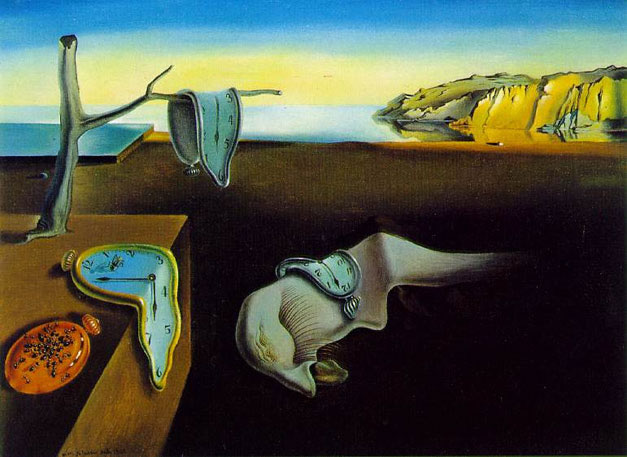
Time goes forwards. It's singular and linear. You might call it an arrow (like Carroll) or persistent (like Dali), but you wouldn’t call it progressing or progressive. That is, a minute now isn’t any better than a minute 30 minutes ago. A minute now isn't an improvement over a minute 30 billion minutes ago.

This is a very simple, value- and progress-free understanding of forwards that isn't transferred onto biological evolution.

Instead, with biology we equate forwards, or the passage of time, with progress but this is a biased view of nature.

Time goes forwards. Complexity requires time. Okay.

Yet, onward-and-upward-ness is our invention. It's a cultural notion, that we can't help but project onto nature. And if you see traits changing through time as each phase being better than the next, as being a part of some cosmic progress, then you’re falling into a dangerous trap.

While you're trapped by forwards-thinking, you might assume that:

(a) prior states of traits were worse than present ones

(b) losing a trait is bad

(c) traits that are not as complex/large/fast/furry/slimy/etc as in prior states are somehow lacking

(d) present traits that resemble earlier versions are somehow lacking, in other words, "primitive" traits are valued less than derived ones.

The last one can rear its ugly head when we naively or carelessly use our completely acceptable evolutionary jargon to describe human variation: Some people are derived at trait X, while others are "primitive."

(Can you call it an f-word if it starts with a p? Because "primitive" might need to get censored from evolution-speak too.)

While you're trapped by forwards-thinking, you might refer to early hominids as “proto-humans” implying they’re an imperfect draft or prototype and that they're not quite perfect or human. If this is true, then we’re proto-Pauls.

Try this. Get in your DeLorean, and set the dashboard to 50 million years ago. Make sure your flux capacitor is engaged and then drive 88 mph down your street and... Voila! You're back in time. Now, are all the animals drooling all over themselves, barely able to eat, walk, or do whatever it is that they do?

Of course not. They’re getting along just fine.

Evidence? Look around you in the year 2011. Nothing would be hunky dory now if nothing was hunky dory in the past.

Yet, 50 million years ago is full of half-baked, inadequate organisms like “proto-whales” and “proto-lemurs” and “proto-bears.” That’s because we have few ways to describe them in such a way that links them to their present-day relatives. They're ancestors or relatives to present day species and we can make those links thanks to some traits they share in their anatomy. But they're not prototypes of anything. They're not anticipating anything. They're not becoming anything. They're just anything--like you and me today are anything.

While you're trapped by forwards-thinking, you might even use the non-term “devolution” to describe the loss of a trait, or the decay of a trait or the decline of a trait. But that’s just evolution. Forwards/backwards, new versions/reversions, gains/losses... All that's just regular old evolution with our biased, value-laden vocabulary (and our aversion to reversion) draped over it. Thinking there's a backwards in nature is just backwards thinking.

We all fall into the forwards-thinking trap. We all have trouble escaping our linear, progressive, goal-oriented thinking. It’s difficult to step out of our present perspective and our culture while we absorb the evidence for evolution. Of course, it's hard... We're complex!

But there are lots of organisms that we wouldn't call complex that are just fine at doing their simple things. Furthermore, there are lots of traits within complex organisms that haven’t changed over millions of years because they’re fine just the way they are. DNA is just one example. Not only have there been myriad additions to organismal complexity during the span of Life on Earth, there have also been myriad losses of functioning
traits as well.

That certainly doesn’t sound like nature is progressing towards a goal or even just towards ever-increasing complexity for complexity’s sake.

Just because we consciously create increasingly complex technology ... just because we marvel at complex systems... just because we appreciate and even strive for complexity…just because we celebrate forwards-thinking... and just because we teach and reinforce goal-oriented behavior... that doesn’t have any bearing on what matters in nature.

Nature cannot strive for, marvel at, celebrate or appreciate, remember?

In nature, there's no forwards or backwards. Nature just is. What works works. What doesn’t doesn’t.

Some of it’s beautiful and some of it’s brutal, but nature has no idea.

Beautiful and brutal and forwards-thinking are ours.

Thanks to nature.

Friday, April 8, 2011

Deep Time: The Movie

The online journal PaleoAnthropology has recently posted the longest boringest movie ever made!

Why would anyone do that? Well, hopefully, you'll see for yourself.


The movie begins with the earliest hominin fossil from between 7-6 million years ago and ....93 hours later... it ends with
[SPOILER ALERT!] modern humans.

You can download the movie here
and you can also check out the brief article that accompanies it called, "Deep time in perspective: An animated fossil hominin timeline."

(Notice the author's name?)


Because here on the Mermaid's Tale I can address a broader audience--and I'm also free to write about celestial bodies and microbes as much as I please--I thought I'd post about the movie here.


So stock up on raisinettes, nuke enough popcorn to last 93 hours, find a comfortable chair, and enjoy your journey through deep time....


Darwin and Deep Time

Darwin heavily stressed the concept of deep time in Origin of Sp
ecies because he knew it was a major obstacle to understanding evolution.
It is hardly possible for me to recall to the reader who is not a practical geologist, the facts leading the mind feebly to comprehend the lapse of time. (Darwin 1872: 294)
Deep, geologic time is absolutely crucial to evolution but it is difficult to grasp let alone represent in a drawing.

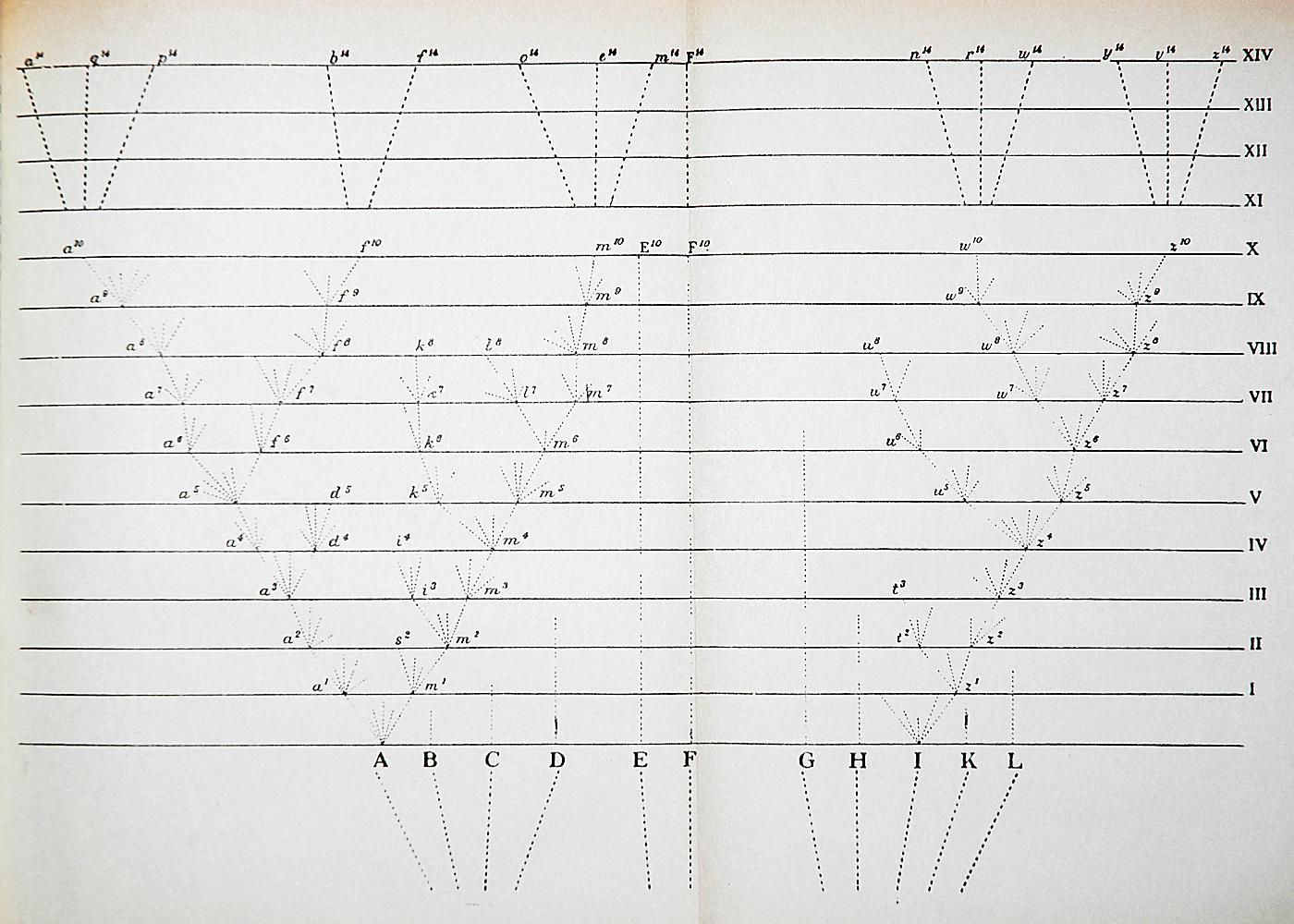
Scientists, like everyone else, have no frame of reference and so the lapse of deep time is all but ignored in evolutionary trees, like this one that Darwin drew.

Mr. Croll, a Strip of Paper, a
nd Deep Time
A colleague of Darwin’s, a "Mr. Croll" mentioned in Origin of Species, offered a c
rafty illustration of deep time.

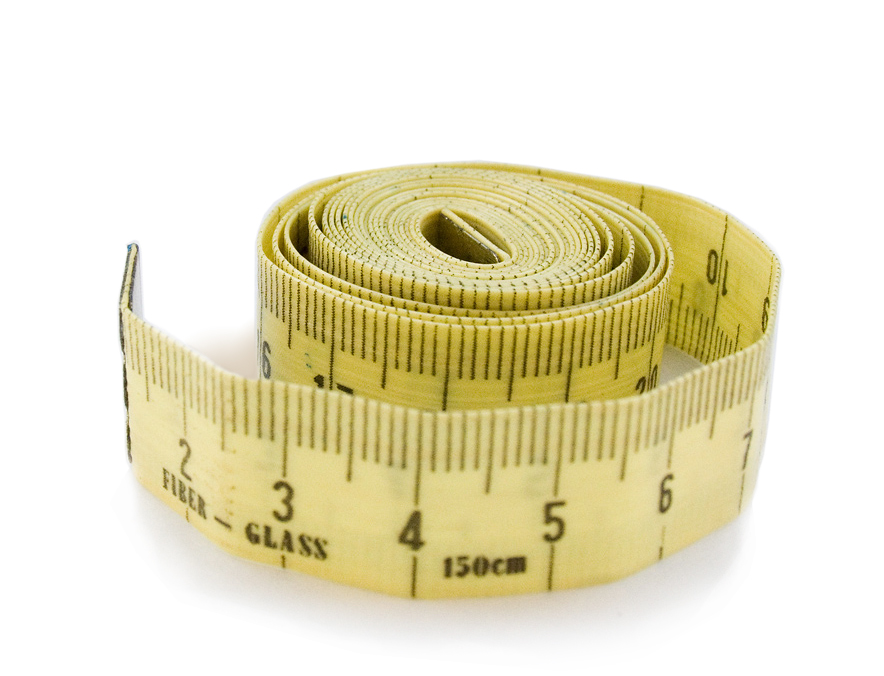
Take a narrow strip of paper, 83 feet 4 inches in length, and stretch it along the wall of a large hall; then mark off at one end the tenth of an inch. This tenth of an inch will represent one hundred years and the entire strip a million years. But let it be borne in mind in relation to the subject of this work, what a hundred years implies, represented as it is by a measure utterly insignificant in a hall of the above dimensions. (Darwin 1872: 269)
Demonstrations like this offer a glimpse into the expanse of deep time and conjure up a feeling of awe. Everyone should try Mr. Croll’s exercise.

Wait. What? You don’t have 83 feet of paper? You’d like to experience more than one million years of deep time?

Well, here’s a solution for you. It’s an animated movie of Mr. Croll’s strip of paper and the inspiration to make it came from marking off the hominin fossil record on a long strip of register receipt paper in Alan Walker's paleoanthropology lab several years ago.

Making the Movie about Deep Time
Because a movie about the entire fossil record of life on Earth might take a lifetime to make and a lifetime to watch, we focused in on the last six and a half million years of human evolution.
We built a database of the majority of significant fossil hominin specimens beginning with the late Miocene Sahelanthropus cranium and going up until about 40,000 years ago.

(This was back in 2005 so we could only include fossils that were published at that t
ime. We could also only use the known dates/ages from that time. We also had to stop adding fossils near the end (the present day) because that part of the record gets enormous and the fossils overwhelmed the movie... you'll see if you watch it all the way through.)

Then, with help from our programmer friends, we created a movie using the software
Shockwave® that turned the record of hominin fossil specimens and their ages into an animated timeline.
The movie pauses with each fossil to allow the viewer to see it. Skeleton icons represent complete and nearly complete skeletal remains. Skull icons represent complete and nearly complete skulls and crania. Partial skull icons represent skull fragments. Full tooth row icons represent nearly complete maxillae and mandibles. Partial tooth row icons stand for jaw fragments. A single molar icon stands for an isolated tooth.

Watching the Movie about Deep Time
To watch the movie, you need to go to this link, find my article
and click on "PA20110013_S03.zip." Download it, unzip it or "extract" the files (crucial), and then click on the "timeline" which should run in Mozilla Firefox or another browser. Detailed instructions on how to do this are here.

Viewers of the movie may begin by following these st
eps:
  1. When you open the movie, it starts rolling immediately. The movie can be stopped at any time by clicking on the red button, which, when clicked again, causes the movie to resume playing. The default rate is 20 years per second and at this rate time ticks by at one generation (20 years) per second.
  2. When you watch the movie at the default rate for at least 2 minutes, you will experience onlyabout 2400 years and will see very few icons. At this rate, watching the entire 6.5 million yearsof the timeline would take about 93 hours!
  3. For a different perspective, you can click on the drop down menu and set the pace to 50,000 years per second (same as 2,500 generations per second). At this pace you can witness the entire timeline of hominin evolution in a more practical length of time... with the film taking only several minutes to watch from beginning to end.
A Guide to the Movie about Deep Time
The clock starts at 6.5 Ma with the cranium from
Chad (Sahelanthropus tchadensis). Time ticks by on the screen at the chosen rate until 6 Ma when symbols representing the next known specimens (belonging to the species called Orrorin tugenensis) flash into view. Then specimens belonging to Ardipithecus pop on the screen, and so on until the proliferation of anatomically modern humans in the Late Pleistocene. This movie offers a different perspective on the hominin fossil record from that of conventional evolutionary tree drawings, where the time span of a species is sometimes estimated based on a single specimen or very few specimens. See this diagram below for just one of the myriad examples (Dunsworth, 2007).


Gaps in the Fossil Record and Deep Time
There are literally tons of fossils in museums around the world, yet it
is clear from watching the movie that there are more gaps than there are fossils. How can that be? Part of the answer has to do with the fact that not all creatures fossilize; and, of those that do fossilize, not all preserve to the present; and, of those that do preserve to the present, only a rare few are actually discovered by paleontologists. This enormous Earth is teeming with life. And it has been teeming with life for longer than we can comprehend from our limited perspective.

So not only is the fossil record spotty because of the rare conditions that are required for fossils to form, and the special conditions that enable paleontologists to find them, but the fossil record also has gaps simply because it is so long. The record covers so much deep time that it is taking generations upon generations of scientists to fill in those gaps.

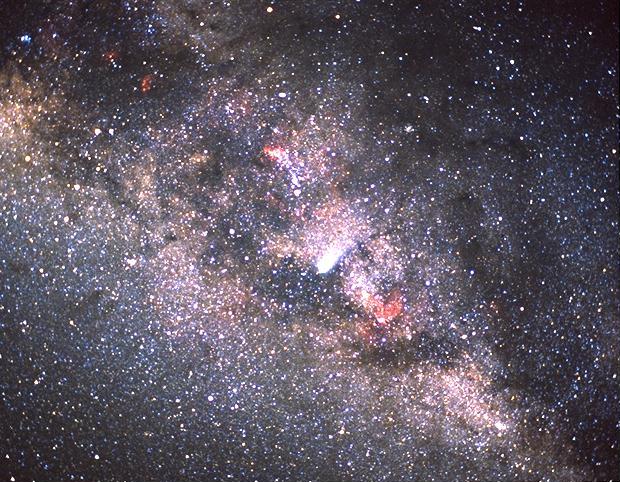
Like your body, like the Milky Way, and like the universe, the fossil record is more empty space than matter.


However, that does not diminish the wealth of information that we can glean from the thousands of hominin fossils and artifacts that have been discovered so far.

In general, hominin fossils are more similar to others that share space and/or time than they are to those found further away in space and/or time. There are a few instances where different types or species of hominins were living practically side-by-side (e.g. robust australopiths and early Homo) and when that is discovered, the hominins are placed on separate evolutionary lineages, marked by separate species or generic designations. Noting similarities and making distinctions are all part of the process that paleontologists use to reconstruct evolutionary history.

In spite of the gaps in the hominin fossil record that are made obvious by the movie, scientists know a great deal about human evolution.

Overall Trends in Hominin Aanatomy and Behavior
The traits and behaviors that distinguish hominins at the genus level are evident in their teeth, their skulls, their bones and the artifacts that they leave behind such as stone tools and butchered bones.

Ardipithecus, Orrorin, and Sahelanthropus: As the fossil record stands now, the bipedal abilities and adaptations of the earliest hominins are disputed (as is their inclusion as hominins!). Some of the teeth of these small-bodied apes have thick enamel and their canines are relatively small—both trends that link them to later hominins.

Australopithecus: The main trend in the time of the australopiths is that of bipedal adaptation. It’s during this era that two separate lineages diverged: The robust australopiths (or Paranthropus) and the genus Homo to which humans belong.

Robust australopiths (a.k.a. Paranthropus): With their large molars and large jaws, these hominins adapted to hard, tough diets and then went extinct.

Homo: With their nearly modern (and, later, totally modern) skeleton, these hominins made and used stone tools as they added meat to their diet. It’s during this time that the brain makes a significant expansion. Species in the genus Homo are the only hominins to be discovered outside of Africa.

Lamarck and Deep Time

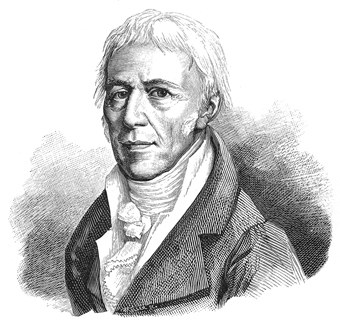
Prior to Darwin, Jean Baptiste Lamarck grappled with deep time and described how miniscule the present perspective is in comparison to the vast stretches of time that came before.

There is one strong reason that prevents us from recognizing the successive changes by which known animals have been diversified and been brought to the condition in which we observe them; it is this, that we can never witness these changes. Since we see only the finished work and never see it in course of execution, we are naturally prone to believe that things have always been as we see them rather than that they have gradually developed. Throughout the changes which nature is incessantly producing in every part without exception, she still remains always the same in her totality and her laws; such changes as do not need a period much longer than the duration of human life are easily recognized by an observer, but he could not perceive any of those whose occurrence consumes a long period of time. (Lamarck, 1809)
Thanks to controlled breeding experiments on organisms like bacteria and basset hounds we can witness evolutionary changes. What’s more, that you are not a clone of your parents, that your generation is different from the previous one, is evolution. However, the dramatic changes that occurred over thousands and millions of years before the present, and that will carry on for thousands and millions of years into the future, are beyond our imagination.

Deep Time is beyond Human Imagination
It is impossible to comprehend deep time. Even if we had a time machine and could visit an australopith 3 million years ago, we would only gain a snapshot of the past.

To gain a better perspective on deep time than we have now—that is, to really se
e evolution taking place—we would have to increase our life spans substantially, which would require a substantial increase in body size as well.

Being as large as Earth would certainly give us a better feel for the lapse of deep, geologic time. Being as big as the Milky Way would be even better. And so on.


This is why so many evolutionary biologists study microbes. To a microbe you are slow and absolutely enormous.


It’s from this present and human point of view that we must continue to work towards the scientific truth about the evolution of all life on Earth, from microbes to mammals. Our inability to truly comprehend deep time does not prevent us from understanding evolution. As long as we accept our limitations we can forge ahead.

Acknowledgments

Alan Walker was the inspiration behind this project which was carried out at Penn State University. Jessica Berry, Stephanie Kozakowski, Gail E. Krovitz, Maria Ochoa, Joseph D. Orkin, and Kelli L. Welker helped compile the fossil hominin database. Brian Shook and Patrick Besong creatively programmed our ideas into the computer. Kevin Stacey, Ken Weiss, and Michael Rogers provided helpful insights, comments, and discussion.


References
Darwin, C. 1872. Origin of Species, 6th edition. John Murray, London.
Dunsworth, HM. 2007. Human Origins 101. Greenwood Press, CT.
Dunsworth, HM. 2011. Deep time in perspective: An animated fossil hominin timeline. PaleoAnthropology 2011: 13-17.

Lamarck, JB. 1809. Additions to Part I, Zoological Philosophy. From 1914 translation.


P.S. Time's Deep, Man...