I have a doctorate in Public Health which means that, unlike a 'real doctor', I was trained to think in terms of the health of populations, not of specific individuals. Public Health of course, when done appropriately, can have an enormous impact on the health of individuals, but in a very real way that's a side effect of gathering group information and instituting measures meant to affect a group. Clean water, fluoridated water, vaccinations, window screens, anti-smoking campaigns, and so much more are all public health measures targeting whole populations, without regard for the specific cavities or cases of cholera or lung cancer that the measure will actually prevent. This is because, of course, smoking doesn't make every smoker sick, just enough of them that aiming to convince whole populations not to smoke can have a large enough difference on population health that it's worth the cost and effort.
You've probably seen those murmuration videos showing enormous flocks of birds flying as if they were one; undulating, turning, responding as though they have a collective mind. Here's one is of a flock of starlings being hunted by a peregrine falcon one evening in Rome. The starlings fly so unpredictably that, at least this time, the falcon is unable to catch a meal.
Source: BBC One
According to the Cornell Lab of Ornithology, murmurations almost always arise in response to the detection of a predator; a falcon or a hawk that has come for its dinner, as the starlings in Rome. So, a bird or birds detect the predator and sound the alarm, which triggers the whole flock to take off. But, how do they stay together? Who decides where they're going next, and how does the rest of the flock get the message?
Young et al. report, in a 2013 paper in PLOS Computational Biology, that once in flight each bird is noticing and responding to the behavior only of its seven nearest neighbors. The murmuration, the movement of the group, then, is due to local responses that create the waves of motion that can be seen in the evening sky. There is no single leader, just many, many local responses happening almost simultaneously.
The same kinds of dynamics explain the movements of schools of fish as well. They work to some extent, but fish are routinely attacked by sharks, which can scoop up multiple individuals at a time, and surely sometimes birds of prey manage to snap up a luckless bird among the thousands or millions in a flock. But, most of the fish or the birds do get away, so it's a winning strategy for the group. Public Health in action.
Well-known, very prolific British epidemiologist George Davey Smith was interviewed on the BBC Radio 4 program The Life Scientific not long ago. He's a medical doctor with a degree in Public Health as well, so he's been trained to think in terms of both the population and the individual. He is currently interested in what genes can tell us about environmental influences on health. One of his contributions to this question is the analytical tool called Mendelian Randomization, which aims to tease out environmental triggers of a trait given a particular genetic risk factor. That is, the idea is to divide a study sample into individuals with and without a particular genetic variant, to determine whether their history of exposure to an apparent risk factor might be responsible for the disease. In this instance, the gene isn't modifiable, but exposure might be.
In the interview, Davey Smith said that his primary interest is in population health, and that if a Public Health measure can reduce incidence of disease, he's happy. So, if everyone in a population is on statins, say, and that reduces heart disease and stroke without major side effects, he would consider that a successful Public Health measure. Even if it's impossible to know just who's stroke or heart attack was prevented. Success of Public Health can only be evaluated on the population, not the individual level.
So much for personalized, predictive medicine. That's fine, my training is in Public Health, too, so I'm ok with that. Except that Davey Smith is also a fan of large, longitudinal studies maintained in perpetuity because, as he said, they have yielded more results at lower cost than most any other kind of epidemiological study.
But there are problems with such studies, and if the idea is to identify modifiable environmental risk factors, a major problem is that these studies are always retrospective. And, as we've written here so often, future environments are not predictable in principle. Presumably the aim of these large studies is to use Big Data to determine which Public Health measures are required to reduce risk of which diseases, and if that is done -- so that large segments of the population are put on statins or change from saturated to unsaturated fats or start to exercise or quit smoking -- this changes environmental exposures, and thus the suite of diseases that people are then at risk of.
So, Public Health has to always be playing catch up. Controlling infectious diseases can be said to have been a cause of the increase in cancer and obesity and heart disease and stroke, by increasing the number of people who avoided infectious disease to live to be at risk of these later diseases. So, in that sense, putting whole populations on statins is going to cause the next wave of diseases that will kill most of us, even if we don't yet know what these diseases will be. Maybe even infectious diseases we currently know nothing about.
Even though, after putting their favored Public Health measure into effect, all the starlings outwitted the falcon that particular night in Rome, they're all eventually going to die of something.

Showing posts with label disease. Show all posts
Showing posts with label disease. Show all posts
Tuesday, March 8, 2016

Monday, February 24, 2014
Medicalizing obesity: What is a 'disease', anyway?
Last June the American Medical Association, along with a number of specialist medical groups, voted to consider obesity to be a 'disease', and released a policy statement explaining why, and what they propose to do to treat it.
A disease, by their definition,
1) is an impairment of the normal functioning of some aspect of the body;The statement details the reasons that obesity meets this definition, and then provides a substantial list of recommended actions. It is worth nothing that the first, in a seven page list of recommendations, is that "Our AMA will: (1) urge physicians as well as managed care organizations and other third party payers to recognize obesity as a complex disorder involving appetite regulation and energy metabolism that is associated with a variety of comorbid conditions…" That is, in plain language: as a disease, obesity should be covered by insurance.
2) has characteristic signs or symptoms; and
3) causes harm or morbidity.
Is this just a ploy for a big financial golden egg? One might be a lot more cynical about about this if the statement didn't include some recommendations for prevention; healthy school lunch and exercise programs, encouraging reduction in the price disparity between fresh and processed foods. They even include recommending healthy food at AMA meetings in their statement. We'd be even happier if nutrition science could tell us at all definitively what "healthy food" is.
 |
| Jogging in Central Park; Wikipedia |
Even so, this strikes us primarily as the medicalization of obesity. The statement justifies this by saying that bariatric surgery, pharmacological approaches and lifestyle interventions can now help people to lose weight and thus reduce the consequences of obesity; type 2 diabetes, heart disease, stroke, breast cancer. If they are so successful, though, why does the same report include the prediction that 50% of the US population will be obese by 2040? Not overweight: obese.
An editorial in yesterday's New York Times, 'Should Obesity Be a "Disease"?', by Crystal Hoyt and Jeni Burnette, two psychologists, asks whether there are negative consequences to the AMA's decision. Does it make a difference psychological and/or medically if obese people consider themselves diseased? "Would it reduce or add to the burden of body-image concerns and shame? Would it empower people to fight back, or lead to a fatalistic acceptance of being overweight?"
So, they did a study. Or, three online studies, of over 700 obese people. They assigned a news story about the AMA's decision to one group, a story about how obesity is not a disease to another group, and a public health message about weight loss to another group, and then asked them some questions.
They found that the people who read that obesity was a disease were more apt to have a positive body image than the other groups. But, there was a down side to thinking of obesity as a chronic illness. "Suggesting that one’s weight is a fixed state — like a long-term disease — made attempts at weight management seem futile, and thus undermined the importance that obese individuals placed on health-focused dieting and concern for weight." Hoyt and Burnette conclude:
Ideally, we would have a public health message that leads to a decrease in self-blame and stigma while at the same time promoting adaptive self-regulation and weight loss — both equally important components of the fight against the obesity epidemic. We’ve yet to find an answer to this dilemma.Obesity is epidemic, meaning that relative weight (for height, say) has become increasingly prevalent in the population. Assuming this trend is a negative one, one might then fairly consider what its cause is and try to eliminate that cause. But after countless studies, there isn't a single reason, and if it were easy to lose weight and keep it off, it wouldn't be a problem, or a 'disease', or something that leads to disease. It could even be something good, as it provides people with some energy reserve if they do get a clear disease. Apparently, even stomach stapling is often not a long-term fix, and it certainly doesn't always change people's mindset about food. Losing weight is really hard, and keeping it off is even harder, so simply saying that the medical systems needs to promote self-regulation and weight loss is to recommend the impossible. It may be as resistant to simple correction or prevention as smoking cessation is.
To give the AMA credit, they do give attention to the prevention side, where it needs to be. As Michael Pollan has written, the food industry produces more calories per day than people need to eat to maintain their weight. They have to get us to eat it somehow, and they are very good at that. And, sugar, salt and fat are very tasty, and often go together in high calorie, inexpensive processed foods.
The food industry has very profitably figured out how to get us to eat what they sell, starting at a very early age. The medical system is now figuring out how to take its cut, by medicalizing obesity. No one has satisfactorily figured out how to get people thin again, once they've gotten obese, however. The cure is prevention. We know that exercise and eating in moderation keep people thin. But that message is drowned out by the easy availability of calorie dense foods. Changing that is going to take societal and cultural change.
What is a disease?
This brings up a broader question. What is an 'impairment' and what is 'normal', and who decides? The 3 characteristics of a disease definition that we listed above are themselves vague, perhaps hopelessly vague. What does 'some aspect' of the body actually mean? Since any and everything can have 'characteristic' signs or symptoms, and since 'normal' is not an obvious term, almost anything--say, a tendency to giggle, or to be ticklish--can fit the definition. Finally, causing 'harm' or 'morbidity' simply passes the buck on what that actually means.
What this shows is that even defining 'disease' is subjective, changeable, and culture-specific. The criteria are in themselves of no actual use. They sound scientific and knowledgeable, and from the AMA one might think they are well considered and helpful. But they really just kick the can down the proverbial road to some other commissions of 'experts'. By now we should be long past asking whether 'obesity' is a trait, much less a disease.
There does seem to be an issue in regard to obesity, and it does seem to go beyond fashion and style and cultural tastes. And there really are diseases that we have every right to be concerned about and try to prevent. But without useful definitions, and data to show that those definitions really mean something, the main people getting fat off of the definitions may be the research industry and people running nice hotels where, after a fine lunch, these definitions are endlessly discussed.
Thursday, May 16, 2013
Breast cancer, and probablities, in the news (again)
Angelina Jolie's New York Times editorial on her decision to have bilateral mastectomies when she tested positive for BRCA1 mutations associated with high risk of breast cancer brings up a number of issues. We have previously commented on the problem of assessing competing risks, in the context of debates about screening, detection, and risk associated with breast cancer. This is so common, and so serious, a problem that it naturally draws a lot of attention. Just as naturally, it involves many sorts of probabilities: does a given test detect actual cancer? Does every cancer need to be detected, or will some go away spontaneously? And so on.
Under these kinds of conditions, the balance between costs, risks, important detection, treatment options and the like all involve probabilities. For example, Jolie writes that she was given an 87% probability of eventually having cancer. Projecting risks--your net future in regard to this disease--is of vital interest, and because most of the probabilities involved are very inaccurately known, it is even a problem to know whether or to what extent to believe the probability estimates we already have. That is also why the same thing seems to require study over and over and over, without clear results.
In the end, for most women, and their physicians, whether they know it or not, they and their lives and health are highly dependent on the statistical aspects of studies to estimate and assess a wealth of probabilities. In such cases, there are important, often wildly misunderstood or misapplied statistical approaches, and they often yield probabilities whose accuracy is not high or is even unknown. Yet the point of statistical and probabilistic analysis is to make decisions about the state of the world. If that is important, then how we interpret the results is important, but so, to a fundamental extent, is how we come to our results and interpretations in the first place.
This is so serious and widepread an issue in science, that we posted a very fine 2-page primer on statistical design and the basic nature of probabilistic inference that was written for MT by our very knowledgeable colleague, Jim Wood, here in our Department.
And yet, the Jolie story shows that under some circumstances, it is unnecessary and perhaps even wrong to worry about the details. She decided to undergo double mastectomy as a preventive against breast cancer. That is, she has decided that in a sense she already had breast cancer in the sense that it was a ticking time bomb in her genome. Prevention being better than cure, she made that awesomely serious decision.
Jolie discovered that she carried one of the known variants in the BRCA1 gene that confer very high risk of breast (and ovarian) cancer. She said she was told that the risk she'd get breast cancer was over 85%. Now, there are actually major uncertainties about even this risk, as different cohorts of women (that is, born in different places or times) have very different risks as estimated by retrospective studies of women known to carry, compared to those known not to carry, such variants. For some cohorts, the risk by age 60 or so has been estimated at only about half that in other cohorts.
Yet, here it doesn't matter and there is no need to worry about statistical finery or even the specific risk estimate. Why? Because under all the established risk scenarios, these mutations confer extremely high, potentially lethal risk. It matters not at all, at least to most of us, whether a risk is 90% or 50%, if the risk is avoidable and the consequences dire.
Further, the BRCA1 gene function is basically known: it relates to corrections of DNA copying mistakes. If miscopied DNA is not repaired, the risk is that in some breast cell a mutation will arise that leads the cell to be transformed into a cancer cell, that then proliferates and spreads. So here we have not just estimates of very high risks, whatever they are, but also a mechanism. And we have replicated findings in different populations. So here, that these specific variants are truly risk factors themselves, rather than just being associated with some unmeasured factor, is pretty convincing--convincing enough to bet your life on it.
The nature of epidemiological risks
The cohort dependence of the BRCA1 risk for those with the clear-cut, well-studied variants, raises a very important point, one we've mentioned before. Risks are expressed in terms of the likelihood of future events. But how do we know what those are? The answer is that we generally only know them from the past. That is, we do retrospective studies, that compare those with or without exposure to a putative risk factor (here, a genetic variant) and see what happened to them. We estimate how much more happened to those with, compared to those without, exposure to the risk factor. But how can we predict future risk from such data? The answer is basically an assumption that might be called uniformitarianism (a term related to the history of geology and that led Darwin to his insight about evolution): we assume that in all relevant ways, the future will be like the past.
That means that we assume that exposure to the same risk factors in the future will have the same effects as exposure did in the past (which we discovered from our sample of cases and controls, etc.). But this assumes that we measured all the relevant factors in the past and, much more importantly, it assumes that people with the genetic risk factor will be exposed to same other factors in the future to an extent that justifies our uniformitarian extrapolation.
However, even if that were the case, we do not understand the many factors well enough and cannot, even in principle, know what exposures will be like in the future. We simply do not know what our lifestyles will be like. So, we have no way to make accurate risk predictions. It is, like the parts of the universe beyond which light cannot get here for us to see, literally beyond our reach.
This is why BRCA1 variants are 'lucky', in that whatever happens in regard to future lifestyles, there is no known scenario in which these variants would not also seem to confer very high risk. The same cannot be said of the vast majority of genetic risk factors that are known today. For them, risk estimates such as various genome-testing companies, or NIH's drive for 'personalized genomic medicine' are misleading--to an unknown extent.
It needs to be pointed out in this context that there are hundreds of other mutational variants in the BRCA1 gene (and in a handful of others, one of which is BRCA2) that are so rare and or were found only in patients' tumor cells, that we really cannot legitimately attribute causation to them. Indeed, if they are too rare (as most are) we cannot apply statistical tests to even estimate risk. All we can do is assume that the gene is relevant and therefore that the variant we find is causal. Those variants are listed in disease-gene data bases as if they are causal, but that verges on simply being circular: assume a gene is causal and then conclude that the variant in that gene is therefore a cause. That's bad reasoning.
Again, even here there are environmental (that is, non-genetic) risk factors that are not well established that may make an even larger proportional difference in risk, so that even if these various mutations are in fact causal in some way, that may depend entirely on the environmental context. If so, that way is highly probabilistic and much farther from certain than the known variants in these genes. Or, some may be exceedingly dangerous, but not statistically demonstrable in the sense of probability that Jim Wood posted about in his excellent primer and discussion yesterday.
In fact, even here one can ask why the same BRCA1 mutations do not cause comparably elevated risks for any and all tissues in the body. Such associations are generally low and not well established. So here, the mechanism that seems to be known (DNA repair) should predict--should lead to a prior expectation of--high cancer risk in any tissue in which the gene's expressed. In a standard 'Bayesian' analysis, the lack of strong effect in other tissues could actually undermine our confidence in our causal expectation for breast cancer itself. Perhaps explanations for this exist, but we don't know of them.
Unfortunately, for most women there is no pre-smoking gun to guide what here are preventive decisions. So while it's very unlucky to have inherited such a variant as Jolie did, in a strange sense she was very lucky. At least she knew. About 9-10 percent of women in developed countries (that is, where this has been studied) are at risk for breast cancer. A close friend of ours has just had the same kind of operation as Jolie, but after a tumor was already found, and without carrying the known risk-variants. Fortunately, although as we noted in our earlier post on this subject (link given above), the story is not entirely rosy, at least there are treatments that can be effective, even after the cancer has already occurred.
Everyone probably knows people who have been affected by breast cancer, and for many it's in their own families. But unlike those with the clear-cut variants, they must face the kinds of exquisitely difficult decisions, based on very poorly understood, or inaccurate to unknown extent, competing probabilities. For them, and for most of us in regard to the various disease time bombs silently ticking away inside us, the fine points of statistical analysis really are matters of life and death. And they are fine points that nobody really understands.....and those who claim to are being misleading.
Under these kinds of conditions, the balance between costs, risks, important detection, treatment options and the like all involve probabilities. For example, Jolie writes that she was given an 87% probability of eventually having cancer. Projecting risks--your net future in regard to this disease--is of vital interest, and because most of the probabilities involved are very inaccurately known, it is even a problem to know whether or to what extent to believe the probability estimates we already have. That is also why the same thing seems to require study over and over and over, without clear results.
In the end, for most women, and their physicians, whether they know it or not, they and their lives and health are highly dependent on the statistical aspects of studies to estimate and assess a wealth of probabilities. In such cases, there are important, often wildly misunderstood or misapplied statistical approaches, and they often yield probabilities whose accuracy is not high or is even unknown. Yet the point of statistical and probabilistic analysis is to make decisions about the state of the world. If that is important, then how we interpret the results is important, but so, to a fundamental extent, is how we come to our results and interpretations in the first place.
This is so serious and widepread an issue in science, that we posted a very fine 2-page primer on statistical design and the basic nature of probabilistic inference that was written for MT by our very knowledgeable colleague, Jim Wood, here in our Department.
And yet, the Jolie story shows that under some circumstances, it is unnecessary and perhaps even wrong to worry about the details. She decided to undergo double mastectomy as a preventive against breast cancer. That is, she has decided that in a sense she already had breast cancer in the sense that it was a ticking time bomb in her genome. Prevention being better than cure, she made that awesomely serious decision.
Jolie discovered that she carried one of the known variants in the BRCA1 gene that confer very high risk of breast (and ovarian) cancer. She said she was told that the risk she'd get breast cancer was over 85%. Now, there are actually major uncertainties about even this risk, as different cohorts of women (that is, born in different places or times) have very different risks as estimated by retrospective studies of women known to carry, compared to those known not to carry, such variants. For some cohorts, the risk by age 60 or so has been estimated at only about half that in other cohorts.
Yet, here it doesn't matter and there is no need to worry about statistical finery or even the specific risk estimate. Why? Because under all the established risk scenarios, these mutations confer extremely high, potentially lethal risk. It matters not at all, at least to most of us, whether a risk is 90% or 50%, if the risk is avoidable and the consequences dire.
Further, the BRCA1 gene function is basically known: it relates to corrections of DNA copying mistakes. If miscopied DNA is not repaired, the risk is that in some breast cell a mutation will arise that leads the cell to be transformed into a cancer cell, that then proliferates and spreads. So here we have not just estimates of very high risks, whatever they are, but also a mechanism. And we have replicated findings in different populations. So here, that these specific variants are truly risk factors themselves, rather than just being associated with some unmeasured factor, is pretty convincing--convincing enough to bet your life on it.
The nature of epidemiological risks
The cohort dependence of the BRCA1 risk for those with the clear-cut, well-studied variants, raises a very important point, one we've mentioned before. Risks are expressed in terms of the likelihood of future events. But how do we know what those are? The answer is that we generally only know them from the past. That is, we do retrospective studies, that compare those with or without exposure to a putative risk factor (here, a genetic variant) and see what happened to them. We estimate how much more happened to those with, compared to those without, exposure to the risk factor. But how can we predict future risk from such data? The answer is basically an assumption that might be called uniformitarianism (a term related to the history of geology and that led Darwin to his insight about evolution): we assume that in all relevant ways, the future will be like the past.
That means that we assume that exposure to the same risk factors in the future will have the same effects as exposure did in the past (which we discovered from our sample of cases and controls, etc.). But this assumes that we measured all the relevant factors in the past and, much more importantly, it assumes that people with the genetic risk factor will be exposed to same other factors in the future to an extent that justifies our uniformitarian extrapolation.
However, even if that were the case, we do not understand the many factors well enough and cannot, even in principle, know what exposures will be like in the future. We simply do not know what our lifestyles will be like. So, we have no way to make accurate risk predictions. It is, like the parts of the universe beyond which light cannot get here for us to see, literally beyond our reach.
This is why BRCA1 variants are 'lucky', in that whatever happens in regard to future lifestyles, there is no known scenario in which these variants would not also seem to confer very high risk. The same cannot be said of the vast majority of genetic risk factors that are known today. For them, risk estimates such as various genome-testing companies, or NIH's drive for 'personalized genomic medicine' are misleading--to an unknown extent.
It needs to be pointed out in this context that there are hundreds of other mutational variants in the BRCA1 gene (and in a handful of others, one of which is BRCA2) that are so rare and or were found only in patients' tumor cells, that we really cannot legitimately attribute causation to them. Indeed, if they are too rare (as most are) we cannot apply statistical tests to even estimate risk. All we can do is assume that the gene is relevant and therefore that the variant we find is causal. Those variants are listed in disease-gene data bases as if they are causal, but that verges on simply being circular: assume a gene is causal and then conclude that the variant in that gene is therefore a cause. That's bad reasoning.
Again, even here there are environmental (that is, non-genetic) risk factors that are not well established that may make an even larger proportional difference in risk, so that even if these various mutations are in fact causal in some way, that may depend entirely on the environmental context. If so, that way is highly probabilistic and much farther from certain than the known variants in these genes. Or, some may be exceedingly dangerous, but not statistically demonstrable in the sense of probability that Jim Wood posted about in his excellent primer and discussion yesterday.
In fact, even here one can ask why the same BRCA1 mutations do not cause comparably elevated risks for any and all tissues in the body. Such associations are generally low and not well established. So here, the mechanism that seems to be known (DNA repair) should predict--should lead to a prior expectation of--high cancer risk in any tissue in which the gene's expressed. In a standard 'Bayesian' analysis, the lack of strong effect in other tissues could actually undermine our confidence in our causal expectation for breast cancer itself. Perhaps explanations for this exist, but we don't know of them.
Unfortunately, for most women there is no pre-smoking gun to guide what here are preventive decisions. So while it's very unlucky to have inherited such a variant as Jolie did, in a strange sense she was very lucky. At least she knew. About 9-10 percent of women in developed countries (that is, where this has been studied) are at risk for breast cancer. A close friend of ours has just had the same kind of operation as Jolie, but after a tumor was already found, and without carrying the known risk-variants. Fortunately, although as we noted in our earlier post on this subject (link given above), the story is not entirely rosy, at least there are treatments that can be effective, even after the cancer has already occurred.
Everyone probably knows people who have been affected by breast cancer, and for many it's in their own families. But unlike those with the clear-cut variants, they must face the kinds of exquisitely difficult decisions, based on very poorly understood, or inaccurate to unknown extent, competing probabilities. For them, and for most of us in regard to the various disease time bombs silently ticking away inside us, the fine points of statistical analysis really are matters of life and death. And they are fine points that nobody really understands.....and those who claim to are being misleading.
Monday, April 9, 2012
SuperSize me! Nothing in American can be small (except genetic risks?)
In evolutionary biology, perhaps especially human evolution and anthropology, and biomedical genetics the current working mythology....er, we mean 'model'....is of strong, rapid, definitive natural selection as 'the' mechanism by which traits we see today got here. Since adaptation only works through what is inherited (environmental effects, so to speak, die with the individual), the same kind of simple-cause deterministic thinking has been applied to the genetic control of current traits.
There are all sorts of reasons to expect, or hope, that cause and effect will be simple. Single-gene causation of adaptation means we can find 'the' gene that explains why you vote or mate as you do, have a particular disease or physical trait, and so on. Pharma doesn't want to invest in profit-less rare traits, or complex traits for which a single med will only help a small fraction of patients. And, of course, simplicity lends itself to melodrama and hence to the visual and even the print news.
But what we see are a multiplicity of individually small effects, as last week's papers on autism (the subject of our post on Friday) show yet again. This is disappointing, but why is nature that way? There are several reasons to believe that the apparent complexity is, in fact, the truth.
This should surprise no one. For example, mutations conferring simple strong effects on disease-susceptibility will be quickly eliminated by natural selection. Genes fundamental to many other genes because of interactions, may be specifically vulnerable to such mutations--so we may not find many risk alleles in those genes.
If many genes contribute to a trait, their individual effects almost necessarily will be even smaller. This clearly is the case for the kinds of traits that are the main targets of GWAS and similar approaches.
Most genes that confer high risk would be eliminated by selection unless, as some argue, recent environments make them harmful (e.g., causing diabetes or cancer), whereas they weren't harmful before. If their effects were slight or of late onset, they would not impair reproductive success, and would stay around in the population. This doesn't seem to be the case. In most GWAS'ed traits, risk has risen rapidly and greatly during the past century. Yet the evidence is not that a few genes with major response to these environmental changes are responsible for the disease: indeed, the GWAS problem is precisely that this is not what we find!
Note also that traits not present at birth, meaning most GWAS'ed traits, take decades to manifest themselves. The risk difference between variants at the 'risk' genes is usually very small, meaning that they change the risk at any given age by trivial amounts. We may not want to get such diseases, but from a biological point of view they are really miniscule effects. This also easily and non-suprisingly accounts for the findings of the recent paper of low concordance of age and cause of death relative to genotypes in identical twins.
The very same arguments apply to the ability of natural selection to detect these differences, and that in turn clearly explains why it is so difficult to find 'signatures' of natural selection in genomic data, and why again in turn most selective arguments that refer to specific genes are without strong support beyond neat stories one tells about them (as we see in the news almost daily, and report here on MT).
When a gene has a true, but tiny, affect on risk (or on evolutionary fitness), there are so many competing causes of death or disease, or bad luck, that the odds on that gene's effect actually being manifest (as disease, or fitness) are simply very very small.
These are not complicated ideas to understand! They are not our own private theory. They're plainly visible in the mountain of facts we already have available to us (without huge, costly biobanks and promises of personalized medicine or strong adaptive arguments).
Traits like disease or adaptation may be major--nobody wants cancer, but in trying to find 'the' gene or few genes that are responsible, we're making mountains out of biological molehills.
There are all sorts of reasons to expect, or hope, that cause and effect will be simple. Single-gene causation of adaptation means we can find 'the' gene that explains why you vote or mate as you do, have a particular disease or physical trait, and so on. Pharma doesn't want to invest in profit-less rare traits, or complex traits for which a single med will only help a small fraction of patients. And, of course, simplicity lends itself to melodrama and hence to the visual and even the print news.
But what we see are a multiplicity of individually small effects, as last week's papers on autism (the subject of our post on Friday) show yet again. This is disappointing, but why is nature that way? There are several reasons to believe that the apparent complexity is, in fact, the truth.
This should surprise no one. For example, mutations conferring simple strong effects on disease-susceptibility will be quickly eliminated by natural selection. Genes fundamental to many other genes because of interactions, may be specifically vulnerable to such mutations--so we may not find many risk alleles in those genes.
If many genes contribute to a trait, their individual effects almost necessarily will be even smaller. This clearly is the case for the kinds of traits that are the main targets of GWAS and similar approaches.
Most genes that confer high risk would be eliminated by selection unless, as some argue, recent environments make them harmful (e.g., causing diabetes or cancer), whereas they weren't harmful before. If their effects were slight or of late onset, they would not impair reproductive success, and would stay around in the population. This doesn't seem to be the case. In most GWAS'ed traits, risk has risen rapidly and greatly during the past century. Yet the evidence is not that a few genes with major response to these environmental changes are responsible for the disease: indeed, the GWAS problem is precisely that this is not what we find!
Note also that traits not present at birth, meaning most GWAS'ed traits, take decades to manifest themselves. The risk difference between variants at the 'risk' genes is usually very small, meaning that they change the risk at any given age by trivial amounts. We may not want to get such diseases, but from a biological point of view they are really miniscule effects. This also easily and non-suprisingly accounts for the findings of the recent paper of low concordance of age and cause of death relative to genotypes in identical twins.
The very same arguments apply to the ability of natural selection to detect these differences, and that in turn clearly explains why it is so difficult to find 'signatures' of natural selection in genomic data, and why again in turn most selective arguments that refer to specific genes are without strong support beyond neat stories one tells about them (as we see in the news almost daily, and report here on MT).
When a gene has a true, but tiny, affect on risk (or on evolutionary fitness), there are so many competing causes of death or disease, or bad luck, that the odds on that gene's effect actually being manifest (as disease, or fitness) are simply very very small.
These are not complicated ideas to understand! They are not our own private theory. They're plainly visible in the mountain of facts we already have available to us (without huge, costly biobanks and promises of personalized medicine or strong adaptive arguments).
Traits like disease or adaptation may be major--nobody wants cancer, but in trying to find 'the' gene or few genes that are responsible, we're making mountains out of biological molehills.
Tuesday, February 14, 2012
Ptolemaic genetics: epicycles of lobbying
That was then...
Way back then, in the dark ol' days of science, the Roman astronomer Claudius Ptolemy (90-168AD) tried to explain the position of the planets in terms of divinely perfect circles of orbit around God's home (the Earth). The idea that we were at the center of perfect celestial spheres was a standard 'scientific' explanation of the cosmos and our place in it.
But the cantankerous planets refused to play by the rules, and their paths deviated from perfect circles. Indeed, occasionally the seemed to move backward through the skies! Still, perfect circular orbits around Earth simply had to be true based on the fundamental belief system of the time, so astronomers invented numerous little deviations, called epicycles, to make the (we now know) elliptical orbital pegs fit the round holes of theory.
And then along came Nicolaus Copernicus (1473-1543 AD). And the cosmos was turned inside out: the earth was not the center of things after all!
Thomas Kuhn famously described in The Structure of Scientific Revolutions how the best and the brightest scientists struggle valiantly to fit pegs into holes they don't really fit, until some bright person ccomes along and shows the benighted herd a better way to account for the same things. Copernicus, Galileo, Newton, Einstein, and others were the knights in shining armor who inaugurated some of the most noteworthy of these occasional 'scientific revolutions.' Darwin's evolutionary ideas are also a classic example.
The same kind of struggle is just what is happening now in genetics and evolutionary biology--indeed in many other fields in which statistical evidence runs headlong into causal complexity. Whether, when, or what knightly change will occur is anyone's guess.
And this is now
Everyone remembers the hoopla the sequencing of the human genome was met with when it was announced (or rather, each time it was announced) -- we were promised that we would by now not only know why people were sick, but we'd be able to predict what we'd get sick with in future. It was promised that this would be a silver-bullet reality by the early 21st century by no other than Francis Collins. Others were promising lifespans in the centuries: all of us would be Methuselahs!
So, all those illnesses would now be treatable or preventable in the first place. How? Well, the genome would allow us to identify druggable pathways, and common diseases must be due to common genetic variants (an idea that came to be known as common disease common variant, or CDCV), and if we could just identify them, we'd be in business. After all, didn't Darwin show us that everything about everything alive was due to genetic causation and natural selection? If that's the case, we should be able to find it, and our wizardry at engineering would take the ball and run with it. Big Pharma jumped on the 'druggable' genome bandwagon and people running big sequencing labs jumped on the CDCV idea, and genomewide association studies (GWAS) were born. And then the 1000 Genomes project, and all the -omics projects.... Big is better, of course! Not that these efforts weren't questioned at the time, based on what everyone should have known about evolution and population genetics, but the powers-that-be plowed ahead anyway.
Well, we're no longer in a minority of naysayers. It's widely recognized that GWAS haven't been very successful, relative to the loud promises being trumpeted only a few years ago. And even the successes they have had -- and numerous genes associated with traits have been identified, it must be said -- typically explain only a small amount of the variation in disease, or any trait, in fact. So now researchers are working on automating the prediction of disease from gene variants based on protein structure and other DNA-based clues. But the assumption--the belief system, really--is still that the answer is in the DNA, and disease prediction is still going to be possible.
A piece in Feb 9 Nature describes a number of state-of-the-art approaches to predicting the effects of DNA variants, in part based on what amino acid changes do to proteins. The idea now is that diseases are going to be found to be due to rare variants, and the challenge is to figure out what these variants do. In part, evolution will help us to do this.
It's true in one sense that every disease we get is genetic -- everything that happens in our body is affected by genes -- but in another sense, much of what happens is a response to the environment, and so is environmentally determined--that is, is not due to genetic variation in susceptibility. Predicting a disease from genes when it's due to combined action of genes and environment, therefore, is a very challenging problem.
Here is just one example of why: Native Americans throughout the Americas are about 65 years into a widespread epidemic of obesity, type 2 diabetes and gallbladder disease, diseases that were quite rare in these people before World War II. There are a number of reasons to suspect that their high prevalence is due to a fairly simple genetic susceptibility. But, if gene variants (still not identified) are responsible, they have been at high frequency in the descendants of those who crossed the Bering Straits from Siberia for at least 10,000 years -- which means that variants that are now detrimental were "tolerated by evolution and exist[ed] in healthy individuals" for a very long time.
If geneticists had wanted to predict 70 years ago what diseases Native Americans were susceptible to, these variants would have been completely overlooked, because they weren't yet causing disease. And indeed these 'risk' genes, whatever they be, were benign -- until the environment changed. We're all walking around with variants that would kill us in some environment or other, and since we can't predict the environments we'll be living in even 20 years from now, never mind 50 or 100, the idea that we'll be able to predict which of our variants will be detrimental when we're old is just wrong. In fact, we're each walking around with substantial numbers of mutant or even 'dead' genes, with apparently no ill effect at all -- but who knows what the effect might be in a different environment.
But, ok, some of us do have single gene variants that make us sick now. Many of these have been identified, most readily when a family of affected individuals is examined (though the benefit of knowing the gene is rarely of use therapeutically), but many more remain to be. The current idea is that this can be done by looking for mutations in chromosome regions that are conserved among species, and figuring out which of these change amino acids (and thus the protein coded for by the gene). The idea is that unvarying regions are unvarying because natural selection has tested the variants that arose and found them wanting, thus eliminating them from the population. They must, therefore, be functionally important!
Well, if we can do with or without a protein (or other functional DNA element), depending on the variation we have across the genome, then even when the element is important its variation in a given individual may not be causal: there are many examples where that is clearly true. Further, the same kind of evolutionary reasoning would say that centrally important -- and hence highly conserved -- parts of the genome probably cannot vary much without being lethal, largely to the embryo. So, from that equally sound Darwinian reasoning, we would expect that disease-associated variation will be in the minor genes with only little effect! So the 'evolutionary conservation' argument cuts both ways, and it's not at all clear which way its cut is sharpest. It's a great idea, but in some ways the hope that searching for conservation will bail us out, is just more wishful thinking to save business as usual.
To complicate things even more, not all amino acid changes cause disease, or even do much of anything. And again, sometimes they will only be harmful in a given environment. And, of course, not all diseases are caused by protein changing mutations -- sometimes they are caused by disturbances to gene regulation.
In fairness, the multitude of researchers trying to make sense of the limitless genetic variation that is pouring out of DNA sequencers recognize that it's complicated. But then, why are they still saying things like this, as quoted in the Nature piece: “The marriage of human genetics and functional genomics can deliver what the original plan of the human genome promised to medicine.”
What's to the rescue? Do we need another 'scientific revolution'?
We have no idea when or if our current model of living Nature will be shown to be naive, or whether our understanding is OK but we haven't cottoned on to a seriously better way to think about the problems, or indeed whether the hubris of computer and molecular scientists' love of technology will, in fact, be victorious. If it comes, it could be. But we are certainly in the midst of a struggle to fit the square truths about genetics and evolution into the round holes of Mendelian and Darwinian orthodoxy.
Perhaps the problem to be solved is how to back away from enumerative, probabilistic, reductionistic treatment of complex, multiple causation, and to make inferences in other ways. We need to understand causation by numerous, small or even ephemeral statistical effects, without our current enumerative statistical methods of inference. In terms of the philosophy of science, doing that would require some replacement of the 400 year-old foundations of modern science, based on reductionistic, inductive methods that enabled science to get to the point today where we realize that we need something different.
The situation here is complicated relative to scientific revolutions in Copernicus', Newton's, Darwin's or even Einstein's time by the large, institutionalized, bureaucratized, fiscal juggernaut that science has become. This makes the rivalries for truth, for explanations that this time will finally, really, truly solve the complexity problem even more frenzied, hubristic, grasping, and lobbying than before. That adds to the normal amount of ego all of us in science have, the desire to be right, to have insight, and so on. Whether it will hasten the inspiration for a transforming better idea, or will just force momentum along incremental paths and make real insight even harder to come by, is a matter of opinion.
Sadly, the science funding system, including the role of lobbying via the media, is so entrenched in our careers, that dishonesty about what is claimed to the media or even said in grants is widespread and quietly acknowledged even by the most prominent people in the field: "It's what you have to say to get funded!", they say. But where does dissembling end and dishonesty begin when it comes time to the design and reporting of studies (and, here, we're not referring to fraud, but to misleading results and over promising the importance of the work)? The commitment to the ideology and the promises restrains freedom of thought, and certainly dampens innovative science. But it's a trap for those who have to have grants and credit to make their living in research institutions and the science media.
But right now, scientists are like tropical trees, struggling mightily to be the one that reaches the sunlight, putting the others in their shade. What we need is a conceptual zip-line over the canopy.
 |
| Ibn al-Shatir's model for the appearances of Mercury, showing the multiplication of epicycles in a Ptolemaic enterprise. 14th century CE (Wikimedia Commons). |

But the cantankerous planets refused to play by the rules, and their paths deviated from perfect circles. Indeed, occasionally the seemed to move backward through the skies! Still, perfect circular orbits around Earth simply had to be true based on the fundamental belief system of the time, so astronomers invented numerous little deviations, called epicycles, to make the (we now know) elliptical orbital pegs fit the round holes of theory.
And then along came Nicolaus Copernicus (1473-1543 AD). And the cosmos was turned inside out: the earth was not the center of things after all!
Thomas Kuhn famously described in The Structure of Scientific Revolutions how the best and the brightest scientists struggle valiantly to fit pegs into holes they don't really fit, until some bright person ccomes along and shows the benighted herd a better way to account for the same things. Copernicus, Galileo, Newton, Einstein, and others were the knights in shining armor who inaugurated some of the most noteworthy of these occasional 'scientific revolutions.' Darwin's evolutionary ideas are also a classic example.
The same kind of struggle is just what is happening now in genetics and evolutionary biology--indeed in many other fields in which statistical evidence runs headlong into causal complexity. Whether, when, or what knightly change will occur is anyone's guess.
And this is now
Everyone remembers the hoopla the sequencing of the human genome was met with when it was announced (or rather, each time it was announced) -- we were promised that we would by now not only know why people were sick, but we'd be able to predict what we'd get sick with in future. It was promised that this would be a silver-bullet reality by the early 21st century by no other than Francis Collins. Others were promising lifespans in the centuries: all of us would be Methuselahs!
So, all those illnesses would now be treatable or preventable in the first place. How? Well, the genome would allow us to identify druggable pathways, and common diseases must be due to common genetic variants (an idea that came to be known as common disease common variant, or CDCV), and if we could just identify them, we'd be in business. After all, didn't Darwin show us that everything about everything alive was due to genetic causation and natural selection? If that's the case, we should be able to find it, and our wizardry at engineering would take the ball and run with it. Big Pharma jumped on the 'druggable' genome bandwagon and people running big sequencing labs jumped on the CDCV idea, and genomewide association studies (GWAS) were born. And then the 1000 Genomes project, and all the -omics projects.... Big is better, of course! Not that these efforts weren't questioned at the time, based on what everyone should have known about evolution and population genetics, but the powers-that-be plowed ahead anyway.
Well, we're no longer in a minority of naysayers. It's widely recognized that GWAS haven't been very successful, relative to the loud promises being trumpeted only a few years ago. And even the successes they have had -- and numerous genes associated with traits have been identified, it must be said -- typically explain only a small amount of the variation in disease, or any trait, in fact. So now researchers are working on automating the prediction of disease from gene variants based on protein structure and other DNA-based clues. But the assumption--the belief system, really--is still that the answer is in the DNA, and disease prediction is still going to be possible.
A piece in Feb 9 Nature describes a number of state-of-the-art approaches to predicting the effects of DNA variants, in part based on what amino acid changes do to proteins. The idea now is that diseases are going to be found to be due to rare variants, and the challenge is to figure out what these variants do. In part, evolution will help us to do this.
"Sequencing data from an increasing number of species and larger human populations are revealing which variants can be tolerated by evolution and exist in healthy individuals."But, are we trying to explain a current disease, or predict the diseases someone will eventually get? These are different endeavors, though it may often be inconvenient to acknowledge that. Rare pediatric diseases that are due to single genetic mutations, or genetic diseases that cluster in families (and, again, usually with young onset age and rare) are easier to parse than the complex chronic diseases that most of us will eventually get. But, based on the comparison of the genomes that have already been sequenced, we now know that we all seem to differ from each other at something like 3 million bases. That is, we all have a genome that has never existed before and never will again. Assigning function to all that variation is from daunting to impossible -- not least because a lot of it might not even have a function. And the idea that we'll eventually be able to make predictions from those variants is based on questionable assumptions.
It's true in one sense that every disease we get is genetic -- everything that happens in our body is affected by genes -- but in another sense, much of what happens is a response to the environment, and so is environmentally determined--that is, is not due to genetic variation in susceptibility. Predicting a disease from genes when it's due to combined action of genes and environment, therefore, is a very challenging problem.
Here is just one example of why: Native Americans throughout the Americas are about 65 years into a widespread epidemic of obesity, type 2 diabetes and gallbladder disease, diseases that were quite rare in these people before World War II. There are a number of reasons to suspect that their high prevalence is due to a fairly simple genetic susceptibility. But, if gene variants (still not identified) are responsible, they have been at high frequency in the descendants of those who crossed the Bering Straits from Siberia for at least 10,000 years -- which means that variants that are now detrimental were "tolerated by evolution and exist[ed] in healthy individuals" for a very long time.
If geneticists had wanted to predict 70 years ago what diseases Native Americans were susceptible to, these variants would have been completely overlooked, because they weren't yet causing disease. And indeed these 'risk' genes, whatever they be, were benign -- until the environment changed. We're all walking around with variants that would kill us in some environment or other, and since we can't predict the environments we'll be living in even 20 years from now, never mind 50 or 100, the idea that we'll be able to predict which of our variants will be detrimental when we're old is just wrong. In fact, we're each walking around with substantial numbers of mutant or even 'dead' genes, with apparently no ill effect at all -- but who knows what the effect might be in a different environment.
But, ok, some of us do have single gene variants that make us sick now. Many of these have been identified, most readily when a family of affected individuals is examined (though the benefit of knowing the gene is rarely of use therapeutically), but many more remain to be. The current idea is that this can be done by looking for mutations in chromosome regions that are conserved among species, and figuring out which of these change amino acids (and thus the protein coded for by the gene). The idea is that unvarying regions are unvarying because natural selection has tested the variants that arose and found them wanting, thus eliminating them from the population. They must, therefore, be functionally important!
A host of increasingly sophisticated algorithms predict whether a mutation is likely to change the function of a protein, or alter its expression. Sequencing data from an increasing number of species and larger human populations are revealing which variants can be tolerated by evolution and exist in healthy individuals. Huge research projects are assigning putative functions to sequences throughout the genome and allowing researchers to improve their hypotheses about variants. And for regions with known function, new techniques can use yeast and bacteria to assess the effects of hundreds of potential mammalian variants in a single experiment.This is potentially useful, because for those with single gene mutations that cause disease -- 1 variant among 3 million other ways in which each person differs from everyone else -- homing in on the causative mutation is, again, difficult to impossible if you don't have a large family with similarly affected individuals in which to confirm the association of mutation and disease.
Well, if we can do with or without a protein (or other functional DNA element), depending on the variation we have across the genome, then even when the element is important its variation in a given individual may not be causal: there are many examples where that is clearly true. Further, the same kind of evolutionary reasoning would say that centrally important -- and hence highly conserved -- parts of the genome probably cannot vary much without being lethal, largely to the embryo. So, from that equally sound Darwinian reasoning, we would expect that disease-associated variation will be in the minor genes with only little effect! So the 'evolutionary conservation' argument cuts both ways, and it's not at all clear which way its cut is sharpest. It's a great idea, but in some ways the hope that searching for conservation will bail us out, is just more wishful thinking to save business as usual.
 |
| Methuselah (Della Francesca ca. 1550) |
In fairness, the multitude of researchers trying to make sense of the limitless genetic variation that is pouring out of DNA sequencers recognize that it's complicated. But then, why are they still saying things like this, as quoted in the Nature piece: “The marriage of human genetics and functional genomics can deliver what the original plan of the human genome promised to medicine.”
What's to the rescue? Do we need another 'scientific revolution'?
We have no idea when or if our current model of living Nature will be shown to be naive, or whether our understanding is OK but we haven't cottoned on to a seriously better way to think about the problems, or indeed whether the hubris of computer and molecular scientists' love of technology will, in fact, be victorious. If it comes, it could be. But we are certainly in the midst of a struggle to fit the square truths about genetics and evolution into the round holes of Mendelian and Darwinian orthodoxy.
Perhaps the problem to be solved is how to back away from enumerative, probabilistic, reductionistic treatment of complex, multiple causation, and to make inferences in other ways. We need to understand causation by numerous, small or even ephemeral statistical effects, without our current enumerative statistical methods of inference. In terms of the philosophy of science, doing that would require some replacement of the 400 year-old foundations of modern science, based on reductionistic, inductive methods that enabled science to get to the point today where we realize that we need something different.
The situation here is complicated relative to scientific revolutions in Copernicus', Newton's, Darwin's or even Einstein's time by the large, institutionalized, bureaucratized, fiscal juggernaut that science has become. This makes the rivalries for truth, for explanations that this time will finally, really, truly solve the complexity problem even more frenzied, hubristic, grasping, and lobbying than before. That adds to the normal amount of ego all of us in science have, the desire to be right, to have insight, and so on. Whether it will hasten the inspiration for a transforming better idea, or will just force momentum along incremental paths and make real insight even harder to come by, is a matter of opinion.
Sadly, the science funding system, including the role of lobbying via the media, is so entrenched in our careers, that dishonesty about what is claimed to the media or even said in grants is widespread and quietly acknowledged even by the most prominent people in the field: "It's what you have to say to get funded!", they say. But where does dissembling end and dishonesty begin when it comes time to the design and reporting of studies (and, here, we're not referring to fraud, but to misleading results and over promising the importance of the work)? The commitment to the ideology and the promises restrains freedom of thought, and certainly dampens innovative science. But it's a trap for those who have to have grants and credit to make their living in research institutions and the science media.
 |
| Zip-line over rainforest canopy, Costa Rica (Wikimedia) |
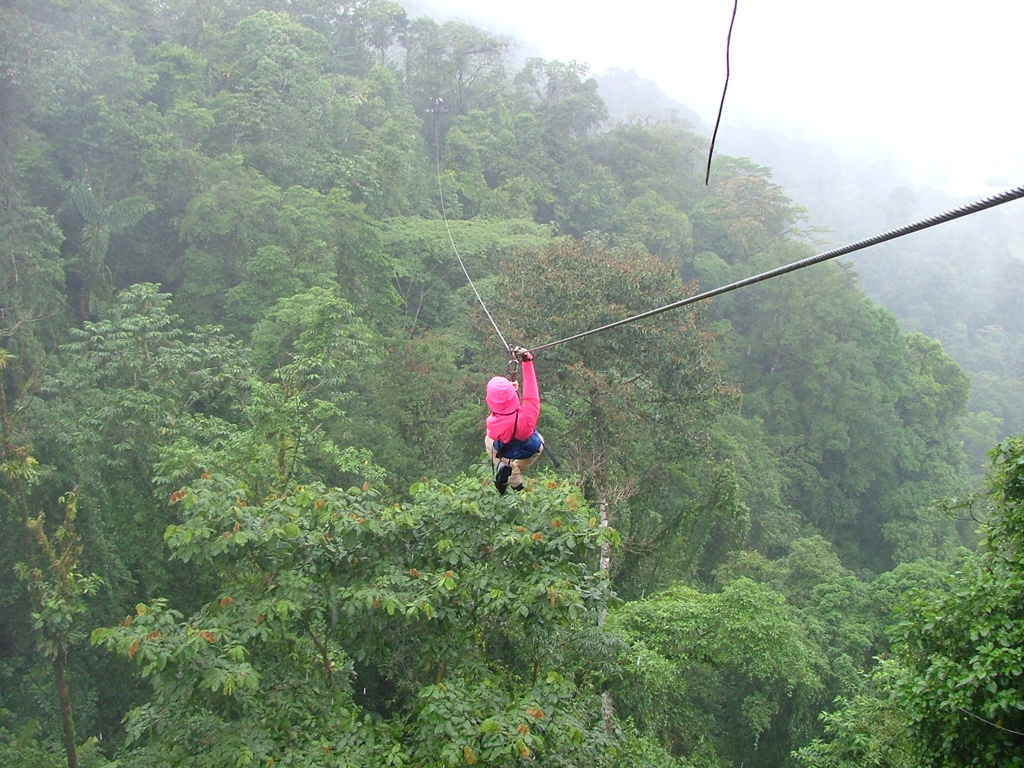
But right now, scientists are like tropical trees, struggling mightily to be the one that reaches the sunlight, putting the others in their shade. What we need is a conceptual zip-line over the canopy.
Subscribe to:
Posts (Atom)