The consequences for important medical research are not going to be pretty.
And I can't help but be angry about this for threatening to take away the fun of genetics too. If we can't have some control over our genetic testing, we can't do it for fun, for education, for finding out more about ourselves, for the awe of it, for innerspace exploration in the technology age. They're taking that away from us by eroding GINA.
I have lots of other thoughts... like about how this fits in so nicely with (not all of) the right's racist/eugenics inclinations.
And juxtapose this view from the political right where there is full-on acceptance of actually-more-than-genetics-can-even-deliver against their anti-science politics and policy...
It's like science is totally fine for Republicans as long as Mother Nature is a dictator.
If it's more complicated than that, then deny it, defund it, bulldoze it. The reality is, genetics is largely probabilistic; it is not a dictatorship. It's just so hard to convince people that it isn't. The ideological drive to justify behavioral differences and socioeconomic inequality with Nature above all is just too strong. If it's Nature, then we don't have to do the hard work of addressing the problems because Nature is Nature is Nature. This is really old thinking that really new knowledge (both through lots of science and lots of lived experience and lots of humanities and lots of art) has overturned but has not managed to catch on all that well. Along with new knowledge we get increasing understanding of genetics so these ancient beliefs can just be spouted by politicians using new-fangled science jargon.
This is really hard to write about today as all the stories about the proposed (and highly probable) budget cuts to science and the arts are blasting through my newsfeeds. It's overwhelming me today. I'm feeling hopeless and angry on behalf of science, art, knowledge, medicine, humanity, humans, children, teenagers, grown-ups, geezers. It's too much today.
But, back to Ed's article, I do need to put this here because it mentions that I have taught with 23andMe and longtime readers of the MT might know about that:
I don't teach with 23andMe anymore. I was doing it for as long as my university would pay for the kits. It was totally voluntary and students had to read Misha Angrist's book and endure long discussions and pass a quiz before deciding whether to go through with the testing. It was so powerful for teaching evolution, genetics, anthropology, etc... and we critiqued the hell out of it. My university said I needed to pay for the kits through course fees from now on. Before any of these threats to GINA, I decided not to do that and to stop using 23andMe. Now, even if my university reconsidered and funded the kits, I still wouldn't take it up again as a teaching tool.
First of all, no. I am not the lovechild of star-crossed siblings, or even cousins, or even second cousins.
This is a gee-whiz kind of post. But the issues are not insignificant.
Hear me out with the background, first, before I get to the part where my eyes bug out of my head and I pull out my kid's Crayola box and start drawing.
If you've learned about sociobiology, or evolutionary psychology, or inclusive fitness, or kin selection, or the evolution of cooperation and even "altruism," or if you've read The Selfish Gene, or if you've been able to follow the debate about levels of selection (which you can peek at here)...
... then you've heard that you're related to your parents by 1/2, to your siblings by 1/2 as well, to your grandparents and grandchildren by 1/4, to your aunts and uncles and nieces and nephews by 1/4 as well, and to your first cousins by 1/8 and so on and so forth. (Here's some more information.)
So, for example. For evolution (read: adaptationism) to explain how cooperative social behavior could be adaptive in the genetic sense, we use the following logic provided by Bill Hamilton, which became known as "Hamilton's Rule":
The cost to your cooperation or your prosocial behavior (C) must be less than its benefit to you (B), reproductively speaking, relative to how genetically related (r) you are to the individual with whom you're cooperating. That could have come out smoother. Oh, here you go:
C < rB, or B > C/r
If you're helping out your identical genetic twin (r=1.0), then as long as the benefit to you is greater than the cost, it's adaptive.
C < B, or B > C
If you're helping out your daughter (r = 0.5) then as long as the benefit to you is greater than twice the cost, it's adaptive.
C < (1/2)B, or B > 2C
So already, the adaptive risk to helping out your daughter or your brother is quite higher. And it's even harder to justify the cooperation between individuals and their sibs' kids, and grandkids, especially ESPECIALLY non-kin. But, of course creatures do it! And so do we.
As relatedness gets more distant and distant, we go from 2 times the cost, to 4 times, 8 times, 16, 32, 64 etc... You can see why people like to say "the math falls away" or "drops off" at first or second cousins when they're explaining where the arbitrary line of genetic "kin" is drawn. If you offer up a curious, "we're all related, we're all kin," someone out of this school of thought that's focused on explaining the evolution of and genes for social behavior may clue you in by circumscribing "kin" as the members of a group that are r = 1/8 or r = 1/16 but usually not less related than that.
This has long bothered me because we're all genetically related and so much cooperation beyond close kin is happening. And it's been hard for me, as someone who sees everything as connected, to read text after text supporting "kin selection" and "kin recognition" (knowing who to be kind to and who to avoid bleeping), to get past the fact that we're arbitrarily deciding what is "kin" and it seems to be for convenience. I'm not doubting that cooperation is important for evolutionary reasons. Quite the contrary! It's just that why is there so much math, based in so many potentially unnecessary assumptions about genes for behavior, gracing so many pages of scientific literature for explaining it or underscoring its importance?
(It could just be that as an outsider and a non-expert I just don't understand enough of it and if I only did, I wouldn't be gracing this blog with my questions. But let's get back to my reason for posting anyway because it's potentially useful.)
Right. So. Even for folks who aren't part of evolution's academic endeavor, it's obvious to most that we're one half dad and one half mom. The sperm carries one half of a genome, the egg another, and together they make a whole genome which becomes the kid. Voila!
There's even an adorable "Biologist's Mother's Day" song about how we've got half our moms' genome...
... but there's biology above and beyond the genes we get from mom (and not from dad). And that song is great for teaching us that the rest of the egg and the gestational experience in utero provide so much more to the development of the soon-to-be new human. So "slightly more than half of everything" is thanks to our mothers. Aw!
But, genetically, the mainstream idea is still that we're 50% our mom.
I teach very basic genetics because I teach evolution and anthropology.And I'm not (usually) a dummy.* I get it. It's a fact! I'm half, genetically, my mom and I'm also half my dad.
r = 0.5
Okay! But, given these facts about relatedness and how it's imagined in evolutionary biology, facts that I never ever questioned, I hope you can see why this report from 23andMe (personal genomics enterprise) blew my mind:
Percent similarity to Holly Dunsworth over 536070 SNPs (single nucleotide polymorphisms or, effectively/rather, a subset of known variants in the genome; Click on the image to enlarge). I am 85% like my mom and I am at least 76% like my students and friends who are sharing with me on 23andMe. Names of comparisons have been redacted. As far as I know, this kind of report is no longer offered by 23andMe. I spat back in 2011/12 and the platform has evolved since.
Okay, first of all, it is a huge relief that, of all the people I'm sharing with on 23andMe, the one who squeezed me out of her body is the most genetically similar to me. Science works.
But that number there, with my mother, it is not 50%. It's quite a bit bigger than that. It says I'm over 85% the same as her. What's more, I am also very similar to every single person I'm sharing with on the site, including example accounts from halfway around the world. Everyone is at least 60-ish% genetically similar to me, according to 23andMe. I know we're all "cousins," but my actual cousins are supposed to be 1/8th according to evolutionary biology. How can my mom be related to me by only one half? How can my actual cousins be only an eighth (which is 12.5%)? What is up with evolutionary biology and this whole "r" thing?
Hi. Here is where, if they weren't already, people just got really annoyed with me. Evolutionary biology's "relatedness" or "r" is not the same as genetic similarity like that reported by 23andMe. Okay! But why not? Let me help unpack the 85% genetic similarity with my mom. Remember, it's not because I'm inbred (which you have to take my word for, but notice that most everyone on there is over 70% genetically similar to me so...). It's because my mom and dad, just like any two humans, share a lot in common genetically. Some of the alleles that I inherited from my dad are alleles that my mom inherited from her parents. So, not only is everything I got from her (50%) similar to her, but so are many of the parts that I got from my dad. Let me get out my kid's arts supplies. Here is a pretty common view of relatedness, genetically. In our imagination, parents are not related (r = 0) which can lead our imagination to think that their alleles are distinct. Here there are four distinct alleles/variants that could be passed onto offspring, with each offspring only getting one from mom and one from dad. In this case, the sperm carrying the orange variant and the egg with the blue variant made the baby.
1. (Please, if you're horrified by the "r" business in these figures, read the post for explanation.)
But few genes have four known alleles, at least not four that exist at an appreciable frequency. Some could have three. What does that look like? The green allele doesn't exist in the next example. As a result of there being only three variants for this gene or locus, mom and dad must share at least one allele, minimum. That means, they look related and that means that, depending on which egg and sperm make the kid, the kid could be more related to mom than to dad.
2. (Please, if you're horrified by the "r" business in these figures, read the post for explanation.)
Now here's where people who know more than I do about these things say that the kid is not more related to mom than dad because she got only one allele from mom and that keeps her at r = 0.5. Well, that's just insane. What does it matter whether she got the allele from mom or dad? I thought genes were selfish? (Sorry, for the outburst.) Again, I realize I'm annoying people and probably much worse--like stomping all over theory and knowledge and science--by mixing up the different concepts of genetic similarity (e.g. 50%) with "r" (e.g. 0.5) and horribly misunderstanding all the nuance (and debate) about "r," but I'm doing it because I'm desperately trying to know why these two related ideas are, in fact, distinct. One last pathetic cartoon. In this third example, as is common in the genome, there are only two alleles/variants in existence (at an appreciable frequency, so not accounting for constant accumulation of de novo variation). An example of such a gene with only two known alleles is the "earwax gene" ABCC11 (there's a wet/waxy allele and dry/crumbly one). Here, the two alleles are orange and blue. Most humans in the species will have at least one allele in common with their mate for a gene with two alleles, and it's not because most humans are inbred, unless we want to redefine inbreeding to include very distant relatives (aside: which may be how the term is used by experts).
3. (Please, if you're horrified by the "r" business in these figures, read the post for explanation.)
But as a result of the chance segregation of either the blue or orange allele into each of the gametes, two people with the same genotype can make a kid with the same genotype. And of course, making a kid with your same genotype is the only possible outcome if you and your mate are both homozygous (i.e. where both copies are of the same variant so that leaves no chance for variation in offspring unless there is a new mutation). So, I wandered a little bit away from my point with these drawings, but I had to because I wanted to get down from where my imagination has me (us?) with "r" versus how things really are with reproduction. We are baby-making with vastly similar genomes to ours, so we are making babies with vastly similar genomes to ours. So, I do see why biology says I'm related to my mom by one half. But, on the other hand, what does it matter if I got the thing I have in common with my mom from my mom or whether I got it from my dad? Because I got it. Period. It lives. Period. [Inserted graf January 20, '17] Saying it matters where I got the similarity to my mom keeps us at r = 0.5. Saying it matters only that I inherited DNA like hers keeps us always, all of us, at r > 0.5 with our parents and our kids because any two babymakers share much of their genome. And the fact that this (see 2 and 3) happens so often is why I'm a lot more than 50% genetically like my mom, and the same can be said about my genetic similarity to my dad without him even spitting for 23andMe. So, here we are. I don't understand why our relatedness to one another, based on genetic similarity, is not "r." I hope it's for really beautifully logical reasons and not something political. Because... If "r" was defined by genetic similarity, then would cooperating with my 76% genetically similar students and friends be more adaptive than the credit I currently get from evolutionary biology for cooperating with my own flesh and blood son? If "r" was defined by genetic similarity, then could we use the power of math and theoretical biology to encourage broader cooperation among humans beyond their close kin? So many questions. Maybe I should re-learn the math and learn all the other math. Nah. Not myself. At least, it wouldn't come fast enough for my appetite. Maybe someone who already knows the math could leave a comment and we could go from there... And it would be worth it, you know, because despite my relatively weaker math skills, I bet we're more than 50% genetically similar.
*from 23andMe: "You have 321 Neanderthal variants. You have more Neanderthal variants than 96% of 23andMe customers."
Recall that we ordered DNA testing kits for our mutts. First we made predictions, then we revealed the results. Today I want to tell a bit more of the story...
yawn
Remember that time a doctor used a vibrator on my hips because I had a cyst on my knee? I was all into it "for science." It was an opportunistic science sting operation. There was totally gum on my shoe. There was all kinds of pseudoscience that day. Anyway, I was all psyched up for that sort of Dateline-style, hidden camera intrigue when I called up Mars Veterinary, the people who do the analysis for Wisdom Panel doggie DNA kits, last Friday afternoon. I was all psyched up because, as Kevin said, I needed, "to make sure they're not defrauding people." Me? I do? Little old me? That sounds about right. I mean, just because I can see all the educational potential here doesn't mean I should be endorsing it without understanding it better. And while I'm understanding it better shouldn't I make sure they're not entirely full of s--t? But I already know they're not full of s--t because they gave us results for both Elroy and Murphy that made sense. They didn't report crazy results and there are lots of ways they could have... there are 200 breeds on that list, most of which do not look like our dogs or like they've wafted their DNA anywhere near our dogs. So, they can't be completely fraudulent. Whew. Okay then, less of a burden on me for this interview. But wait. Could it be maybe a little more nuanced, this hypothetical fleecing? After all, they're the ones who saw my blog and reached out to me to have an interview--isn't that a little big brothery? And, after all, their website doesn't tell us what their methods are, not really, not for those of us who have ever operated a PCR machine or run a gel. And they don't tell us what these markers are in our dogs' reports that led them to make the reports. I'm used to having too much information, even, because of 23andMe. Anyway, there were all kinds of reasons to be professional when I called up the veterinary geneticist. But after she answered my first question so well, I pretty much lost all professionalism and drooled all over her, albeit through the phone. Here's what I learned. Please bear with me... I didn't take direct quotes because (a) that's hard to do without a hands-free headset (or fancy recording software I don't have because I never needed), and (b) I got a wee bit excited and flailed my arms most of the conversation.
All questions and answers are my paraphrasing.
Question: Are you using a chip or what? How are you genotyping?
Answer: A chip like 23andMe's isn't cost effective. Yes, there's a chip but it's not specific to the test. They use a sequenom platform. It's PCR markers combined into panels. They run those PCRs for 321 markers, broken up into several panels, optimized so that they don't interfere with each other clearly and don't have to change primers. They use nested PCR for segmenting around the mutation and then to get the exact SNP they throw the DNA in a mass spec to find the particular A, T, C or G mutation. Each has a different weight, so each can be identified.
Question: Do you get both alleles from that?
Answer: Yes. They don’t sequence in both directions but they sequence both chromosomes.
Question: Are those 321 markers for visible or perceptible phenotypes?
Answer: No. None
are visible phenotype. They're ancestry markers/SNPs.
Question: Have you found any dogs that have none, not one, of those breed markers?
Answer: No. And we don't expect to. But it's not completely out of the question given the spectral nature of variation over space and time.
Question: How did you validate your mixed breeds family tree methods? Do you have mixed dogs with known parents and grandparents and type them all in the family?
Answer: The pure breed tests validate so well already. And also, yes, they do validate with mixed dogs with known heritage but not many. The methods are built out of Ostrander's research with 85 breeds, 5 dogs from each and 96 microsatellites. She licensed the patent exclusively to WisdomPanel.
Question: How do your mixed breed reports compare to how people guess based on external cues? Aren't people already good at guessing their mutts ancestries? Answer: Actually they're not. Ancestry DNA testing is much better. People aren't that good at guessing mutt ancestry based on phenotype, as far as the few studies suggest. (There's one by Victoria Voith that I want to check out and there's one by Levy on pitbulls specifically.)
***
We chatted for much longer than that and she shared all kinds of interesting information about genetics for dogs' visible traits and also lots about their reproduction which I'm keen to learn about. But that right there's all the relevant information regarding our doggie DNA testing experience that I got during the 30 minute phone call. She was completely open with me about everything which is why I'm kicking myself that I forgot to ask why they require the dog's weight when you submit its cheek swabs. I have a hunch, however, that it's got something to do with validating their mixed breed body size estimates given how many people use WisdomPanel on shelter puppies that will be better adopted if their projected size is known.
So the question remains... If you don't have a puppy or don't care what it will grow up to look like or be like, why do Wisdom Panel?
The promotional video on the homepage sums up why many people might do it:
I wasn’t sure what my dog was made up of...Pretty sure she wasn’t just a [breed name]...I wanted to know so I could tell people when they ask me 'what kind is she?'
This is fascinating. Why do we care where our dogs come from or what kind they are? Same reason we care the same things about humans and ourselves. And it all boils down to the fundamentals of the field of anthropology... and it's complicated.
And finally, why have I titled all three of these posts "my dogs' evolutionary history"? Because evolutionary history is a synonym for family history and for ancestry. And vice versa, all around. And, clearly, I'm trying to make a point about that.
When you type "evolution" into the Wisdom Panel website search, this is what you get:
But that's not going to stop me from using this to teach evolution. I've decided that Wisdom Panel will be a good alternative for students who aren't interested in doing 23andMe in my anthropology courses, so I'm going for it. Dogs, humans, what's the difference? A lot and not.
Thanks to my university's support of my new anthropology teaching initiative--using 23andMe as part of the curriculum--and thanks to its visibility here at The Mermaid's Tale, I was asked to speak about the experience at the California Academy of Sciences last month.
Because it was all arranged and sponsored by the Leakey Foundation, I tailored it for an audience interested in human origins and human evolution, which felt natural considering that's me.
Because I was slotted to speak while "NightLife" was also going on, I thought an album cover art-themed slideshow, something I've long wanted to do (thank you King Crimson), would be appropriate.
"Aaah! You mean 23andMe can tell all that from just my spit?"
The film of the talk is up at fora.tv, here at this link.
While I was in San Francisco I had two wonderful opportunities to visit schools, one high school and one middle school. At the high school I got to sit down for an hour and talk genetics with an evolution and genetics course! And at both schools I gave a presentation called "Your evolutionary history is showing," part of which included a little about how science is part of everyday life, like when you want to figure out which dog ate Kevin's book.
For the Cal Academy talk, I considered posting my transcript here, but I think I'll just post my gratitude.
THANK YOU
The
California Academy of Sciences
The
Leakey Foundation
Students
in my APG 350 and APG 201 courses
The
University of Rhode Island Provost’s
Office
All
the artists who created these album covers.
Timetree.org
Anne
Buchanan - Penn State
University
Ken
Weiss
- Penn State
University
Jennifer
Wagner- University of Pennsylvania
Ellen
Quillen- Texas Biomedical Institute
Misha
Angrist
-Duke University
Niall
Howlett- University of Rhode Island
Abigail
Bigham -University of Michigan
Chanika
Phornphutkul- Brown University
Lorraine
Santy - Penn State
University
Juliet
Dunsworth – Oviedo, FL
Kevin
Stacey - Peace Dale, RI
Marisa
Nelson & Mark Ackerly- 23andMe*
*I
am not paid by 23andMe.I use 23andMe at
the educational rate to teach anthropology.
Careful what you ask that gene.
One last thing. Please check out my students' reflections on their experience with 23andMe and with learning biological anthropology this semester at URI at their blog "human variation style" ...http://humanvariationstyle.blogspot.com/
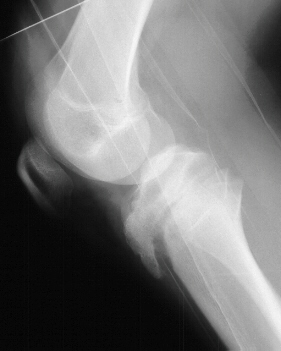
March 15, 1993. Oviedo, FL - A sophomore at OHS who injured the soft tissue in her knee in a freak accident while warming up for the 4 x 100 meter relay at an area track meet on Friday night was told, by her doctor, that she is done growing.
X-rays of Holly Dunsworth's knee--part of routine injury diagnosis and plans for repair--showed that the growth plates in her proximal tibia and distal femur are fused. This indicated to the doctor that Dunsworth has completed growth and has reached her full stature, so he passed this information along to her.
"He said it so cavalierly, too," said Dunsworth. "I spent my whole life wondering how tall I'd grow to be, hoping and wishing I'd grow to be tall enough to really dominate on the basketball court. And my doctor didn't even warn me that he was about to deliver this dream-killing news, and he definitely didn't ask me if I even wanted to hear it in the first place."
x-ray of human knee showing unfused growth plate of still-growing tibia (lower right bone). Source
The news was "even more devastating," said Dunsworth, than learning that her knee injury would most likely require surgical ACL (anterior cruciate ligament) reconstruction, meaning several months of recovery and probably a missed junior year of basketball.
"Sitting out a varsity basketball season just as I'm starting to be noticed by college recruiters is one thing," said Dunsworth, "but learning that I'll probably never be tall enough to play in the NBA or the Olympics is another. What should I dream now? What can I look forward to? I will never dunk. It's over. I wish the doctor would have kept my growth plates to himself." When asked whether she expected to be much taller than her present 5'7" because she'd seen other girls continue to grow taller at her age, or whether it was because of her freakishly tall parents, Dunsworth said, "Oh no. Girls are pretty much full-sized by sophomore year. And my dad's 5'11" and my mom's 5'8". But I guess I just hoped I'd luck out. And now all that hope is gone, long gone. A big part of me is dead and I don't know how I'll fill this hole with anything good. I just don't know how I'll do it."
*** True story. Fake quotes. Thanks, The Onion, for the inspiring framework. Note that I did not work the word "cavalierly" into my verbal capacity until many many years later. (Fine, it was today.)
Here's a look at one of the dreams that died that day:
***
If you follow this blog then you know that we talk about personal genomics quite a bit. My parable's not a perfect comparison for many reasons. Obviously the cessation of growth is not equivalent to the cessation of life (death sentences, being how people can interpret genomic data) or even to the deterioration of health, as with the onset of disease. Further, my complete growth plate fusion was not probabilistic news, like so many of the genetic interpretations that companies like 23andMe provide.
But I thought it was important to share this sort of story where my identity and dreams were wrapped up in my biology and where a doctor delivered news of incidental findings about that biology (which deeply affected my identity and my dreams) without my consent or without even considering my feelings.
I had some rather ignorant notions about biology if I thought I could still grow taller past 16 years of age, especially given my parents' heights, but does it matter if you consider how fundamental those assumptions, however misguided, were to forming my identity? I never even stopped to consider whether I was done growing. It was always a hopeful mystery. Learning from a scientific authority that it was all over was harsh. It's culture, people, and it's not always rational but it's what we do. It's who we are.
On the other hand, culture changes with education. Humans will always have dreams, and I will always have dreams, but maybe my dreams would have been different in high school had I learned to ditch magical thinking in favor of the real evidence staring me in the face. Thanks to family history and to growth patterns of my classmates, it was obvious that I was done growing. I shouldn't have needed the doctor to tell me that! But I did. I needed the education. I needed to be enlightened.
I've been thinking about this story of mine because of what I've been reading about personal genomics and probability lately:
If you're taking gene-based probabilities as certainties--the hullabaloo over Nate Silver's estimates demonstrated that many do!--then there's potential for harm from participating in personal genomics.
***
Sure, a big part of the personal genomics dilemma is whether to make people worry about something they cannot prevent at our present level of knowledge (e.g. Huntington's, which 23andMe does not report).
But another big part of the personal genomics dilemma is whether to make people worry over nothing at all (e.g. higher estimated gene-based risk but the condition never ends up presenting). This is the paradox of probabilistic medical data. There was no such uncertainty or estimation about my fused growth plates, and since the news wasn't about how I could get sick or die, that's presumably why my doctor did not have to seek my consent to tell me this incidental finding of the radiography.
That I'm done growing is fact. That I have increased risk of breast cancer is fact-ish. It's a fact that I have certain SNPs or alleles or mutations associated with a specific type of breast cancer. That's certain. Whether those alleles are meaningfully associated with breast cancer isn't. And what having those alleles means for me, Holly Dunsworth, isn't either. My risk for breast cancer might not be as high as 23andMe estimated (or it could be even higher, or it could be lower). That estimate's not based on any data from my lifestyle and environment. It's only based on my genes in my spit--and only the genes that were genotyped. My report of increased breast cancer risk has got the potential to worry me over nothing. But it could also make me more vigilant so I can catch it early if it does occur.
I'm one of the many out there who wants to know everything about my genome that I can, even if interpreting much of it requires fancy brains to program fancy computers to estimate probabilities. I unlocked my Alzheimer's and Parkinson's reports on 23andMe and if they genotyped for Huntington's I'd have unlocked that too. I'd like to have all the information I can have. I hope risk estimates will improve over time. I'm optimistic like that, but (a) I understand very well that there is so much of our health, our lives, etc that we will never be able to predict no matter how much science learns about the genome and (b) I have no idea how high a reported disease risk has to be to significantly worry me. Something is bound to kill me. If it's not all the confounders of old age, then hopefully it's molten lava or a black hole or chocolate. What's the big deal? We all die. I'm also pretty comfortable with some level of genetic determinism since genes figure greatly in how bodies work. It's not scary. It is what it is. Actually, it's brilliant. And it's even more amazing that it's a terribly difficult and sometimes impossible system to understand. If it wasn't so complex, all our little variations wouldn't have the wiggle room and the workarounds to function and to function well!
That earth-shattering news about my growth plates? I got over it. And pretty quickly. That hole inside my melodramatic, Holden Caufield-loving teenage heart? It was filled up with other dreams.
I wonder about all those people with life-threatening conditions and a shortened life expectancy. My grandfather was one of them, living some 40 years past his expiration date. I recently met an enchanting 70 year-old woman with a heart condition and an expiration date of 25 years old. She claims that it was her doctor's diagnosis (some might call it a death sentence) that gave her such a wonderful life, inciting her to cherish every moment and seek pleasure in ways that others do not or cannot.
But while deciding whether to see your genome and to receive the disease risk estimates calculated from it, how does anyone know they'll react like my joie-de-vivre'd friend? How does anyone know whether probabilities of disease-risk will be at least not misery-inducing and at best life-enhancing? Could there be a SNP for this charmed outlook on life/death that we could test for before we agree to learn what our disease genes say?
*wink*
And as for the new dreams that filled the empty hole in my soul where all the basketball dreams had died: Maybe those new dreams were better dreams! I can certainly choose to describe my life in hindsight that way. And I do. They really were much better dreams. Similarly, I can choose to see my increased risk for breast cancer, psoriasis, age-related macular degeneration, rheumatoid arthritis, restless leg syndrome, exfoliation glaucoma, melanoma, esophageal squamous cell carcinoma, and stomach cancer (so says 23andMe) anyway that I choose.
For starters, ever met anyone afflicted with all those problems during their life? Right. That's really telling isn't it? And, of course, understanding even in theory how those risk estimates are made helps a great deal. And so does knowing that most of those conditions are already documented in my family history. And so does knowing that for some known conditions I could have new mutations that are hard to detect, or may never be detected. And so does knowing that those risk estimates don't incorporate my phenotype, lifestyle, or environment. And so does knowing that, just by being alive, my risks for obesity, coronary heart disease, and type 2 diabetes are still higher than my relatively increased risk for any of those aforementioned conditions.
Exercise, eat well, live right. My genes are my genes. And it is what it is. It's what I've got and it's good. Amen, awomen, amonkey.
And if this post wasn't a slam dunk, surely I'll have another shot. Because of how I'm built, I have no choice but to believe that I will.
A new report out of 23andMe suggests that one can learn more about risk for common traits from relatives than from individual DNA sequences. The fact is about as surprising as a sunrise, and has been known for a long time (as has the reason for it). Acknowledging this sounds more than typically forthcoming from this company, but they do put their own spin on it, saying the combination of family history and the kind of genetic risk estimation they sell is best. Family history predicts common diseases and risk estimates the rare ones.
The reason that family history is so predictive is quite simple: family history integrates all your relatives' genetic variation to reveal, at least within their respective environmental contexts, the net effect of that variation. You inherit half your variation from each parent (given some reasonable assumptions), so the net risk experienced by your parents is much greater than that likely to be predicted from a single variant in a single gene in your DNA sequence.
Several papers have shown this in various ways. A clever one a few years ago noted that Francis Galton's family correlations from Darwin's time (he was a cousin of Darwin's) provides a better prediction than modern genotype sequencing.
We might be expected to revel in this confession by 23andLess, since we have criticized this whole endeavor of personalized genomic medicine as a bit of snake-oil selling. Of course, there are countless variants that for some generally rare, mostly pediatric traits are highly predictive. Companies can provide this information if you have these variants, but even then unless they are recessive in their effects, if you have the gene you'd already have the disease or trait. For decades there have been honorable practitioners, called genetic counselors, who worked within medical schools generally and were carefully licensed to do this. They identify known genetic risks and advise about recurrence risks and the like. But they were professionals, working with physicians, not hustling to the public for corporate profit.
At the same time, let's step back and ask about the idea of family risk. If that's based on genetic variation (that is, if you filter out environmental effects), then certainly your DNA sequence would contain the variants involved! That means that, properly done, sequencing should be able to identify the variants that account for your resemblance to your parents. But studies to date have shown that variants identified by GWAS and other approaches only account for a small fraction of the parent-offspring correlation. That is the gist of the current report, stated in another way. The issue, then, is how to identify what's causal and what isn't, among the huge amount of DNA sequence you share with any individual relative.
Various authors have made suggestions. Some say the problem is that each of us is affected by one or more very rare variants and even if you carry the same from your parent, finding it in a sea of sequence data is nigh impossible. Authors favoring the rare-variant idea are trying their best to devise such methods. One is to look at multiple close, affected relatives and winnow down the shared amount to the part that's actually causal. Another prominent group is trying to argue that it is not the sum of individual genetic variants that determines risk but that interactions among variants is what contributes to risk. This is a statistical nightmare to work out, but if it were true it would mean that we really have already identified the variants in question, but not the way they interact.
The most likely truth at this stage is that such common traits like heart disease or how tall or heavy you are, are determined by a very large number of genes, mostly with individually very small effects. Each person with the 'same' trait--each diabetic, say--has that trait for a different genetic reason. Individual genetic variants may be causal contributors, but they are not very important.
If this is so, and we could find a way to document the individual effects, we could use each person's genome sequence to tally up all their particular set of risk variants and compute their risk, even if specific approaches usually couldn't be tailored to his/her specific risk set. In essence, we would gain nothing but a usually false sense of precision by doing so. We'd be just as well off, in practice, to look at family history (or even more so, directly relevant risk traits like glucose levels, obesity, etc.). And this is under the assumption that we know of or don't have to worry about, environmental effects. That is a huge can of worms that everyone is just conveniently ignoring.
The same, by the way, applies to attempts to identify or characterize traits in terms of genes responsible for their adaptive evolution--and for essentially the same reasons.
A piece by Erika Check Hayden in this week's Nature on current confusion with respect to informed consent begins with a discussion of the patent 23andMe filed in late May to protect their findings from their research on Parkinson's disease. As Hayden points out, many consumers of 23andMe, the direct-to-consumer genotyping company, were surprised to learn that the company was filing to patent a gene -- gene patenting having been one of the earliest and most controversial aspects of the commercialization of genetic research and one that several of the company's founders were known to oppose. We blogged about this when the patent announcement was made.
Hayden's piece hits close to home because in her second paragraph she quotes MT's own Holly Dunsworth who left a comment on the 23andMe blog post announcing the patent application. Holly said that she didn't believe she'd agreed to the possibility that one of her genes could be patented when she signed her consent for their genetic services. (She's aghast that genes can be patented, and is against it -- that makes it unanimous here at MT.) But Hayden points out that "the language is there" in the consent forms. Well, that may be so if you're a lawyer and it occurs to you that "If 23andMe develops intellectual property and/or commercializes products
or services, directly or indirectly, based on the results of this
study, you will not receive any compensation" means that if they find something they want to patent in your genome, they will and it's theirs.
The non-legal crowd isn't as likely to have read it that way, and didn't realize they were signing on to the possibility that the
company might patent one of their genes, without sharing any of the
profit, and without explicitly broaching this sensitive ethical issue with participants. It's more than a bit disingenuous of 23andMe to claim to be open and free with knowledge on the one hand, engaging customers because of this open access policy and on the other hand committed to constraining that freedom when there's profit to be made -- by them!
But beyond what this means about 23andMe, this does point out one of the problematic issues having to do with informed consent, and that is that when what can be done with the materials a subject or donor consented to give a researcher or company access to can change as technologies change or as findings accumulate, "informed consent" is in fact not that. 23andMe's consent asks their customers to agree essentially to blanket use of their genetic data. It's an open-ended consent, as many researchers and institutions prefer these days, seeking permission to do anything with the sample in perpetuity. Some consent agreements, though, impose specific time or usage limits instead. Given how quickly technology changes however, these limiting agreements may well be used less and less as genetic research goes forward. You can be pretty sure that once researchers get their hands on your samples they aren't going to want to give them up.
Another approach is George Church's no-consent-at-all model for the Personal Genome Project. When people sign on to the project he requests that participants allow all their biomedical data to be freely accessible online, along with their whole genome sequence. The idea is that because researchers can't predict what they'll find, or what new technologies will come along, science will best progress if participants allow anything at all be done with their data and their biomedical information now and in the future.
Of course this kind of consent can't be properly 'informed' in
any serious sense, relative to being what is fair to call a blank check
for the researchers. They know this, of course, and any benefits that do happen to become possible will likely go to them. Researchers don't get to set all the limits, though. Any consent for a study using federal funding must allow research participants to be free to remove their samples and data from a study. And, Hayden says that several US states, including California where 23andMe is based, are considering laws to constrain what can be done with a person's DNA.
However, genetic data are different from, say, demographic data because even anonymized, no names attached, it's possible to identify individuals if reference genetic data are available, and identifying ethnicity is often trivial. Not to mention that no genome is an island, so if you are genotyped, that tells you a lot about your parents as well as your siblings. So, if you consent to genotyping or whole genome sequencing but your parents don't, that can be a problem. And of course once a sequence is published or summarized in statistical data, it is no longer removable.
Who is informed consent for, though? Who is it designed to protect? It stems from Nuremberg Trial protections that were the result of the Nazi experiments in World War II. They were indeed for protecting human subjects. Human subjects protections have evolved over the years however, and now while still nominally for protection of, well, human subjects, there's a whole lot of CYA going on, as universities and companies try to avoid the kinds of legal difficulties that researchers such as those working with the Havasupai in Arizona got into not long ago (a case we blogged about here).
Indeed, Hayden quotes Mishra Angrist, genome policy analyst at Duke University, and participant in the Personal Genome Project saying, “Institutions use informed consent to mitigate their own liability and
to tell research participants about all the things they cannot have, and
all the ways they can't be involved. It borders on farcical.”
The interests of researchers and subjects don't always coincide, of course. It is only human to expect those with their hands on the data
to be tempted, and at least occasionally to yield to the temptation, to
seek private gain from the samples, beyond their salaries and job
status. Also, researchers generally and naturally want to be allowed to do whatever they want with their hard-earned samples, while subjects often want constraints -- if they even understand the study.
Many researchers say that the obvious solution is a broad consent
document that gives researchers free rein with the data. But many
non-scientists think participants should be able to control how their
data are used, says lawyer Tim Caulfield of the University of Alberta in
Calgary, Canada, who has surveyed patients about this idea. “There's an
emerging consensus within the research community about the need to
adopt things like broad consent, but that hasn't translated out to the
legal community or to the public,” he says.
And then there's 23andMe, which gives their customers access to all their own data. Until they don't.
The direct-to-consumer DNA genotyping company, 23andMe, announced on Monday that it was soon to receive its first patent, one that it had applied for in 2010 (that patent application is here). It has to do with genetic polymorphisms associated with Parkinson's disease (PD), and, while we're not patent lawyers by any means, the application seems to cover genetic variants and testing. This announcement is a surprise to many, including many of its customers (indeed, the consent form says nothing about possible patents), in part because the company has come out against gene patenting in the past.
Ken and I have had issues all along with the scientific merit of what these companies are selling (see this post and this one, e.g.). And we're by far not the only ones. Much of what they report back to consumers are things the consumers already know (e.g., hair color, freckles), and the estimates of most disease risk, which they also report, just aren't ready for prime time for all sorts of reasons that we and others have commented amply upon. So, while it may be fun for people to know their genotypes, and sometimes their ancestry estimates, the information is generally not very useful clinically. And apparently it's not just for public edification or recreation: it is run by Google money, after all. We believe it's unethical for any of these companies to be selling disease risk, no matter how many caveats they include, and this is before considering the profit motive in patenting what they have found apparently on the backs of their customers.
How does 23andMe work? You spit in a tube and send it to the company along with your payment, and they genotype you at selected sites and then give you full access to that data, with some explanation. If you want to take part in the research the company does then you can choose to answer surveys about lifestyle or other risk factors, which is your consent for them to throw that information and your genetic data into their research pool. The company says that most of their customers have chosen to do this, but at the same time, it seems that none of their customers were told that gene patents might result.
Gene patenting has been controversial since the first one was applied for, in part because it is difficult to know how to apply the generic wording on patents in the Constitution to the molecular age. Basically, patents should cover inventions or discoveries, and while scientists may in fact discover genes, the law now says that they can only be patented if the scientist has also discovered a function for the gene. That's a law that had to have been written by not-disinterested geneticists! Legally speaking, the polymorphisms discovered by 23andMe for PD are patentable, but is that really innovation?
But legal or not, many, including us, are still not in favor of gene patenting. To us, patenting should be not getting to own properties of nature, but for innovating value-added products. A medical test, that any beginner who works in a genetics lab for a week could replicate, shouldn't be covered. If the patents were designed to protect against commercialization of naturally occurring genotypes, as NIH once threatened to do, that's a worthy public-domain protectant--against predatory commercial practices--but that's not the idea here.
The gene patenting issue has been endlessly discussed and the discussion is easily accessed online, so we won't repeat the arguments here except to say that our personal concerns are that patenting makes public and often publicly funded information private, for private personal gain. In addition, it can tie the hands of clinicians who want to be able to offer genetic testing to their patients, it can prohibit others from doing research on a gene of interest and so on, and while we may be a minority we're not in favor of the get rich quick motivation for doing research. Some "defensive patenting" has been going on (patenting to protect against genetic profiteering), but in our opinion that should not be necessary -- naturally occurring genes should not be patentable, period.
As if the issue of this 23andMe patent weren't problematic enough, it seems that the company's motivation for focusing on Parkinson's disease is a very personal one. Apparently the CEO's husband, one of the founders of Google, has been found to have a PD risk allele, and the couple has donated millions of dollars to the Michael J Fox Foundation (which will be one of the beneficiaries of this patent, along with Scripps Research Institute) for research. Well, fine, but they should have been up front about their personal interest in mining the 23andMe consumer database for PD variants and asked their customers whether they were willing to
donate spit, and pay for what turned out to be a PD research 'crowd-funding' project (see our post last week on this idea as related to fairer science funding). Instead, they appear to have done it surreptitiously, complicating what's already making many 23andMe customers feel misled, if not betrayed (see comments on Twitter for examples--here's a randomly chosen set of them, e.g.). Not to mention that some of the scientists affiliated with this company have had prior apparent interests in ethics, to boot.