Tuesday, February 14, 2012

Ptolemaic genetics: epicycles of lobbying

That was then...
Ibn al-Shatir's model for the
appearances of Mercury,
showing the multiplication of
epicycles in a Ptolemaic
enterprise. 14th century CE
(Wikimedia Commons).
Way back then, in the dark ol' days of science, the Roman astronomer Claudius Ptolemy (90-168AD) tried to explain the position of the planets in terms of divinely perfect circles of orbit around God's home (the Earth).  The idea that we were at the center of perfect celestial spheres was a standard 'scientific' explanation of the cosmos and our place in it.

But the cantankerous planets refused to play by the rules, and their paths deviated from perfect circles.  Indeed, occasionally the seemed to move backward through the skies!  Still, perfect circular orbits around Earth simply had to be true based on the fundamental belief system of the time, so astronomers invented numerous little deviations, called epicycles, to make the (we now know) elliptical orbital pegs fit the round holes of theory.

And then along came Nicolaus Copernicus (1473-1543 AD).  And the cosmos was turned inside out: the earth was not the center of things after all!

Thomas Kuhn famously described in The Structure of Scientific Revolutions how the best and the brightest scientists struggle valiantly to fit pegs into holes they don't really fit, until some bright person ccomes along and shows the benighted herd a better way to account for the same things.  Copernicus, Galileo, Newton, Einstein, and others were the knights in shining armor who inaugurated some of the most noteworthy of these occasional 'scientific revolutions.'  Darwin's evolutionary ideas are also a classic example.

The same kind of struggle is just what is happening now in genetics and evolutionary biology--indeed in many other fields in which statistical evidence runs headlong into causal complexity.  Whether, when, or what knightly change will occur is anyone's guess.

And this is now
Everyone remembers the hoopla the sequencing of the human genome was met with when it was announced (or rather, each time it was announced) -- we were promised that we would by now not only know why people were sick, but we'd be able to predict what we'd get sick with in future.  It was promised that this would be a silver-bullet reality by the early 21st century by no other than Francis Collins.  Others were promising lifespans in the centuries: all of us would be Methuselahs!

So, all those illnesses would now be treatable or preventable in the first place. How?  Well, the genome would allow us to identify druggable pathways, and common diseases must be due to common genetic variants (an idea that came to be known as common disease common variant, or CDCV), and if we could just identify them, we'd be in business.  After all, didn't Darwin show us that everything about everything alive was due to genetic causation and natural selection?  If that's the case, we should be able to find it, and our wizardry at engineering would take the ball and run with it.  Big Pharma jumped on the 'druggable' genome bandwagon and people running big sequencing labs jumped on the CDCV idea, and genomewide association studies (GWAS) were born.  And then the 1000 Genomes project, and all the -omics projects....  Big is better, of course!  Not that these efforts weren't questioned at the time, based on what everyone should have known about evolution and population genetics, but the powers-that-be plowed ahead anyway.

Well, we're no longer in a minority of naysayers.  It's widely recognized that GWAS haven't been very successful, relative to the loud promises being trumpeted only a few years ago.  And even the successes they have had -- and numerous genes associated with traits have been identified, it must be said -- typically explain only a small amount of the variation in disease, or any trait, in fact.  So now researchers are working on automating the prediction of disease from gene variants based on protein structure and other DNA-based clues.  But the assumption--the belief system, really--is still that the answer is in the DNA, and disease prediction is still going to be possible.

A piece in Feb 9 Nature describes a number of state-of-the-art approaches to predicting the effects of DNA variants, in part based on what amino acid changes do to proteins.  The idea now is that diseases are going to be found to be due to rare variants, and the challenge is to figure out what these variants do.  In part, evolution will help us to do this.
"Sequencing data from an increasing number of species and larger human populations are revealing which variants can be tolerated by evolution and exist in healthy individuals."
But, are we trying to explain a current disease, or predict the diseases someone will eventually get? These are different endeavors, though it may often be inconvenient to acknowledge that.  Rare pediatric diseases that are due to single genetic mutations, or genetic diseases that cluster in families (and, again, usually with young onset age and rare) are easier to parse than the complex chronic diseases that most of us will eventually get.  But, based on the comparison of the genomes that have already been sequenced, we now know that we all seem to differ from each other at something like 3 million bases.  That is, we all have a genome that has never existed before and never will again. Assigning function to all that variation is from daunting to impossible -- not least because a lot of it might not even have a function.  And the idea that we'll eventually be able to make predictions from those variants is based on questionable assumptions.

It's true in one sense that every disease we get is genetic -- everything that happens in our body is affected by genes -- but in another sense, much of what happens is a response to the environment, and so is environmentally determined--that is, is not due to genetic variation in susceptibility.  Predicting a disease from genes when it's due to combined action of genes and environment, therefore, is a very challenging problem.

Here is just one example of why: Native Americans throughout the Americas are about 65 years into a widespread epidemic of obesity, type 2 diabetes and gallbladder disease, diseases that were quite rare in these people before World War II.  There are a number of reasons to suspect that their high prevalence is due to a fairly simple genetic susceptibility.  But, if gene variants (still not identified) are responsible, they have been at high frequency in the descendants of those who crossed the Bering Straits from Siberia for at least 10,000 years -- which means that variants that are now detrimental were "tolerated by evolution and exist[ed] in healthy individuals" for a very long time.

If geneticists had wanted to predict 70 years ago what diseases Native Americans were susceptible to, these variants would have been completely overlooked, because they weren't yet causing disease.  And indeed these 'risk' genes, whatever they be, were benign -- until the environment changed.  We're all walking around with variants that would kill us in some environment or other, and since we can't predict the environments we'll be living in even 20 years from now, never mind 50 or 100, the idea that we'll be able to predict which of our variants will be detrimental when we're old is just wrong. In fact, we're each walking around with substantial numbers of mutant or even 'dead' genes, with apparently no ill effect at all -- but who knows what the effect might be in a different environment.

But, ok, some of us do have single gene variants that make us sick now.  Many of these have been identified, most readily when a family of affected individuals is examined (though the benefit of knowing the gene is rarely of use therapeutically), but many more remain to be.  The current idea is that this can be done by looking for mutations in chromosome regions that are conserved among species, and figuring out which of these change amino acids (and thus the protein coded for by the gene).  The idea is that unvarying regions are unvarying because natural selection has tested the variants that arose and found them wanting, thus eliminating them from the population.  They must, therefore, be functionally important!
A host of increasingly sophisticated algorithms predict whether a mutation is likely to change the function of a protein, or alter its expression. Sequencing data from an increasing number of species and larger human populations are revealing which variants can be tolerated by evolution and exist in healthy individuals. Huge research projects are assigning putative functions to sequences throughout the genome and allowing researchers to improve their hypotheses about variants. And for regions with known function, new techniques can use yeast and bacteria to assess the effects of hundreds of potential mammalian variants in a single experiment.
This is potentially useful, because for those with single gene mutations that cause disease -- 1 variant among 3 million other ways in which each person differs from everyone else -- homing in on the causative mutation is, again, difficult to impossible if you don't have a large family with similarly affected individuals in which to confirm the association of mutation and disease.

Well, if we can do with or without a protein (or other functional DNA element), depending on the variation we have across the genome, then even when the element is important its variation in a given individual may not be causal: there are many examples where that is clearly true.  Further, the same kind of evolutionary reasoning would say that centrally important -- and hence highly conserved -- parts of the genome probably cannot vary much without being lethal, largely to the embryo.  So, from that equally sound Darwinian reasoning, we would expect that disease-associated variation will be in the minor genes with only little effect!  So the 'evolutionary conservation' argument cuts both ways, and it's not at all clear which way its cut is sharpest.  It's a great idea, but in some ways the hope that searching for conservation will bail us out, is just more wishful thinking to save business as usual.

Methuselah (Della Francesca ca. 1550) 
To complicate things even more, not all amino acid changes cause disease, or even do much of anything.  And again, sometimes they will only be harmful in a given environment.  And, of course, not all diseases are caused by protein changing mutations -- sometimes they are caused by disturbances to gene regulation.

In fairness, the multitude of researchers trying to make sense of the limitless genetic variation that is pouring out of DNA sequencers recognize that it's complicated.  But then, why are they still saying things like this, as quoted in the Nature piece: “The marriage of human genetics and functional genomics can deliver what the original plan of the human genome promised to medicine.”

What's to the rescue?  Do we need another 'scientific revolution'?
We have no idea when or if our current model of living Nature will be shown to be naive, or whether our understanding is OK but we haven't cottoned on to a seriously better way to think about the problems, or indeed whether the hubris of computer and molecular scientists' love of technology will, in fact, be victorious.  If it comes, it could be.  But we are certainly in the midst of a struggle to fit the square truths about genetics and evolution into the round holes of Mendelian and Darwinian orthodoxy.

Perhaps the problem to be solved is how to back away from enumerative, probabilistic, reductionistic treatment of complex, multiple causation, and to make inferences in other ways.  We need to understand causation by numerous, small or even ephemeral statistical effects, without our current enumerative statistical methods of inference. In terms of the philosophy of science, doing that would require some replacement of the 400 year-old foundations of modern science, based on reductionistic, inductive methods that enabled science to get to the point today where we realize that we need something different.

The situation here is complicated relative to scientific revolutions in Copernicus', Newton's, Darwin's or even Einstein's time by the large, institutionalized, bureaucratized, fiscal juggernaut that science has become. This makes the rivalries for truth, for explanations that this time will finally, really, truly solve the complexity problem even more frenzied, hubristic, grasping, and lobbying than before.  That adds to the normal amount of ego all of us in science have, the desire to be right, to have insight, and so on.  Whether it will hasten the inspiration for a transforming better idea, or will just force momentum along incremental paths and make real insight even harder to come by, is a matter of opinion.

Sadly, the science funding system, including the role of lobbying via the media, is so entrenched in our careers, that dishonesty about what is claimed to the media or even said in grants is widespread and quietly acknowledged even by the most prominent people in the field: "It's what you have to say to get funded!", they say.  But where does dissembling end and dishonesty begin when it comes time to the design and reporting of studies (and, here, we're not referring to fraud, but to misleading results and over promising the importance of the work)?  The commitment to the ideology and the promises restrains freedom of thought, and certainly dampens innovative science.  But it's a trap for those who have to have grants and credit to make their living in research institutions and the science media.
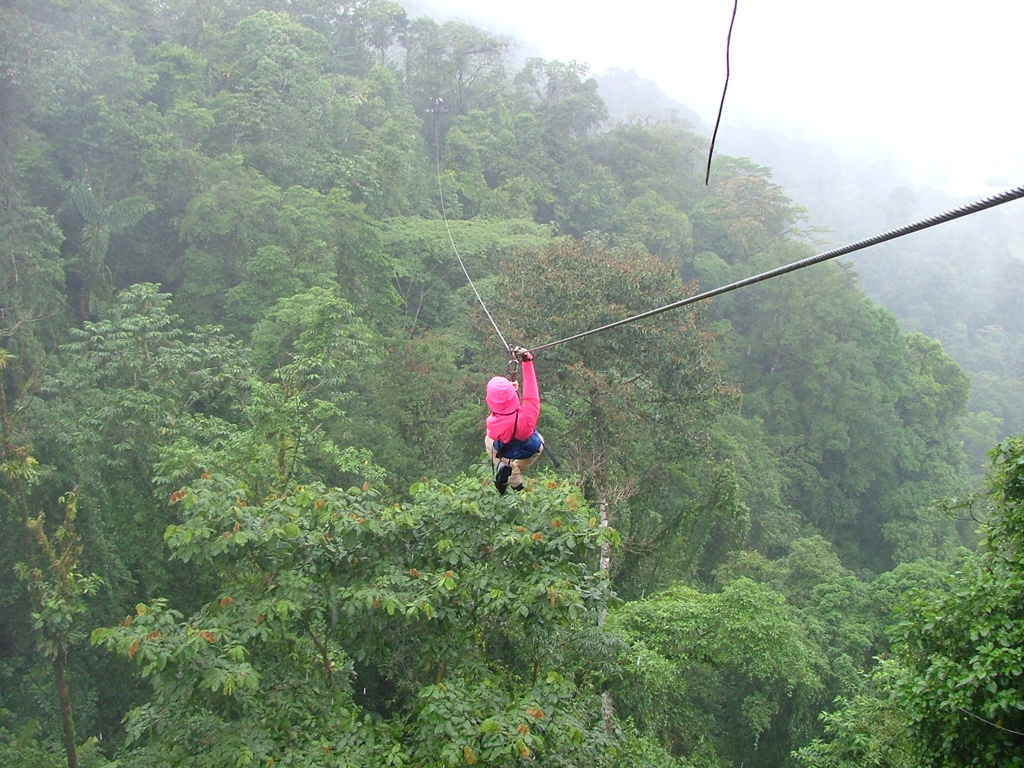
Zip-line over rainforest canopy,
Costa Rica (Wikimedia)

But right now, scientists are like tropical trees, struggling mightily to be the one that reaches the sunlight, putting the others in their shade. What we need is a conceptual zip-line over the canopy.

Monday, February 13, 2012

Luck of the draw: Evolving flipbooks mimic non-selective processes (a classroom activity)

First the lesson plan, then a look at the peer-review process that provided feedback.

A common ancestor (center) and its descendants.
Introduction and scope
Even if evolution is accepted and natural selection is understood, learners of all ages may mistakenly explain all variation with this single mechanism. That there are myriad resources for, and examples of, natural selection and because it is so powerful, it is not surprising that the concept is dominant even though selection is not the only means by which evolution occurs. Here I suggest that there should be better coverage of non-selective processes at the introductory level of learning evolution. Towards that goal, I offer an engaging activity involving the drawing of flipbooks, which not only marries art and science but symbolically demonstrates evolutionary mechanisms other than selection.
Leads into—biology, genetics, evolution, the art of animating with flipbooks.
Concepts—Mutation, genetic drift, natural selection, common ancestry, diverging lineages, speciation, inheritance, species identification, developmental constraints, complexity, evolutionary progress.
Target age group—All students who are being introduced to the fundamentals of evolution can perform this simple activity and can learn from it. As long as they can trace a line, they can participate. In schools, evolutionary concepts are formally introduced as early as the sixth grade, but basic concepts like change over time, deep time, and common ancestry may be introduced even earlier. Often students are not formally or rigorously introduced to evolution until they reach college or university. Furthermore, many of the more advanced concepts that can be addressed with this activity are only appropriate for secondary and post-secondary courses. It is up to teachers to decide how to integrate this activity into their evolution lessons. I developed this activity, and used it with success, in my introductory biological anthropology course at the University of Rhode Island.

The importance of teaching beyond selection at the introductory level
Natural selection does not explain all of evolution
             Since Darwin’s time we’ve learned that natural selection is just one mechanism of evolution that works in concert with others such as mutation, gene flow, and genetic drift. Mutation, the result of chance, creates the necessary variation for natural selection and drift to take place. Each human inherits an estimated average of 150 mutated nucleotides per person (Ken Weiss, Pennsylvania State University, personal communication[A]). Like mutation, drift is also random, but drift occurs over time as random events accumulate. Because both are due to differential reproduction, the result of drift can look remarkably like that of selection and change away from the ancestral state can occur quickly if the population size is small (1). A classic example of drift occurs in a small culturally isolated population of the Old Order Amish in eastern Pennsylvania; hardly anyone would hypothesize that the relatively high frequency of polydactyly was due to natural selection. For many traits that seem to have no adaptive value, drift is a strong hypothesis. Often drift is considered alongside relaxed selection (2). That is, a trait becomes prevalent through drift in the absence of selective pressures that would otherwise prevent the drift from occurring. The deterioration of human eyesight may be explained this way and so may geographic variation in earwax (3). Many diagnostic characteristics of the Neanderthal face may be explained by drift (4) and so might the fixed loss of tails in our hominoid ancestry.[B]
           
A strict selection perspective creates potential for societal harm
Learning about evolution solely through natural selection is not only inaccurate but may also have negative social consequences.  Wearing adaptation-colored glasses fosters notions that evolution is progressive, that past states were inferior to present ones, and that there is some striving in nature towards perfection (5, 6). From this perspective it is all too easy to assign differential value, worth, or beauty to variation within and between species under the backing assumption that “Mother Nature” has “favored” one trait over another. Judgments like this can lead to human exceptionalism and anti-environmentalism (justifying human superiority over other organisms) or tribal exceptionalism and racism (justifying superiority of some nose shapes or skin colors over others).[C] Presenting a more complete picture of evolution to those in the early phases of learning about it may lower the risk that these dangerous ideological paths will be followed (7).

Flipbooks for teaching evolution
            Seeds, jelly beans, and the like are common stand-ins for alleles or gametes in classroom exercises meant to recreate evolving populations. These exercises demonstrate how new gene pools result from mutation followed by selection or the lack thereof (i.e. drift).  However, these activities are not appropriate for all ages because of the algebra they require for calculating allele frequencies; even at the university level, students can struggle with the math. Furthermore, these engaging hands-on activities do not allow students to witness more than a few generations of evolutionary change. Alternate illustrations of the effects of mutation and genetic drift on evolution are needed. Recently, Gillings (8) provided a pedagogically useful metaphor of these biological processes with language evolution.
Here I offer another sort of instructional device inspired by two films that were recently posted by artist Clement Valla on the Internet. The films show how line drawings, when traced 500 times, can evolve dramatically. And although it is so simple, this is a powerful demonstration of evolution without natural selection.

***
Teacher Resources
Films by Clement Valla (2010)—Inspiration for this flipbook activity
On-line resources for the art of flipbook animation
On-line resources for teaching and learning about the role of chance in evolution
General evolution:
Genetic drift:
Mutation:
Misconceptions about evolution:
***

Valla’s films are basically digital renderings of classic flipbooks used by cartoon animators and by following the steps in the activity outlined below, teachers can easily recreate the experience of the films with students in the classroom. In addition, they can use this exercise to teach an array of evolutionary principles and concepts.
If learners can trace lines they can perform this activity. As a collaborative endeavor, this activity works with a minimum of two participants and, theoretically, has no maximum group size. With 50 tracings per book, it takes about 50 minutes to complete.[D] At the end, students will have created flipbook animations that “evolved” merely because each of their tracings, no matter how diligently drawn, was slightly different from the previous one.


Materials
·       One pencil or pen for each participant
·       Two blank flipbooks for each participant. There are several ways to fashion flipbooks. They can be small blank notebooks with at least 50 plain white sheets that are slightly transparent for tracing purposes. A much cheaper method is to fasten sheets of copier paper together with a binder clip. The paper should be cut down with a paper cutter to pages with roughly 3 inches (or 8 cm) on each side and not too much larger than that because large books beg for large drawings that slow down the activity. To get seamless animation while flipping through the flipbook, the flipping edges of the pages need to be lined-up, so tap the stack of pages on a table top to settle them all together on one edge before clipping them together and beginning the drawings.  Once the flipbook drawings are underway, the clip cannot be moved or removed.

Procedures
1.     Set the stage. Prior to performing this activity, provide students with background information  on flipbook animation and on concepts of common ancestry, the Tree of Life, evolution, and mechanisms of evolution (natural selection, mutation, and genetic drift). 


***
Questions to gauge knowledge and spark interest before the activity
Teachers will need to choose the questions that are appropriate for their students’ learning level and for the particular evolutionary lessons they want to address.         
Change through time and common descent—What is evolution? What is the evidence for it? How does it occur? What is the concept of common ancestry that is used to build the Tree of Life?
Evolutionary mechanisms—What is natural selection? What are other ways that evolution occurs besides natural selection? What is genetic drift and how is it different from and similar to natural selection? What is a mutation? What causes mutations? How frequent are mutations? What keeps mutations from happening more frequently than they do? Are mutations always bad? How could something that starts as a mutation in an individual end up in more and more individuals in a population over generations and through time?
The nature of evolution—Is evolution progressive? Is there a goal? Does it always result in improvement over earlier forms?
***

2.     Draw the templates.
a.      Have students put their names on the front covers of their books.
b.     Have them open one of their flipbooks to the last page and draw something. Keep it a simple line drawing so that it does not take longer than 10 seconds to trace. The drawing can be an unknown shape, like a doodle or scribble (known here as “unrecognizable”; Figures 1-4). Or the drawing can be a symbol like a number or letter, an amoeba or Mona Lisa (known here as “recognizable”; Figures 5-8). It is important that both types of templates are represented because the “recognizable” templates may experience stabilizing natural selection. That is, tracers of familiar shapes may have stronger expectations about how their tracing should appear. If they have such expectations, they may trace with fewer mistakes and/or correct the mistakes that previous tracers have made. But the “unrecognizable” templates may experience less, if any, of this conservative influence. Do not explain the rationale to the students yet because it will be part of the discussion after the completion of the exercise. The bottom line is that teachers make sure that both unrecognizable and recognizable templates are created. They may also want to encourage some students to draw creatures (see explanation in “concluding remarks”).  
c.      Optional modification: I had several students use identical templates—rather than having each student draw a unique one—so that they could witness several different lineages, not just two, evolving from a common ancestor (Figures 1-8). The only downside to this modification is that students are not given the opportunity to create their own templates. Also, teachers may wish to copy and cut out the templates from Figures 1-8 and glue them in the flipbooks before handing them out to students. This would allow students to compare their results (i.e. descendants) with the ones published here.
d.     Have the students carefully trace their template into their second book. Each of them will now have two flipbooks with identical templates. They may rotate the tracing so that the second template is oriented differently in the book.
3.     Introduce the activity. Briefly describe Step 6—that they’re about to pass the books around and each of them will trace the tracing of the person who went before them until the books are filled up. The result will be flipbooks that contain animated movies of the tracings beginning with the original templates.  
4.     Make predictions. Ask the students: What will your book’s animation be like? What will the last picture in your book look like? Will your two books’ animations be identical? What does the template symbolize in evolutionary terms? What do your two flipbook animations symbolize?
5.     Establish the rules
·       Trace as best as you can, but in a brief amount of time.
·       Joking is fine, but do not give anyone grief for “messing up” a flipbook with their mistakes. Everyone’s tracings are imperfect copies. 
·       You may only look at the page that you are tracing. You may not flip back and look at any previous drawings in the book that build up as this activity goes along.
·       You must pass the book to the next tracer in a way that keeps it open to your drawing (i.e. the drawing that the next person will trace).
6.     Trace in an assembly line to build the flipbooks.
  1. Each student will turn one page down over the template and trace it and then pass the book to the right.
  2. Each tracing should take a few seconds and, ideally, everyone should take roughly the same amount of time.
  3. Trace, pass, trace, pass, and repeat to fill all pages of the book.
7.     Observe, discuss, and explain the evolving animations. When filled-up, make sure each flipbook makes its way back to its owner. Each student will have two flipbook animations of the evolution of their template drawing, starting with the template and ending with the last tracing. Now they are ready to explain the evolution that occurs in their books.


Results
Figures 1-4. “Unrecognizable” template (i.e. ancestor; center circle) and the resulting drawings (i.e. descendents) after 50 tracings carried out in different flipbooks (i.e. divergent evolutionary paths).


Figures 5-8. “Recognizable” template (i.e. ancestor; center circle) and the resulting drawings (i.e. descendents) after 50 tracings carried out in different flipbooks (i.e. divergent evolutionary paths).


***
Questions to gauge understanding and to spark further study after the activity
Teachers will need to choose the questions that are appropriate for their students’ learning level and for the particular evolutionary lessons they want to address. 
Results—What happened to the templates? Were your predictions correct? Were there differences in the outcomes of the identical templates? Describe the differences in size and shape (morphology) between your template and your final drawings: What were the trends, if any, through time? Did any new traits appear? Did any old traits disappear?  Look around at the other flipbooks and distinguish “recognizable” from “unrecognizable” templates (as described in Step 2b):  Were there any differences in the outcomes of their evolution?
Evolutionary mechanisms—How can you explain what happened to your drawings? What caused the evolution in your flipbooks? Explain the evolutionary history of the last drawing in each of your flipbooks.
Speciation and species concepts—Are the final drawings in your two flipbooks different species from your template (i.e. their common ancestor)? Are the two final drawings different species from each other? Can you identify the moment (i.e. the particular tracing) when a new species originated?
Luck, chance, randomness, and non-random constraints—What does luck, chance and randomness have to do with evolution? Is natural selection random? Look at the differences and similarities between any two neighboring pages in a flipbook. Are there many major differences between the two tracings? What does this suggest about phylogenetic and developmental constraints in evolution? Is evolution predictable? Are there any hypothetical evolutionary changes to an organism, like Homo sapiens, that are implausible or highly unlikely?
Scales of variation and modes of inheritance—Are your animations symbolic of the evolution of a strand of DNA, a protein, a cell, a single-celled organism, a tissue, an organ, a multicellular organism, or a population? Are your animations depicting the results of asexual or sexual reproduction through time? What are the differences for each, in terms of how variation gets into the next generation?
Explaining human evolution—List hypotheses for the evolution of variation in human nose shape. Point out which hypothesis most closely mimics the process in your flip book animation. Describe, in as much detail as possible, how the different hypotheses could be tested. Include materials and methods. Then discuss any problems that you can anticipate with confidently supporting one hypothesis over another and suggest some possible workarounds or solutions to those problems.
Complexity, progress, and perfection—Would you describe your final drawings as more complex than your template? What about the reverse? Would you say that your animations depict progress? Progress and perfection are valued in our society, so what’s the trouble with perceiving human evolution to be progressive, or to be striving towards perfection or some ideal form?
***
  
Concluding remarks
            This activity illustrates the impact of luck on evolution—when chance is a factor (mutation and drift) and when it is not (natural selection). Students may also use the flipbooks to learn the principles of common ancestry, divergent evolution, and speciation. More advanced students can explore concepts of inheritance, species identification, developmental constraints, complexity, and evolutionary progress.
Over the course of three trials of this activity, I found that there were observable degrees of evolutionary change in all flipbooks, whether they had unrecognizable or recognizable templates (Figs. 1-8). Even if there seemed to be conservative influences on the recognizable templates as predicted in Step 2b, evolution still occurred simply because human tracers are not perfect. The various degrees of distance between template and results (e.g. Figure 5) nicely demonstrate the various speeds of evolutionary change, with some organisms retaining more ancestral traits than others.
There was another sort of issue with the recognizable templates, specifically the ones that represented creatures. Some of my students who had these templates (Figures 7 & 8) were the only students to ignore chance and instead describe their animations with natural selection. For example one student explained that, “What started as a lizard evolved to a blob maybe because it could survive better without legs.” Another wrote, “Natural selection may have occurred in my animation because of environmental changes that caused the need for certain features on the body.”  These answers reveal common misunderstandings of natural selection (which are due in no small part to our pedagogical language: 9), but they also illuminate a deeper struggle with accepting and identifying randomness in evolutionary scenarios. Because this activity is designed to help overcome these issues, I recommend that teachers encourage some students to draw templates of creatures so that these fundamental problems, if present, are more likely to surface.
Although natural selection is not responsible for the evolution in the flipbook animations, teachers should not forget to discuss how natural selection is involved in this activity: it is the non-random process behind our cells’ ability to copy DNA without making many mistakes and it is mimicked by tracing in the flipbooks. However, like tracing drawings, DNA replication is imperfect and the chance variations that arise are a fundamental component of evolution.
With these flipbooks students can see for themselves, albeit in a symbolic way, how random mutations can contribute to complexity by flipping through the “recognizable” flipbooks backwards (from the last tracing to the template). When viewed in reverse, the animations evolve from (perceived) simplicity to (perceived) complexity. And when students are reminded that all the mistakes in the tracings (i.e. the mutations) are still the same and that it’s just the sequence of these mistakes that differs in the reverse view, a dialogue is opened up about the roles of chance and deep time in the evolution of complex life (10).  Students can reflect on whether chance mutations and drift could have produced a flipbook that started with a blob and ended with a symbol. After gaining this insight, they are better poised to question the relevance of probability-based arguments against evolution and the origin of life (11). 
The roles of luck, chance and randomness too often take a back seat to natural selection and this activity is meant to help introductory students achieve a more complete view of evolution from the start. Although I cannot guarantee that every student will be evolutionarily enlightened or artistically inspired by this activity, it will provide teachers and students with tools for overcoming some of the mistaken assumptions about evolution that we so often inherit and propagate.

Acknowledgments
            Thanks to B. Bailey, N. Bailey, A. Collado, J. Conrad (and the lizard), W. Harcourt-Smith, G. Felda, C. Mesyef, D. Nelson, B. Shearer as well as the students in my two sections of ‘APG 201: Human Origins’ at The University of Rhode Island during the Fall 2011 semester for providing valuable input during the development process.  Thanks also to Anne Buchanan, Norman Johnson, Kevin Stacey, and Ken Weiss for their most helpful comments on the manuscript. Clement Valla’s art was the spark and I’m grateful for it.

References

1.      Helgason A,  et al. (2009) Sequences from first settlers reveal rapid evolution in Icelandic mtDNA pool. PLoS Genet 5(1): e1000343. doi:10.1371/journal.pgen.1000343
2.      Lahti DC, Johnson NA, Ajie BC, Otto SP, Hendry AP, Blumstein DT, Coss RC, Donohue K, Foster SA (2009) Relaxed selection in the wild. Trends in Ecology and Evolution 24: 487-496.
3.      Yoshiura K, et al (2006) A SNP in the ABCC11 gene is the determinant of human earwax type. Nature Genetics 38: 324-330.
4.      Weaver TD, Roseman CC, Stringer CB (2007) Were neandertal and modern human cranial differences produced by natural selection or genetic drift? J Hum Evol 53: 135-145.
5.      Gould SJ, Lewontin RC (1979) The spandrels of San Marco and the Panglossian paradigm: a critique of the adaptationist programme. Proc R Soc Lond B 205: 581-598.
6.      Weiss KM, Dunsworth HM (2011) Dr. Pangloss’s nose: In evolution, cause, correlation, and effect are not always identical. Evolutionary Anthropology 20:3-8. 
7.      Johnson NA, Lahti DC, Blumstein DT (in press) Combating the assumption of evolutionary progress: Lessons from the decay and loss of traits. Evolution: Education and Outreach.
8.      Gillings MR (in press) How evolution generates complexity without design: Language as an instructional metaphor. Evolution.
9.      Nehm RH, Rector M, Ha M (2010) "Force Talk" in evolutionary explanation: Metaphors and misconceptions.  Evo Edu Outreach 3:605–613.
10.   Nilsson DE, Pelger S (1994) A pessimistic estimate of the time required for an eye to evolve. Proc R Soc Lond B 256: 53-58.
11.   Morris HM (2003) The mathematical impossibility of evolution. Back to Genesis, 179. El Cajon, CA: Institute for Creation Research. Available via the Internet. Accessed 2011 December 22.


[A] Estimated roughly with the equation 2.5 x 10⁻⁸ mutations per generation, per 6 billion nucleotides based on published rates (e.g. Pelak et al., 2010.PLoS Genetics 6(9): e1001111).
[B] I cannot find a reference containing this hypothesis, but I cannot find one containing a selection-based hypothesis for ape tail loss either.
[C] For just one example of a scholarly treatment of these issues see ‘Race’ is a Four-Letter Word by C. Loring Brace (Oxford University Press, 2005).
[D] This estimate is based on three trials with ten, 25 and 30 students, respectively. However, making 50 tracings takes just as long with 25 students as it does with 125 students. This time estimate of 50 minutes only includes time for instruction and drawing. It does not include the time spent priming the students on evolutionary concepts and discussing the results. For my students, those discussions continued for the rest of the semester because the flipbooks were a useful touchstone for new concepts down the line. 


Behind the article 

It’s tough to get a paper accepted for publication. This one was rejected from an education series in a scientific journal. I chose to submit there because it's open access (and was prepared to pay if the fee wasn't waived) and the series is billed as a forum for classroom activities, not education research. 

I consider the three reviews (below) to be pretty supportive, especially #2, and think that with just a few revisions I could ameliorate the first reviewers' concerns about citing more literature.

But the academic editor’s concerns about assessment, as outlined in the cover letter (also below), which also echo #3's concerns about Intelligent Design (ID) would require much more work to address. Those issues, along with the extremely low-tech methods (just my hunch), is why I think that they rejected my paper rather than ask me to revise it.

Clearly a lot of my article's shortcomings stem from the fact that I am a college professor and not a trained primary-secondary school teacher, who must meet particular standards of evaluation and assessment. I might also have a poor understanding of the minds of students who are learning biology in high school (or younger). My attempt to transcend those things and address common difficulties that we all share with understanding and teaching evolution... at all levels of learning... well, it failed to be seen as that... perhaps because I failed at doing that! 

I chose not to submit elsewhere because I don’t know of many other open access journals that publish lesson plans and, from my personal perspective, I don't see the point of publishing a lesson plan if it’s not open access. I bet you’re thinking that tenure’s the point. Well, if my choices are (a) submit somewhere else and risk burying it in a journal that few will see, or (b) turn my focus to other publications for my tenure portfolio and make this activity available, now, to anyone with Internet access who visits us here on the Mermaid’s Tale...

...then, I’ll take b.

I'm posting the letter and reviewer comments (with my comments in italic red) for a few reasons: (1) if you decide to try this activity, the comments will help you anticipate any issues or problems you may have; (2) you can see the kind of reviews that a paper like this gets and the sorts of things that people require of evolution lesson plans; (3) it's in the spirit of open access which is what this manuscript has been about from the start of my writing it. 


Article submitted on December 28, 2011, Reviews back on February 10, 2012 


So swiftly returned!

Dear Dr. Dunsworth,

Thank you very much for submitting your manuscript "Luck of the draw: Evolving flipbooks mimic non-selective processes" for review by _________. As with all papers reviewed by the journal, yours was assessed and discussed by the editors. In this case, your article was also assessed by an academic editor with relevant expertise and three independent reviewers. Based on the reviews, I regret that we will not be able to accept this manuscript for publication in the journal.

The reviews are attached, and we hope they may help you should you decide to revise the manuscript for submission elsewhere. I am sorry that we cannot be more positive on this occasion.

Overall, the reviewers and the academic editor thought the approach is innovative, though should be more firmly grounded in the prior work dealing with students' understanding of "random" and evolutionary processes.

I honestly thought it was grounded in common knowledge, but I should have cited this and this. (A useful side tip: I perform pre- and post-tests at the beginning and end of each semester with a survey that I built thanks to Cunningham and Wescott's paper. The survey really helps me gauge where students are and where they end up so that each semester I can hopefully help them end up even better. This semester I showed them last semester's stats on day one, tackling some of the issues head-on, like the fact that before taking my course 8% of them think dinosaurs and humans lived at the same time in the past, and 84% think that new traits arise because they need to.)

In addition, the academic editor worried that the activity runs the risk of confusing students by omitting a big piece of the process (selection).  

I assumed that selection would be covered well in other ways and that this activity would complement those efforts.

The reviewers also point out that it is unclear how the activity could be evaluated so that others could determine its efficacy relative to other activities.

If this is how teachers operate, then I’ve got a lot to learn. I didn't have a control group either. Never do!

The evaluation suggestions will be difficult to access, since many rely upon how "different" two drawings are, something that will be difficult to measure accurately and consistently.


It's hard not to jump to this conclusion: If you can’t assess the students’ work easily, then don’t have them do those things or think about those things. Alternatively, it could mean that to publish a lesson plan you must provide teachers with ways to assess the all the things that they ask of their students. Maybe this is one of the big differences between college and everything that comes before it.

For example, because individual viewers may well have different views as to whether or not the flip animations differ from the template, an exercise controlling for or illustrating the bias in viewer perspectives would seem necessary.

This is an exercise that illustrates the subjectivity. I think the issue here is that I should have included explicit instructions for counting, measuring or otherwise evaluating traits and their changes over time, and in deciding whether different drawings should be called separate species or not, rather than suggesting that teachers merely ask students to do all that on their own. But to me setting students free to do those things is a pretty important, and effective, part of the process assuming that the fundamental concepts will be covered in class as follow-up (something I assume teachers would do if speciation and classification were topics that they chose to address with the flipbooks). I think this is, again, my limited experience and college-level bias showing.

Even more problematic, however, is the possibility that students might take away the message that rather than random processes, overlaid by selection, account for increasing complexity in evolution, it is the work of an "intelligent designer." This is obviously not your intent, but something that Reviewer 3 points out may occur.

I had a hunch I’d get pinned for unintentionally promoting ID and I thought I was anticipating some of that in my concluding remarks. If teachers take on those issues (and I hope they do!) there are myriad resources out there to support them starting here and here on the MT and also here: http://ncse.com/.

I hope you appreciate the reasons for this decision and will consider _________ for other submissions in the future. The support of the community is essential if open access publishing is going to succeed, so thanks again for your interest.

Sincerely,
Editor
------------------------------------------------------------------------
Reviewer Notes:

Reviewer #1: While the author has identified a challenging educational issue - differentiating drift and selection as mechanisms of evolution - I found the framing of the problems and the connections to the instructional activity tenuous. There is an extensive literature dealing with students conceptions of "random" event, evolution, and teleological reasoning, none of which were referenced here. The activity was clearly described and sufficient context was supplied to support a teacher interested in adopting it for classroom use. There was, however, no evidence that the activity support the intended learning outcomes or that students enjoyed the lesson. I think we need to have a wide range of strategies for engaging students in evolutionary reasoning and in certain situations this resource may provide a mechanism for raising students awareness about the potential role of drift in evolutionary change. Unfortunately, I don't think this manuscript fits well in this journal and I believe it would be strengthened by connecting it to existing educational research.

Reviewer #2: The paper Luck of the Draw: Evolving flipbooks mimic non-selective processes describes an activity where students create flipbooks by tracing over drawings of either recognizable or unrecognizable templates.  Because tracing is not perfect, and students repeat the tracing effort over many pages, the final outcome provides an example of how small random changes can lead to evolution.  The paper is extremely well written, and the idea of the flipbooks very creative.  The author provides exceptional resources, including links to teaching tools explaining the art of animation, to leading questions for student follow-up and assessment of understanding.  The added figures help the reader visualize the degree of variation that can accumulate over the course of the exercise.  The focus on helping students understand how random events influence evolution is great.  The author correctly identifies a significant problem - too many activities focus on selection, and students, who are already challenged in understanding the concept of random, all too often believe evolution equals natural selection.  Many of the antievolution arguments focus on the perceived impossibility of random events resulting in the evolution of complex structures.  Helping students understand how random events might influence evolutionary change is a very worthwhile educational strategy.

Reviewer #3: This is a very good foundational activity for introducing evolutionary mechanisms.  The chief concern relates to the directionality and complexity issues raised in the concluding remarks, which may be an unavoidable result of the tracing instructions given to students. It seems as though attempts to trace will always result in degradation of initial templates into blobs, which feeds into the 2nd law and mathematical impossibility notions advanced by creationists. So while you may be able to introduce other mechanisms, is one doing so at the risk of demonstrating that the "intelligent designer" of the student themselves is really the take away lesson.  While the point of this exercise may be to raise awareness of the random aspects of evolutionary processes, it may not be clear to students (or pre-college teachers), that they should expect this sort of behavior from such a random process, and that the accumulation of order and complexity results from the overlaying of selection onto random variation.  One suggestion to be considered is to ask if it might be possible to give the students any other instruction that could lead to an accumulation of complexity, without being too Panglossian or feeding into even worse ID notions. Maybe something like "if you see an acute angle, make it into a loop", or something similar that might lead to feature accumulation without having students try to achieve a predetermined target shape. The concern still is that the reason for the variation to be introduced is being produced by the generator, not the system. For more advanced student audiences it seems appropriate to suggest that teachers provide some refutation of the mathematical impossibility argument based on the idea that specifying any specific outcome for a probabilistic system is difficult, but that some outcome has to result.

Part of what  this reviewer is picking up on with the flipbook metaphor/activity is that tracing errors seem to miss parts more than add parts. This would appear to play into Behe's and other ID/creationist arguments that  mutations only chip away at complexity rather than contribute to it. Obviously this activity is only a metaphor and it also cannot go without a companion lesson in selection (which helps a great deal with complexity). One way to avoid giving the impression that mutations only take away complexity would be to stick to unrecognizable templates. But I don't recommend doing that since the recognizables offer great opportunities for teaching the important random mechanisms that are the focus of the lesson. (See 'concluding remarks' where I explain how the recognizables are where students struggle to see the role of chance.) I think that I inadvertently encouraged this reviewer's concern with my wording in that second to last paragraph in the 'concluding remarks.' I should have pointed out how some resulting drawings appear more complex than the templates before going into the trouble with perceiving complexity in the recognizable ones. I think I underestimated how powerful this metaphor could be.


But, overall, regarding #3's issues... I am satisfied with what I laid out in my concluding remarks. Teachers may choose to face the complexity issue explicitly in class and if so they should probably discuss how mutations that cause variation do contribute to the evolution of complexity--even with a mutation that reduced the number of chromosomes in the human lineage, we consider ourselves more complex than chimpanzees who retained one more pair than we did. In the article I cited the famous eye evolution paper for demonstrating the evolution of complexity over time with the accumulation of small mutations. You could also discuss gene duplication's role in complexity. You could talk about hox gene expression in bat wings and bird beaks. You could discuss lactase enzyme production into adulthood and the various known SNPs to allow this in some populations. Even the famous sickle-cell and malaria example illustrates how mutations add to complexity. Ken and Anne have recently listed off a few examples here. Some of these issues raised by ID and anti-evolution folks aren't much more than semantic arguments and differences of perspective...which are issues that stray far from the real biological ones they claim to be about. The same is true, I suspect, for some debates within the evolutionary sciences.


Regarding the suggestion to ask students to deliberately change the drawings in directed ways... I'm uncomfortable with changing the human tracer away from what it is--an imperfect DNA copier--because I worry that would support notions of agency, religious and secular alike! (see my rant here) I also don't think that it's up to an evolution lesson to disprove agency because nobody can do that. What we can do is show how evolution occurs without agency (like we do with this activity). 
------------------------------------------------------------------------


My final thoughts and requests for teachers
These reviews have left me feeling a bit daunted about helping to strengthen evolution education at its earlier stages so that fewer people make it to college and through college so full of misconceptions. If the pre-college rule is that you can't teach something that can't easily be assessed or that you can't teach something that would possibly be fodder for creationists, then I think we risk miring ourselves in the status quo. Religious objections are only one  kind of obstacle to learning and teaching evolution, and letting that one obstacle dominate our pedagogy limits our ability to overcome the rest of them.

Teachers, if you try 'Luck of the draw' please consider the issues raised by the people who put time and effort into reviewing it. 

Take my word for it--students have a lot of fun with it and learn a lot from it. It's a great activity to have students perform if you're away traveling. They can meet somewhere more exciting than the classroom, trace the books together, then bring them back to the next class for discussion when you return.

Trust me, it's not complicated--it's just that there are so many concepts you can choose to run with!

And when you're all done, please leave feedback here. I'd love to know how it goes! I'd love to hear suggestions for improvement!


(c) Holly Dunsworth
Note: I know it's a blog, but this is where I chose to publish. That means, if you use this then find a way to cite it, please. Thanks and welcome to the future!


I'll gladly share a nice printer friendly version of 'Luck of the draw' with anyone who'd like it. Just let me know.

Friday, February 10, 2012

Do we need to know why airplanes fly? What does this have to do with life?

Do we know why airplanes fly?
Why do airplanes fly?  Or rather, why do airplanes fly if, as it turns out, we didn't understand how they do?

From Freewebs.com
To summarize some elementary physics, the four forces of fluid dynamics, drag, thrust, lift and weight, are what allow airplanes to fly.  These forces only exist in a fluid (liquid or gas).  Thrust pulls or pushes the plane forward, while at the same time, drag inhibits it.  Thrust must be greater than drag for a plane to move forward. 

Weight and lift are also opposing forces; lift must be greater than the weight of the object.  And, the object must be moving for lift to come into force.  The classic explanation for flight is that a moving object, the wing of the plane, splits the airflow in two -- both up and over the wing, and down under it.  Because the wing is curved on top, the air that goes over the wing travels faster than the air moving underneath.  As airspeed increases, its pressure falls, which means that the air above the wing exerts less pressure than the air under the wing moving more slowly, and this pushes the wing and thus the airplane up, against the opposing force of gravity -- lift.

www.laesieworks.co


The relevant wing shape is called an airfoil. It's shown in the above figure we grabbed from the web.  Everyone has known this since Bernoulli proposed this principle in 1738.  However, this explanation has frustrated people who know better for a long time.  The "principle of equal transit times," that is, that the air above the wing must 'catch up' with the air beneath, is just plain wrong.  As it happens, there's no reason that the air above and below must converge.  In fact, the air above, indeed moving faster than the air below, reaches the end of the wing much ahead of the latter, as this video from Holger Babinsky's lab at Cambridge University shows.


Quoted in a story at Physorg.com, Babinsky said, "What actually causes lift is introducing a shape into the airflow, which curves the streamlines and introduces pressure changes – lower pressure on the upper surface and higher pressure on the lower surface. This is why a flat surface like a sail is able to cause lift – here the distance on each side is the same but it is slightly curved when it is rigged and so it acts as an aerofoil. In other words, it’s the curvature that creates lift, not the distance.”

Is this nitpicking?  Does it matter that we haven't really understood this?  Planes do fly, no matter whether we've understood in detail why.  And, after all, no matter how much faster the air above the wing moves, it's still faster than the air underneath, and the end result -- lower air pressure above -- is the same.  The important thing is that planes do fly.

When Ken was, long ago, a graduate student in meteorology (training to be an Air Force weather officer), it was taught that the theory was as above but that many aspects of actual fluid flow theory were inadequate for the actual complexities of airfoils.  Things such as local eddies or turbulent areas that broke up the smooth airflow could reduce lift or even be dangerous to staying aloft under some circumstances.  So engineers -- like even the Wright brothers -- used models in wind tunnels, then tests on actual prototype aircraft to tinker with the design til it worked.  Regardless of the niceties of the theory, with lots of experimentation -- engineering -- predictable function was arrived at. This is the basis of many applied sciences.  In the case of airfoils, Babinsky is hoping that a more precise understanding of lift can lead to the design of more efficient, faster planes, relying at least somewhat less on tinkering.

Why are we talking about this on MT?
But, how does this relate to MT and what we usually write about here?  We write about cause and effect all the time, in evolution and genetics and the practicalities of observational science in particular, and how cause is so often not understood, or misunderstood, or simplified.  But, sometimes it doesn't matter -- how aspirin works wasn't understood for decades after it came on the market, and how the most effective antimalarial in history, artemisinin, works is still not understood, as discussed here, and as indicated in this figure from a paper entitled, "The Molecular Mechanism of Action of Artemisinin--The Debate Continues".  

From O'Neill, Barton and Ward, 2010

When empirical demonstration of efficacy comes before theoretical understanding, application can happen without fundamental principles.  It's when application depends on principles that things can get difficult.  Should sugar be regulated?  Should we eat eggs?  Can we predict disease from our genotypes?

You can tinker with airfoils as much as you want.  Once you get a design, you can test it as often as you want.  For all practical purposes once you work it out experimentally, every wing with the same shape works the same.  That's why you can relax and order a nice drink on your flight, without looking out fearfully at the wing to see if the one supposedly holding up your plane actually works.

But that is definitely not the way life works!  All individuals today are different, and it is difficult in most cases to isolate the same genetic variant in many study subjects and assume the rest of the individuals' causal environments are the same.  Life is inherently about difference: evolution works strictly through variation, and without evolution neither we nor airfoils would be here.  That's why the same conditions don't apply in the evolutionary past any more than they do in the present.  That's why, while evolution tinkers with what it has available at any given time, it's not an engineer working towards some preconceived goal.  And it's also why it is so hard to predict traits from genomes, and why GWAS doesn't account for most variation in traits.

We cannot even take the engineering who-cares-about-theory approach when studying life, except in some relatively clear cases of, say disease, or traits like eye color and so on.  Even they turn out to be not so simple (even Mendel's peas, from which he and we developed our basic ideas about genetic inheritance, weren't totally simple).  Compared to airfoils, there is no 'theory' of a person or of evolution, beyond some rather broad generalities.  So the lesson from airfoil discoveries is.....that they are not very relevant to what so many hope to discover about life.

Thursday, February 9, 2012

The politics of malaria control?

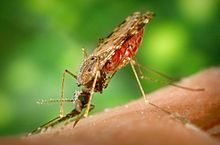
Anopheles albimanus mosquito feeding
It has been said that malaria has killed more human beings than any other single cause during the course of our evolutionary history. It is certainly a scourge but because control is a combat against both an insect carrier and a parasite, both of which reproduce faster than we do and can evolve treatment-resistance, it's a challenge to global public health.

The news had recently been that we were making overall progress. But a new study, published in The Lancet, and described on the BBC website, reports that the global number of deaths from malaria between 1980 and 2010 was double previous reports, though the number is falling, and has been falling since it peaked in 2004. That's good news and bad news -- the revised mortality statistic, suggesting that the disease has been even more devastating than previously thought, and the falling number of deaths due to malaria, which continues to be welcome news, presumably indicating success in eradication measures.

Malaria statistics are notoriously unreliable because malaria is most prevalent in parts of the world where the public health infrastructure is thin and unreliable itself as a source of case counts. So, the authors collected as much actual data as they could for the years between 1980 and 2010, and then developed models to account for missing data. They built into their models predictors of malaria mortality such as prevalence of the parasite, drug resistance rates, and mosquito control measures.

They estimate that the number of deaths from malaria increased from 995,000 in 1980 (with a 95% uncertainty interval of 711,000-1,412,000) to 1,817,000 in 2004 (1,430,000-2,366,000), decreasing to 1,238,000 in 2010 (929,000-1,685,000). Deaths in Africa decreased by about 30% between 2004 and 2010, and by nearly 80% elsewhere. We needn't quibble about the assumptions upon which the uncertainty intervals were estimated. But this doesn't take into account increasing population sizes, so the decrease in mortality rates (deaths per thousand or hundred thousand) based on counts alone, rather than people-at-risk, would be even steeper.
Our findings show that the malaria mortality burden is larger than previously estimated, especially in adults. There has been a rapid decrease in malaria mortality in Africa because of the scaling up of control activities supported by international donors. Donor support, however, needs to be increased if malaria elimination and eradication and broader health and development goals are to be met.
From the CDC web page on malaria
This study was funded by the Bill and Melinda Gates Foundation, so the fact that the findings support increased funding of malarial control is perhaps not a surprise.  And, declining mortality from malaria is extremely good news, and we certainly do not question the benefit of bed nets and the best treatment.  But, we do wonder if the decline is as easy to explain as this paper makes it sound.  This is not at all to say that control measures aren't working, as clearly they are!  But, the story is more complex. 

For example, a paper in Malaria Journal in 2011 (which we blogged about here at the time) reported that:
A longitudinal decline in the density of malaria mosquito vectors was seen during both study periods despite the absence of organized vector control. Part of the decline could be associated with changes in the pattern of monthly rainfall, but other factors may also contribute to the dramatic downward trend.
And, a report in The Lancet in 2010, title, suggests that the story is indeed more complex than the recent paper suggests.  Indeed, this paper states that malaria declined in Ethiopia between 1998 and 2004, and:
It is very likely that the massive scale-up of ITNs [insecticide treated bednets], indoor residual spraying, community-based management of fevers, and environmental management of mosquito breeding sites all contributed to these results. However, the incidence of malaria was already declining at the beginning of the surveillance period, before these interventions were introduced.
And in the coastal area of Kenya, where "pediatric malaria admissions declined by as much as 75% between 2003 and 2007" and parasite prevalence has declined dramatically:
Although ITN use has increased concurrently with the decline in paediatric admissions, the prevalence of malaria infection declined from 35% to 10% before ITN coverage reached 25%, and before the introduction of ACTs [artemisinin combination therapies, currently the best treatment available].
And:
In Rwanda, data from 20 facilities representing every district in the country showed a decline of more than 50% between 2005 and 2007 in both inpatient and outpatient slide-confirmed malaria cases. Before 2005, the number of cases had been increasing annually, but began to decline shortly before or at the same time as mass distribution of long-lasting insecticidal bednets and the use of ACTs in 2006–07.
And:
An urban hospital in Libreville, Gabon reported an 80% decline in the number of children with positive blood smears in the inpatient and outpatient services. The decline began in 2003 and persisted until the end of the surveillance period in 2008. The decline pre-dated both the introduction of ACTs in 2006 and ITN distribution in 2005, the coverage of the latter reaching 50% in 2008.
And so on.  The 2011 Lancet paper concludes:
Alternative explanations for these changes should be considered. Previous experience in Europe and North America has shown that malaria declines as social conditions and education improve. However, these changes (eg, improvements in house construction) are likely to be gradual and cannot account for the sudden changes seen during the past few years, although they might have contributed. Malaria transmission is strongly affected by climate. However, climate has been carefully monitored in several case studies, and although there have been fluctuations from year to year, no overall pattern emerges that can explain the remarkable reductions in malaria cases in some countries. A highly speculative explanation for the reductions is a change in the parasite or its mosquito vector that has reduced transmissibility of the infection. Both of these are biological possibilities, but such a change seems unlikely on the opposite sides of the continent at the same time. Finally, the transmissibility of P falciparummalaria might not be as high as has been previously thought, making it easier for any transmission blocking intervention directed at either the parasite (ACTs) or the vector (ITNs or indoor residual spraying) to reduce transmission.
A student in our department  is working on malaria in southeast Asia, and he tells us that there are still many unknowns.  For example, infection is higher in males than females in Thailand, which suggests that men are becoming infected while working in the fields, so that the usual approaches of mosquito control in living quarters, and the use of bed nets, aren't enough to control infection there.  Also, infection peaks at unexpected times of the year, which suggests that the life cycle of the parasite (primarily plasmodium vivax in Southeast Asia but not entirely) is not well-understood, or may be changing.  And, climate change, as predicted, is changing the distribution of mosquitoes in all malarial zones, so that infection is now occurring or increasing in places (higher altitudes, e.g.) where it has been rare to non-existent before.

Climatic factors (rainfall amounts, temperature changes, e.g.), and even agricultural practices, such as the use or interruption in the use of irrigation, will explain seasonality of infection and short-term trends, but so will newly developed resistance of mosquitoes to treatments or insecticides, a chronic problem for malarial control. And, determining when a trend is short or long-term, and thus what is causing it, can be difficult.  

If we can find all this with a little poking around the web, presumably it's all well-known in the international health arena, too, so it's curious that a paper attributing all of the decline to improved control could be published so prominently. Could there be an element of coloring of the situation to serve the purpose of massaging donors ('MalariaGates'?), to keep the money coming?  If there is any of that involved, it would do a disservice to the understanding of the complexity of factors underlying malarial transmission and control.

Evolutionarily one must expect a continuing race between human susceptibility, drugs, attacks on the parasites and carriers, and the latters' ability to change in response.  Hopefully, in this case, the problem can be understood well enough that technology can be fast enough that we can win.  But for this to happen, all the variables need to be understood, not just the easy ones.