Showing posts with label personal genomics. Show all posts

Thursday, March 16, 2017

Higher resolution discrimination: The GOP wants to allow employers to require genetic testing

This morning, Ed Yong published an article that takes on issues that we at the The Mermaid's Tale care very deeply about.
Link to article
The consequences for important medical research are not going to be pretty.

And I can't help but be angry about this for threatening to take away the fun of genetics too. If we can't have some control over our genetic testing, we can't do it for fun, for education, for finding out more about ourselves, for the awe of it, for innerspace exploration in the technology age. They're taking that away from us by eroding GINA.

I have lots of other thoughts... like about how this fits in so nicely with (not all of) the right's racist/eugenics inclinations.

And juxtapose this view from the political right where there is full-on acceptance of actually-more-than-genetics-can-even-deliver against their anti-science politics and policy...

It's like science is totally fine for Republicans as long as Mother Nature is a dictator.

If it's more complicated than that, then deny it, defund it, bulldoze it. The reality is, genetics is largely probabilistic; it is not a dictatorship. It's just so hard to convince people that it isn't. The ideological drive to justify behavioral differences and socioeconomic inequality with Nature above all is just too strong. If it's Nature, then we don't have to do the hard work of addressing the problems because Nature is Nature is Nature. This is really old thinking that really new knowledge (both through lots of science and lots of lived experience and lots of humanities and lots of art) has overturned but has not managed to catch on all that well. Along with new knowledge we get increasing understanding of genetics so these ancient beliefs can just be spouted by politicians using new-fangled science jargon.

This is really hard to write about today as all the stories about the proposed (and highly probable) budget cuts to science and the arts are blasting through my newsfeeds. It's overwhelming me today. I'm feeling hopeless and angry on behalf of science, art, knowledge, medicine, humanity, humans, children, teenagers, grown-ups, geezers. It's too much today.

But, back to Ed's article, I do need to put this here because it mentions that I have taught with 23andMe and longtime readers of the MT might know about that:

I don't teach with 23andMe anymore. I was doing it for as long as my university would pay for the kits. It was totally voluntary and students had to read Misha Angrist's book and endure long discussions and pass a quiz before deciding whether to go through with the testing. It was so powerful for teaching evolution, genetics, anthropology, etc... and we critiqued the hell out of it. My university said I needed to pay for the kits through course fees from now on. Before any of these threats to GINA, I decided not to do that and to stop using 23andMe. Now, even if my university reconsidered and funded the kits, I still wouldn't take it up again as a teaching tool.

Thursday, June 27, 2013

My dogs' evolutionary history. Part 3: Inside scoop and why

Recall that we ordered DNA testing kits for our mutts. First we made predictions, then we revealed the results. Today I want to tell a bit more of the story...
yawn
Remember that time a doctor used a vibrator on my hips because I had a cyst on my knee? I was all into it "for science." It was an opportunistic science sting operation. There was totally gum on my shoe. There was all kinds of pseudoscience that day.

Anyway, I was all psyched up for that sort of Dateline-style, hidden camera intrigue when I called up Mars Veterinary, the people who do the analysis for Wisdom Panel doggie DNA kits, last Friday afternoon. I was all psyched up because, as Kevin said, I needed, "to make sure they're not defrauding people."

Me? I do? Little old me?

That sounds about right. I mean, just because I can see all the educational potential here doesn't mean I should be endorsing it without understanding it better. And while I'm understanding it better shouldn't I make sure they're not entirely full of s--t?

But I already know they're not full of s--t because they gave us results for both Elroy and Murphy that made sense. They didn't report crazy results and there are lots of ways they could have... there are 200 breeds on that list, most of which do not look like our dogs or like they've wafted their DNA anywhere near our dogs.

So, they can't be completely fraudulent. Whew. Okay then, less of a burden on me for this interview. But wait. Could it be maybe a little more nuanced, this hypothetical fleecing? After all, they're the ones who saw my blog and reached out to me to have an interview--isn't that a little big brothery? And, after all, their website doesn't tell us what their methods are, not really, not for those of us who have ever operated a PCR machine or run a gel. And they don't tell us what these markers are in our dogs' reports that led them to make the reports. I'm used to having too much information, even, because of 23andMe.

Anyway, there were all kinds of reasons to be professional when I called up the veterinary geneticist. But after she answered my first question so well, I pretty much lost all professionalism and drooled all over her, albeit through the phone.

Here's what I learned. Please bear with me... I didn't take direct quotes because (a) that's hard to do without a hands-free headset (or fancy recording software I don't have because I never needed), and (b) I got a wee bit excited and flailed my arms most of the conversation. 

All questions and answers are my paraphrasing.


Question: Are you using a chip or what? How are you genotyping?
Answer: A chip like 23andMe's isn't cost effective. Yes, there's a chip but it's not specific to the test. They use a sequenom platform. It's PCR markers combined into panels.  They run those PCRs for 321 markers, broken up into several panels, optimized so that they don't interfere with each other clearly and don't have to change primers. They use nested PCR for segmenting around the mutation and then to get the exact SNP they throw the DNA in a mass spec to find the particular A, T, C or G mutation. Each has a different weight, so each can be identified. 

Question: Do you get both alleles from that?
Answer: Yes. They don’t sequence in both directions but they sequence both chromosomes.

Question:  Are those 321 markers for visible or perceptible phenotypes? 
Answer: No. None are visible phenotype. They're ancestry markers/SNPs.

Question:  Have you found any dogs that have none, not one, of those breed markers?
Answer: No. And we don't expect to. But it's not completely out of the question given the spectral nature of variation over space and time. 

Question: How did you validate your mixed breeds family tree methods? Do you have mixed dogs with known parents and grandparents and type them all in the family?
Answer: The pure breed tests validate so well already. And also, yes, they do validate with mixed dogs with known heritage but not many. The methods are built out of Ostrander's research with 85 breeds, 5 dogs from each and 96 microsatellites. She licensed the patent exclusively to WisdomPanel. 

Question: How do your mixed breed reports compare to how people guess based on external cues? Aren't people already good at guessing their mutts ancestries?
Answer: Actually they're not. Ancestry DNA testing is much better. People aren't that good at guessing mutt ancestry based on phenotype, as far as the few studies suggest. (There's one by Victoria Voith that I want to check out and there's one by Levy on pitbulls specifically.)

***
We chatted for much longer than that and she shared all kinds of interesting information about genetics for dogs' visible traits and also lots about their reproduction which I'm keen to learn about. But that right there's all the relevant information regarding our doggie DNA testing experience that I got during the 30 minute phone call. She was completely open with me about everything which is why I'm kicking myself that I forgot to ask why they require the dog's weight when you submit its cheek swabs. I have a hunch, however, that it's got something to do with validating their mixed breed body size estimates given how many people use WisdomPanel on shelter puppies that will be better adopted if their projected size is known. 

So the question remains... If you don't have a puppy or don't care what it will grow up to look like or be like, why do Wisdom Panel? 

The promotional video on the homepage sums up why many people might do it: 

I wasn’t sure what my dog was made up of...Pretty sure she wasn’t just a [breed name]...I wanted to know so I could tell people when they ask me 'what kind is she?'

This is fascinating.

Why do we care where our dogs come from or what kind they are? Same reason we care the same things about humans and ourselves. And it all boils down to the fundamentals of the field of anthropology... and it's complicated.

And finally, why have I titled all three of these posts "my dogs' evolutionary history"? 
Because evolutionary history is a synonym for family history and for ancestry. And vice versa, all around. And, clearly, I'm trying to make a point about that.

When you type "evolution" into the Wisdom Panel website search, this is what you get:


But that's not going to stop me from using this to teach evolution. I've decided that Wisdom Panel will be a good alternative for students who aren't interested in doing 23andMe in my anthropology courses, so I'm going for it.

Dogs, humans, what's the difference?  A lot and not.

http://evolutionpsa.tumblr.com/

Thursday, June 13, 2013

My dogs' evolutionary history. Part 2: Results


Yesterday we made the predictions of the breed signatures we'd find in our dogs' DNA.

If you didn't already, please consider going back to yesterday's post first before reading today's. Predictions are key! It's best if you confirm our guesses and/or add your own. (...what are the reasons for your predictions? Size? Color? Ears? Tails? Fur? Snout? Furnishings?)

Sadly (yes, sadly), predictions are not part of the official Wisdom Panel or 23andMe experiences. When I teach with 23andMe predicting the results is a major assignment early in the semester. Not only is making predictions the best practice for later scientific evaluation of the results, and it's the best way to force yourself to come to terms with how inheritance and gene expression work (and don't work), but guessing the outcome first makes reading the results orders of magnitude more fun ... not to mention how it makes things a lot less nerve-wracking when it's about your own DNA with 23andMe.

Briefly, before I reveal our dogs' results, let's consider a couple important things first...

Dog breed markers are mutations. 
Just like anything else alive right now, all dog breeds, no matter how "pure" or revered, are mutants. All of their dog traits just like all of our human traits, good and bad, started out as new mutations. Even the ones we all share that contain little variation now (like our genes involved in the development of five fingers and five toes), but also the ones that vary among our populations (like our genes that affect our pigmentation).

And mutations aren't just a population thing; each of us has a tiny fraction of our genome that's mutated compared to our parents. As far as we know, mutations occur in the making of all babies and puppies, etc. Most are neutral, some are bad, some are good.

We're all mutants because mutation, perpetual change generation upon generation within a lineage, is constant. Stasis is not.

This constant change in every puppy is fundamental to why we can have hundreds of dog breeds today.

Many dog breed traits are genetically simple.
Dogs seem to be particularly simple kinds of mutants.

The mutated genes that determine the traits that distinguish one dog breed from another are remarkably few and remarkably simple, but that simplicity makes a lot of sense.

Since humans coaxed these breeds out of ancestral dog stocks and also out of other breeds (as they still do today), it's easy to imagine that new simple traits, not new complex ones, had the best potential to be easily and quickly propagated into future generations and eventually into new breeds.

If a trait arose that was preferred, and it was caused by the kind of genetic mutation that could be simply and somewhat reliably expressed in offspring that inherited it, that mutation and the trait it produced could be increased in future generations by promoting breeding of those new attractive mutant dogs and their offspring.
(source)
If dog breed traits were genetically complex (based on many genes, for example), they would be terribly difficult to produce through controlled breeding of parents with those traits... at all... let alone during one human breeder's lifetime! That's at least partly because there would be far too many puppies without the preferred trait and it would be far too difficult to preserve a trait at an appreciable frequency in a lineage. Of course, inbreeding with very close relatives that share the mutations helps a great deal with this.

Humans have taken advantage of the simple mutations that have popped up in dogs (as they pop up in all living things!), due to sheer feasibility of the breeding outcomes those simple mutations allowed. Like that new coat curl or those new furnishings? Some puppies will have the exact same look. And we're off and running with a new kind of dog...
(source)
I don't know about the genes for Dalmatian spots (and honestly haven't even looked) but I do know about this paper by Cadieu and colleagues from 2009. Apparently you need only three genes (FGF5, RSPO2 and KRT71), each with two alleles (i.e. gene variants; denoted +/- in the figure below) to explain all this coat variation among dogs:

Cadieu et al., 2009
Dog genes are made of the same goop that ours are, and their genomes are very similar to ours because of our shared mammalian ancestry, but they're described as "simple." Evan Ratliff explains some more about why dog genes are simple in "How to Build a Dog:"
The vast mosaic of dog shapes, colors, and sizes is decided largely by changes in a mere handful of gene regions. The difference between the dachshund's diminutive body and the Rottweiler's massive one hangs on the sequence of a single gene. The disparity between the dachshund's stumpy legs—known officially as disproportionate dwarfism, or chondrodysplasia—and a greyhound's sleek ones is determined by another one. The same holds true across every breed and almost every physical trait. In a project called CanMap, a collaboration among Cornell University, UCLA, and the National Institutes of Health, researchers gathered DNA from more than 900 dogs representing 80 breeds, as well as from wild canids such as gray wolves and coyotes. They found that body size, hair length, fur type, nose shape, ear positioning, coat color, and the other traits that together define a breed's appearance are controlled by somewhere in the neighborhood of 50 genetic switches. The difference between floppy and erect ears is determined by a single gene region in canine chromosome 10, or CFA10. The wrinkled skin of a Chinese shar-pei traces to another region, called HAS2. The patch of ridged fur on Rhodesian ridgebacks? That's from a change in CFA18. Flip a few switches, and your dachshund becomes a Doberman, at least in appearance. Flip again, and your Doberman is a Dalmatian. "The story that is emerging," says Robert Wayne, a biologist at UCLA, "is that the diversity in domestic dogs derives from a small genetic tool kit."
So it's this simplicity that allows companies like Wisdom Panel to genetically distinguish breeds and then look for the signatures/markers of those breeds in our dogs' DNA. It's also the recency of most of these breeds (no more than a few to several hundred years at most) that allows us to assume (maybe not rightly but still...) that so much of what genetically identifies a breed today is similar to what the breed was working with all along.

And so... without further ado...

Here are the results of mailing off our dogs' cheek swabs and having 321 markers for 200 breeds analyzed.

For Elroy...
This is his "Breed Ancestry Certificate"

The report notes how Rottweiler and Chow Chow are the only ones with confidence. 

How do they make the pedigree chart? 
What I think they do is estimate what percent of the breed contributes to the dog's ancestry and if it's something like 50%, it's one parent. If it's like 25%, it's one grand-parent and if it's like 12.5%, it's one great-grandparent. Any % less than that is lumped into "mixed breed" ... the details of those are guessed at below.  So those placements on either side of his chart are just best fit in terms of percentage. 

What I'm not sure about is why we must assume that 100% of Elroy's ancestry comes from any breed. But, remember that 100% of the markers in the Wisdom Panel test distinguish breeds. That means, this Breed Ancestry Certificate is missing all the information about Elroy that's not analyzed by Wisdom Panel. 

Non-surprises.
We guessed the breeds that they were confident about! There must be something to this test. Especially since we had seen his litter mates and were told by the adoption agency that he was probably rott/sharpei (and later on we figured he was just as likely chow chow as sharpei). SCIENCE works.

Surprises.
German Shepherd and Collie aren't terribly surprising either. He came from Ohio. Those breeds are abundant enough in the region, are allowed to roam free and probably mated like that too for decades upon decades in those regions. And he's a big boy!

But Westie? Westie is a bit of a head-cocker.

Or is it? Westies had to have had big ancestors, first of all, since they descended from wolf ancestors like all other dogs. But something that distinguishes Westies from other breeds is in Elroy's DNA. That means a relatively recent Westie left a signature in his genome. So was it kamasutra lovemaking between tiny Elroy ancestor and big Elroy ancestor?  Or are we talking about love between mixed breeds and pure breeds and mixed breeds over time? Probably.

Here are their best guesses about what contributed to those "mixed breed" mysteries on his certificate.
Mostly big dogs, some ancient and awesome. The Dogo! (Ugh, don't google it... so many fighting and abuse videos.)

Nothing to really take home from this list because they're far off guesses without even a report of percentage there with the bar graph.

For Murphy...
This is her "breed ancestry certificate"

Akita, German Shepherd and Lab are the only confident ones (as noted in the report). 
And here are the most likely breeds contributing to those "mixed breed" mysteries on her certificate.


Non-surprises.
Shepherd! And Lab is another good one considering friends and relatives see lab in her.
Many of her mix guesses are herders!

Surprises.
Akita? That's phenotypically (and maybe genetically(?) will have to check) close to Husky which is another guess we often hear for her. So this is only a little bit surprising.

French Bulldog? Now that's a real head-cocker.

But again, like with the Westie, it's not noted as "confident" in the report, but on the other hand, why not French Bulldog in her ancestry? It just means this is a marker, like with the Westie, that's not tied to outward appearance/phenotype.*

Not enough information...
I wonder what these markers are then; if Westie and French Bulldog are showing up, why? As the website explains, “Physical features characteristic of certain breeds, such as the flattened face of the English Bulldog or the extremely curled tail of the Pug, seldom survive even the first crossbreeding.”

So these markers for unseen traits are fascinating but not explained in the report.  I'm spoiled rotten by 23andMe that tells you everything, down to the A,T,C, or G you have for your allele for whatever gene. I'm guessing that Wisdom Panel keeps all this under wraps because (a) most consumers don't care to know those details and (b) it's in their best competitive and economic interests to keep their methods to themselves.

What's interesting is how some of the hype about these dog tests is similar to 23andMe: They're "for your health!" But unlike with 23andMe, Wisdom Panel says that you're good just going to your vet and saying "she's got Akita in her blood" when you're dealing with health issues.  While 23andMe advocates that you know each and every SNP.  My health is more important than my dog's I suppose, but what's absolutely not clear is how these two very different approaches (ancestry and family history vs. SNP data) are resulting in different health outcomes.

As you might imagine, there's a lot more to say about the evolutionary and anthropological issues these dog tests raise, so please stay tuned. (Here's part 3.)

Kevin and me and our Westie, Elroy, and our French Bulldog, Murphy.

*Or if it is, it's present in only one recessive copy and would require two copies for the visible trait in the Westie or French Bulldog  to be expressed (added June 14)

Wednesday, June 12, 2013

My dogs' evolutionary history. Part 1: Predictions

[Click here to skip to Part 2 and Part 3]

You might remember Murphy and Elroy from the time we used science to solve the book-eating mystery. Or the time they figured out evolution. (Still looking for puplisher! [sick]) Or maybe you already know Elroy because you follow him (@ElroyBeefstu) on Twitter.
Elroy (I fit in your phone!)

Murphy (awww)

These are the mutts that inhabit our lives, and we theirs.

It's because of our tremendous love for these dogs but mostly because of our tremendous fascination with evolution that we ordered Wisdom Panel kits for each, for my birthday.

What we do
With Wisdom Panel, the process on the consumer end isn't a whole lot different from 23andMe. You purchase the kits online, they arrive at your house, you activate the kits online, you swab your dogs' mouths, pop the kits back in the mail with the postage-prepaid packaging, and wait for an email with the results.

Wisdom panel needs far less of the contents of a dog's mouth than 23andMe requires. And that's not only because the analysis will be far less extensive, but because dogs' lips and face muscles aren't hooked up for spitting into a test tube.

The turnaround was speedy. We sent in the samples on May 28 and got the results June 6.

At this stage in the process, the only red flag is that they require you to submit your dog's weight during online registration. For the love of science, there should be no phenotypic hints required. I hope they don't use weight to discard or confirm dog breeds for their results report.

What they do
Here's what the FAQ says:
Testing your dog with Wisdom Panel® 2.0 begins when you use the cheek swabs to simply collect a small DNA sample from inside your dog’s cheek and send the swabs into the laboratory. Once your sample is received at our lab it is scanned into our database and assigned to a batch for testing. It then undergoes processing to extract the DNA from your dog’s cells which is examined for the 321 markers that are used in the test. The results for these markers are sent to a computer that evaluated them using a program designed to consider all of the pedigree trees that are possible in the last three generations. The trees considered include a simple pedigree with a single breed (a likely pure-bred dog), two different breeds at the parental level (a first-generation cross), all the way up to a complex tree with eight different great-grandparent breeds allowed. Our computer used information from our extensive breed database to fill these potential pedigrees. For each of the millions of combinations of ancestry trees built and considered, the computer gave each a score representing how well that selected combination of breeds matched to your dog’s data. The pedigree with the overall best score is the one which is selected and provided to you in your dog’s individualized report.
This doesn't really cut it for me. I want to know what the methods are and this is all they provide in answers to "Science Based Questions!" This isn't helping much:
Not only does the computer analyze a dog’s DNA for the breeds and their likely proportions in the dog’s ancestry, but it also models which side of a dog’s ancestry each breed is likely coming from.
I'll just have to assume for now that they use something like a chip (because sequencing is still not thrifty) to identify markers that they've already linked to breeds and then they're applying their probability-based analyses to those markers in our dogs in order to provide an estimate of our dogs' ancestry. And what are those markers?
Wisdom Panel only uses what are called autosomal DNA markers, chromosomes that contain most of the genetic instructions for every canine’s body make up (height, weight, size etc.). There are no markers from either the so-called sex chromosomes (the canine X or Y chromosomes). Mitochondrial DNA, or Y-chromosome DNA testing, is rather different as these parts of the genome are passed on intact from mother to child and father to son respectively, but are therefore only representative of either the female or the male lineage. Autosomal DNA is inherited both from the maternal and paternal lineages equally and constantly shuffled by a process called recombination at each successive generation, and therefore is able to give useful information on the breeds found on both sides of a dog’s lineage.
To find the genetic markers that performed best at distinguishing between breeds, Mars Veterinary™ tested over 4,600 SNPs (single nucleotide polymorphisms or genetic markers, where genetic variation has been found between different dogs), from positions across the whole canine autosomal genome from over 3,200 dogs. To further refine the search, Mars Veterinary determined the best 1,536 genetic variations and ran them against an additional 4,400 dogs from a wide range of breeds. This stage of testing resulted in the selection of the final panel of DNA markers that performed best at distinguishing between breeds, ultimately creating the Wisdom Panel genetic database which presently covers over 200 different breeds.
Predicting our results
Both Elroy and Murphy are mixed breed dogs. Here's the list of breeds they say they can detect.  And here's more from the website:
Wisdom Panel® 2.0 breaks down a dog’s lineage in the form of an ancestry tree.  This allows you to see which breeds are present at a parent, grandparent, or great-grandparent level.  Keep in mind that a parent contributes 50% of their DNA to the puppy while a grandparent contributes about 25% of their DNA on average to the puppy.  It follows that a great-grandparent would contribute approximately 12.5% of their DNA to the puppy on average.
Since each of these different levels can contribute different amount of DNA to the puppy, you can see a variety of influence in the puppy’s physical and behavioral traits.  With a parental breed, you are likely to see some physical and behavioral traits from this breed represented unless some of the genes are recessive (requires two copies of the gene variant to show it).  Examples of recessive traits include longhair in most breeds, a clear yellow or red hair coat, a brown or chocolate hair coat, and prick or upright ear set (e.g. like a German Shepherd Dog).  You may see traits from breeds at the grandparent level and it becomes less likely to see physical and behavioral traits from breeds at the great-grandparent level unless those traits are dominant (requires only one copy of the gene variant to show it).  Examples of dominant traits include shorthair in most breeds, black hair coat, black nose, a drop or down ear set (e.g. like a Beagle), and merle/dapple (e.g. like a Australian Shepherd or Great Dane).

For Elroy (85 lbs)
Our guesses = 50% sharpei or chow chow; 50% rottweiler

Kevin was told he was half sharpei and half rottweiler when he adopted him and all his litter mates were black and looked like rotts. He's got tiny ears and a huge square head and heavy neck relative to his body.

We started to wonder whether he was chow chow instead of sharpei when I checked my best dog reference for another breed with a black tongue.


If he's part chow chow then my envy of his fur is no longer so crazy, since the breed was long made for that... and for dinner too. It makes me chuckle every time I call Elroy's dinnertime, "chow time."


For Murphy (40 lbs)

My guess = 25 % German shepherd; 25 % Border collie; 25 % Hound of some kind; 25% unknown village dog. Kevin's guess = 25% German shepherd; 75% Border Collie
Before her greybeard took over.
Unlike for Elroy, Murphy's behavior came into play for these predictions. Her main occupation is to herd each car that comes down the lane along the edge of our lot. She also stalks squirrels and chases shorebirds. And compared to Elroy, she doesn't have as many breed-specific morphological traits.

Who knows? We could be way off. After all, I just took this Dog Bark Interactive Quiz and failed miserably despite knowing exactly what Elroy and Murphy's vocalizations mean.

Results and analysis, right here, tomorrow...

Thursday, December 13, 2012

Your genome is showing.

Thanks to my university's support of my new anthropology teaching initiative--using 23andMe as part of the curriculum--and thanks to its visibility here at The Mermaid's Tale, I was asked to speak about the experience at the California Academy of Sciences last month.

Because it was all arranged and sponsored by the Leakey Foundation, I tailored it for an audience interested in human origins and human evolution, which felt natural considering that's me.

Because I was slotted to speak while "NightLife" was also going on, I thought an album cover art-themed slideshow, something I've long wanted to do (thank you King Crimson), would be appropriate.
"Aaah! You mean 23andMe can tell all that from just my spit?"
The film of the talk is up at fora.tv, here at this link.

While I was in San Francisco I had two wonderful opportunities to visit schools, one high school and one middle school. At the high school I got to sit down for an hour and talk genetics with an evolution and genetics course! And at both schools I gave a presentation called "Your evolutionary history is showing," part of which included a little about how science is part of everyday life, like when you want to figure out which dog ate Kevin's book.

For the Cal Academy talk, I considered posting my transcript here, but I think I'll just post my gratitude.

THANK YOU
The California Academy of Sciences
The Leakey Foundation
Students in my APG 350 and APG 201 courses
The University of Rhode Island Provost’s Office
All the artists who created these album covers.
Timetree.org
Anne Buchanan - Penn State University
Ken Weiss - Penn State University
Jennifer Wagner -  University of Pennsylvania
Ellen Quillen -  Texas Biomedical Institute
Misha Angrist -  Duke University
Niall Howlett -  University of Rhode Island
Abigail Bigham -  University of Michigan
Chanika Phornphutkul -  Brown University
Lorraine Santy - Penn State University
Juliet Dunsworth – Oviedo, FL
Kevin Stacey - Peace Dale, RI
Marisa Nelson & Mark Ackerly - 23andMe*

*I am not paid by 23andMe.  I use 23andMe at the educational rate to teach anthropology.

Careful what you ask that gene.

One last thing. Please check out my students' reflections on their experience with 23andMe and with learning biological anthropology this semester at URI at their blog "human variation style" ...http://humanvariationstyle.blogspot.com/

Monday, November 5, 2012

Area Doctor Shatters Area Girl's Dream of Being Taller Than She Is. (A personal genomics parable)

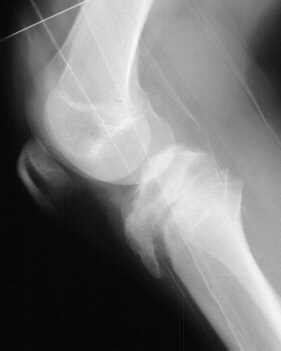
March 15, 1993. Oviedo, FL - A sophomore at OHS who injured the soft tissue in her knee in a freak accident while warming up for the 4 x 100 meter relay at an area track meet on Friday night was told, by her doctor, that she is done growing.

X-rays of Holly Dunsworth's knee--part of routine injury diagnosis and plans for repair--showed that the growth plates in her proximal tibia and distal femur are fused. This indicated to the doctor that Dunsworth has completed growth and has reached her full stature, so he passed this information along to her.

"He said it so cavalierly, too," said Dunsworth. "I spent my whole life wondering how tall I'd grow to be, hoping and wishing I'd grow to be tall enough to really dominate on the basketball court. And my doctor didn't even warn me that he was about to deliver this dream-killing news, and he definitely didn't ask me if I even wanted to hear it in the first place."
x-ray of human knee showing unfused growth plate of still-growing tibia (lower right bone). Source
The news was "even more devastating," said Dunsworth, than learning that her knee injury would most likely require surgical ACL (anterior cruciate ligament) reconstruction, meaning several months of recovery and probably a missed junior year of basketball.

"Sitting out a varsity basketball season just as I'm starting to be noticed by college recruiters is one thing," said Dunsworth, "but learning that I'll probably never be tall enough to play in the NBA or the Olympics is another. What should I dream now? What can I look forward to? I will never dunk. It's over. I wish the doctor would have kept my growth plates to himself."

When asked whether she expected to be much taller than her present 5'7" because she'd seen other girls continue to grow taller at her age, or whether it was because of her freakishly tall parents, Dunsworth said, "Oh no. Girls are pretty much full-sized by sophomore year. And my dad's 5'11" and my mom's 5'8". But I guess I just hoped I'd luck out. And now all that hope is gone, long gone. A big part of me is dead and I don't know how I'll fill this hole with anything good. I just don't know how I'll do it."

***
True story. Fake quotes. Thanks, The Onion, for the inspiring framework. Note that I did not work the word "cavalierly" into my verbal capacity until many many years later. (Fine, it was today.)  

Here's a look at one of the dreams that died that day:

***
If you follow this blog then you know that we talk about personal genomics quite a bit. My parable's not a perfect comparison for many reasons.  Obviously the cessation of growth is not equivalent to the cessation of life (death sentences, being how people can interpret genomic data) or even to the deterioration of health, as with the onset of disease. Further, my complete growth plate fusion was not probabilistic news, like so many of the genetic interpretations that companies like 23andMe provide.

But I thought it was important to share this sort of story where my identity and dreams were wrapped up in my biology and where a doctor delivered news of incidental findings about that biology (which deeply affected my identity and my dreams) without my consent or without even considering my feelings.

I had some rather ignorant notions about biology if I thought I could still grow taller past 16 years of age, especially given my parents' heights, but does it matter if you consider how fundamental those assumptions, however misguided, were to forming my identity? I never even stopped to consider whether I was done growing. It was always a hopeful mystery. Learning from a scientific authority that it was all over was harsh. It's culture, people, and it's not always rational but it's what we do. It's who we are.

On the other hand, culture changes with education. Humans will always have dreams, and I will always have dreams, but maybe my dreams would have been different in high school had I learned to ditch magical thinking in favor of the real evidence staring me in the face. Thanks to family history and to growth patterns of my classmates, it was obvious that I was done growing. I shouldn't have needed the doctor to tell me that! But I did. I needed the education. I needed to be enlightened.

I've been thinking about this story of mine because of what I've been reading about personal genomics and probability lately:
  1. What Your Doctor Isn't Telling You About Your DNA. (Time Magazine)
  2. John Hawks's recent reflections on things like the Time piece.
  3. Razib Khan's reaction to the Time piece
  4. Genetics textbook author Ricki Lewis doesn't want to see her genome
  5. If you're taking gene-based probabilities as certainties--the hullabaloo over Nate Silver's estimates  demonstrated that many do!--then there's potential for harm from participating in personal genomics.
***
Sure, a big part of the personal genomics dilemma is whether to make people worry about something they cannot prevent at our present level of knowledge (e.g. Huntington's, which 23andMe does not report).

But another big part of the personal genomics dilemma is whether to make people worry over nothing at all (e.g. higher estimated gene-based risk but the condition never ends up presenting).  This is the paradox of probabilistic medical data.  There was no such uncertainty or estimation about my fused growth plates, and since the news wasn't about how I could get sick or die, that's presumably why my doctor did not have to seek my consent to tell me this incidental finding of the radiography.

That I'm done growing is fact. That I have increased risk of breast cancer is fact-ish. It's a fact that I have certain SNPs or alleles or mutations associated with a specific type of breast cancer. That's certain.  Whether those alleles are meaningfully associated with breast cancer isn't. And what having those alleles means for me, Holly Dunsworth, isn't either. My risk for breast cancer might not be as high as 23andMe estimated (or it could be even higher, or it could be  lower). That estimate's not based on any data from my lifestyle and environment. It's only based on my genes in my spit--and only the genes that were genotyped. My report of increased breast cancer risk has got the potential to worry me over nothing. But it could also make me more vigilant so I can catch it early if it does occur.

I'm one of the many out there who wants to know everything about my genome that I can, even if interpreting much of it requires fancy brains to program fancy computers to estimate probabilities. I unlocked my Alzheimer's and Parkinson's reports on 23andMe and if they genotyped for Huntington's I'd have unlocked that too. I'd like to have all the information I can have. I hope risk estimates will improve over time. I'm optimistic like that, but (a) I understand very well that there is so much of our health, our lives, etc that we will never be able to predict no matter how much science learns about the genome and (b)  I have no idea how high a reported disease risk has to be to significantly worry me. Something is bound to kill me. If it's not all the confounders of old age, then hopefully it's molten lava or a black hole or chocolate. What's the big deal? We all die. I'm also pretty comfortable with some level of genetic determinism since genes figure greatly in how bodies work. It's not scary. It is what it is. Actually, it's brilliant. And it's even more amazing that it's a terribly difficult and sometimes impossible system to understand. If it wasn't so complex, all our little variations wouldn't have the wiggle room and the workarounds to function and to function well!

That earth-shattering news about my growth plates? I got over it. And pretty quickly. That hole inside my melodramatic, Holden Caufield-loving teenage heart? It was filled up with other dreams.

I wonder about all those people with life-threatening conditions and a shortened life expectancy. My grandfather was one of them, living some 40 years past his expiration date. I recently met an enchanting 70 year-old woman with a heart condition and an expiration date of 25 years old. She claims that it was her doctor's diagnosis (some might call it a death sentence) that gave her such a wonderful life, inciting her to cherish every moment and seek pleasure in ways that others do not or cannot.

But while deciding whether to see your genome and to receive the disease risk estimates calculated from it, how does anyone know they'll react like my joie-de-vivre'd friend? How does anyone know whether probabilities of disease-risk will be at least not misery-inducing and at best life-enhancing? Could there be a SNP for this charmed outlook on life/death that we could test for before we agree to learn what our disease genes say?

*wink*

And as for the new dreams that filled the empty hole in my soul where all the basketball dreams had died:  Maybe those new dreams were better dreams! I can certainly choose to describe my life in hindsight that way. And I do. They really were much better dreams. Similarly, I can choose to see my increased risk for breast cancer, psoriasis, age-related macular degeneration, rheumatoid arthritis, restless leg syndrome, exfoliation glaucoma, melanoma, esophageal squamous cell carcinoma, and stomach cancer (so says 23andMe) anyway that I choose.

For starters, ever met anyone afflicted with all those problems during their life? Right. That's really telling isn't it? And, of course, understanding even in theory how those risk estimates are made helps a great deal. And so does knowing that most of those conditions are already documented in my family history. And so does knowing that for some known conditions I could have new mutations that are hard to detect, or may never be detected. And so does knowing that those risk estimates don't incorporate my phenotype, lifestyle, or environment. And so does knowing that, just by being alive, my risks for obesity, coronary heart disease, and type 2 diabetes are still higher than my relatively increased risk for any of those aforementioned conditions.

Exercise, eat well, live right. My genes are my genes. And it is what it is. It's what I've got and it's good. Amen, awomen, amonkey.

And if this post wasn't a slam dunk, surely I'll have another shot. Because of how I'm built, I have no choice but to believe that I will.

Monday, October 1, 2012

Be afraid of fear, not personal genomics.


It's just the way it is now. This headline. This story.
(click to read/hear)


It follows the recipe. (1) Start with a headline that demonstrates controversy. (2) Present a story about science-related news (which does not require controversy to be news). (3) End it ever-so briefly and vaguely with dissent, doubt, outcry or warning. 


This recipe applied to personal genomics is particularly bad.

If you read or hear that story you might be primed before you start to wonder, okay what's the worry? Glad this article will tell me, finally, what we should be concerned about concerning this brave new world of personal genomics.

But you'll be sorry when you reach the end and this is all you get:
But the idea of widespread sequencing is setting off alarm bells. How accurate are the results? How good are doctors at interpreting the results, which are often complicated and fuzzy? How well can they explain the subtleties to patients? The fear is that a lot of people could end up getting totally freaked out for no reason. And there are concerns about privacy. Scientists recently even sequenced a fetus in the womb, raising the possibility of everyone getting sequenced before or at birth — a prospect with a whole new set of questions and concerns. "I think there are lots of populationwide and individual dangers," said Mark Rothstein, a bioethicist at the University of Louisville. "We're basically not ready for a society in which very exquisite, detailed genomic information about every individual, potentially, is out there."
Why? Tell us? And I don't mean the "us" who have access to the academic journals. Or the "us" who have the patience to bushwhack through the jargon. I mean, here is your chance to share with the public who you're concerned about: Since you brought it up, tell us why we should worry.

It's unclear who deserves the complaints and the criticism for producing pieces like this, since much of the "telling us" that I'm begging for might be lying on the cutting room floor.

I'm clenched about this because right now about 20 students in my Human Varition (Anthropology 350) course at the University of Rhode Island are voluntarily participating in genotyping through 23andMe. And I'm using this curriculum for the second semester now. After last spring, where over 100 students in both Human Variation and also the introductory level Human Origins (Anthropology 201) did 23andMe, not one student got "totally freaked out." This along with much of my experience with genotyping and undergraduates indicates that, with education and with understanding, personal genomics does not induce fear. Not coincidentally, participating in personal genomics aides in education.

And the same fear that I'm trying to mitigate through education is the same fear that some journalists and ethicists seem to be perpetuating if not creating.

In my experience, if you're informed, you're likely to appreciate biological complexity rather than cling to genetic determinism. If you're informed, you understand the positive and negative consequences and aspects of personal genomics. If you're informed, you don't get lured into personal genomics for all the wrong reasons. You don't order an expensive 23andMe spit kit as if it's snake oil. You don't send your vial of saliva to California, along with 300 of your precious bucks, because you think it will help you to live a longer, healthier life, or because you think it will show you your future.  Spit kits are not crystal balls, are not medicine, are not cures. Plus, the results will also most certainly change! Not your genotypes, but how they're interpreted. That genomes must even be "interpreted" should be a flag shouldn't it?

Informed citizens and consumers don't buy into personal genomics thinking it's their one and only answer-- their key to "me"-- because "me" will be increasingly different the more we learn about genetics and the links between genotypes and phenotypes. "Me" is, for most, too stubborn and conservative, while at once too big and too free, to be dictated by genotypes and probabilistic phenotypes.


All that is guaranteed with a 23andMe spit kit is that you will see parts of yourself that you haven't seen before. There's not a whole lot on the planet that's cooler than that. For most of us who will never go to Mars, at least we've got this, at least we've got innerspace.

Even if you don't get an ounce of joy from the experience, when you're informed you don't fall uncritically for claims that spit kits are dangerous or venomous.

Considering the engaging educational opportunites provided by personal genomics, considering its power to inform, spit kits may just be much-needed anti-venom.

In my experience education diminishes fear about genetic determinism because it diminishes genetic determinism. That leads me to see fear of personal genomics as a symptom of ignorance. And that's something worth being afraid of.

**

Note: Ken, Anne and I have differing views on direct-to-consumer (DTC) personal genomics like 23andMe so please remember that I speak only for myself when I write. Also, I am not paid  or sponsored by 23andMe to endorse their product. I use their product, at the educational rate, to teach anthropology at the University of Rhode Island.